
New exhibition in Leeds explores the legacy of artist and educator Maurice de Sausmarez

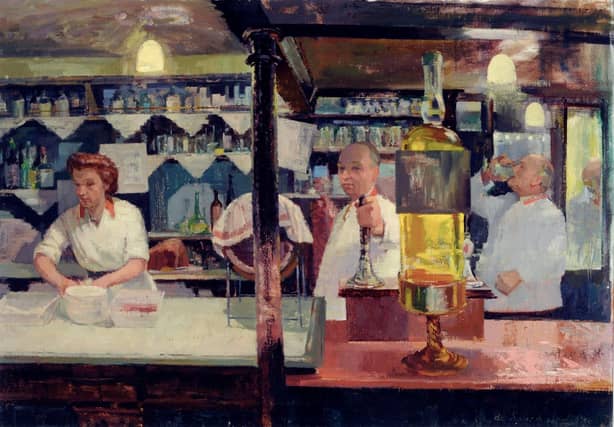

A new exhibition in Leeds is exploring the legacy of artist, writer, broadcaster and educator Maurice de Sausmarez, a key figure in the development of art education in the city in the middle of the 20th century.
Born in Australia in 1915, de Sausmarez studied painting at the Royal College of Art before the Second World War and began teaching at Leeds College of Art in 1948.
He went on to become the first Head of the new Department of Fine Art at the University of Leeds, where he was in post from 1950-59. It was during this period of nearly ten years that de Sausmarez was at the forefront of the drive to create a new model of art education that combined practical skills with art history and theory.
Today, de Sausmarez is less well known than many of his contemporaries – such as the painters Alan Davie and Terry Frost, abstract artist Victor Pasmore and pop artists Richard Hamilton – who were also involved in the movement, centred in Leeds, to initiate new ways of approaching art education.
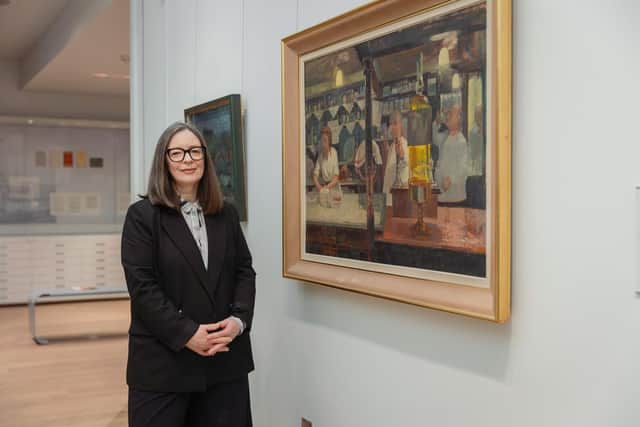
The exhibition, A Continuous Circulation: Artists and Art Education in Mid-century Leeds, curated by Dr Kerry Harker, Bridget Riley Art Foundation Fellow at the University of Leeds, features artworks by de Sausmarez and items from his archive, which is held in University’s Cultural Collections, including letters and postcards revealing his thinking and his radical approach.
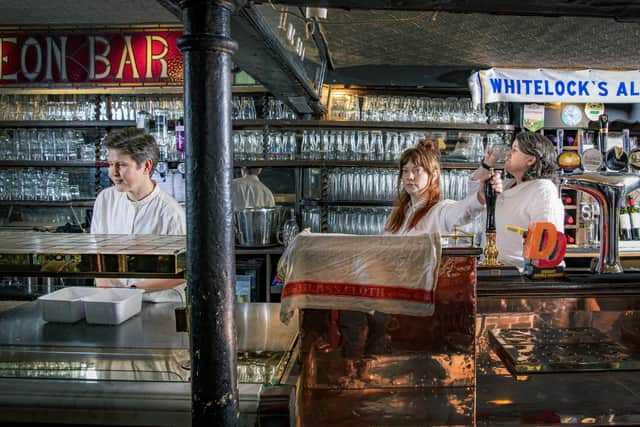
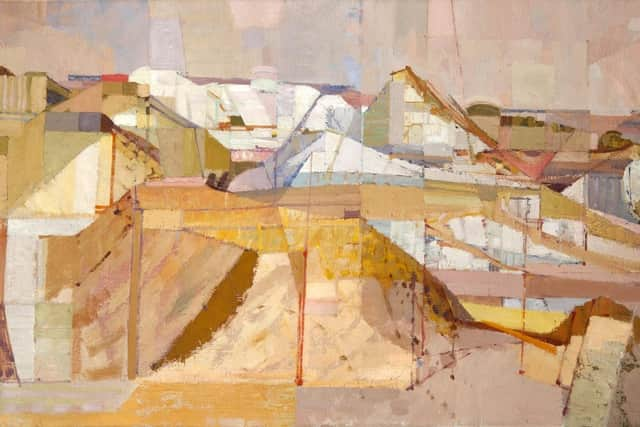
Among the artworks by de Sausmarez on display in the exhibition are his seminal work Whitelock’s an atmospheric figurative painting of the historic Leeds pub, as well as a sun-drenched landscape Tuscan Summer that demonstrates the artist’s exploration of abstraction. Interestingly, both paintings, though quite different, were made in the same year, 1955.
Subscribe to the YP’s Lifestyle newsletter
“My research has gravitated toward the incredible coming together of artists at the University of Leeds in the 1950s and the de Sausmarez archive is rich in material that speaks to that particular period,” says Harker.
“There were two threads to pre-war arts education, which hadn’t changed for a long time – it was academic and based on copying from the great masters.
“What that post-war cohort of artists and educators in Leeds were interested in was looking at the function of life in art and the links between the arts and science, that was very much at the forefront of their thinking. They wanted to develop a new form of art education to reflect the dynamism of the postwar period.”
Inspired by the earlier innovations of the Bauhaus, the new form was known as Basic Design and encouraged students to explore visual principles, experiment with materials and dimensions. De Sausmarez was very much a catalyst and a facilitator, bringing together fellow artists and educators to discuss their ideas.
He assembled all these in his book Basic Design: The Dynamics of Visual Form, published in 1964, which has been continuously in print ever since and helped to form the basis for the art foundation course that is taught today.
“He was hugely significant and influential – he created networks nationally and further afield but he is less well known than his peers partly because he died young at the age of 54, in the prime of his life,” says Harker.
“In the intervening years there was some jostling for position among the big characters involved in the movement about who did what when, and accounts vary. As the first researcher to take a deep dive into the de Sausmarez archive, I have been able to redress the balance, fill in some gaps, correct some historical inaccuracies and reconstruct a timeline.”
One of the ‘big characters’ Harker refers to who were involved in the Basic Design movement was the artist Harry Thubron who developed his own version of the form. Thubron was the head of Leeds College of Art at the time.
“There was no rivalry between de Sausmarez and Thubron , they were really good friends and kept a dialogue going,” says Harker.
“I was interested in the fact that the College of Art and the University were not seen as competing institutions and the two artists leading them were in an ongoing conversation and were also talking to the city council and local businesses. I hope the exhibition will give people a stronger understanding of that extraordinary period in Leeds and encourage them to think about what can happen when artists come together and have real agency to make positive change.”
A Continuous Circulation: Artists and Art Education in mid-century Leeds is at the Stanley & Audrey Burton Gallery, University of Leeds until May 9.