
24 Hours in A&E: A night in casualty which can weirdly make you feel better about the world
I've been re-watching ER (Netflix, streaming now), a roughly biennial ritual of nostalgia and wonder, when I wonder how you can produce 22 episodes of drama every year and still maintain a sense of urgency, unpredictability and emotion without testing the viewer's patience.
At least until that unfortunate meeting of Rocket Romano's arm and a helicopter rotor blade in season nine.
But watching American medics and patients struggle with questions of insurance, and Medicaid and Medicare throws the real-life dramas of 24 Hours in A&E (Channel 4, Mon, 9pm) into sharp focus.
Now in its 36th series, it still has the capacity to shock and leave you in an puddle of salty tears on the floor.
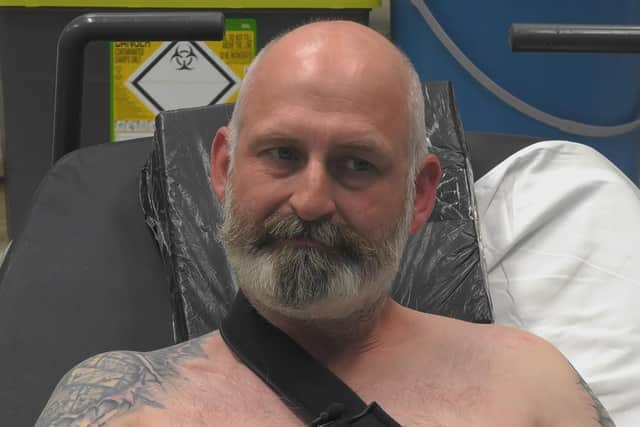

It's the beauty, if that's the right word, of the casualty department. Every day brings some new or outlandish injury; some new or outlandish disease; some new or outlandish story.
This week, we saw David brought in having suffered a suspected stroke. He is immediately taken for a CT scan of his head, an expensive test which would no doubt leave a patient in Cook County ER expecting a huge bill.
At Queen's Medical Centre in Nottingham, however, it is seen as just the first step in getting David back on the road to recovery.
A road, let's not forget, where each medical stop along the way comes free at the point of use.
David's is one story among three in an episode subtitled Without Warning, an episode which illustrates the unpredictability of life.
“I think suffering a serious medical event can certainly make people re-evaluate their lives and value their family members, the small things in life even more than they did before,” says one doctor.
“So you need to live your life to the fullest. You never know when something will happen to you.”
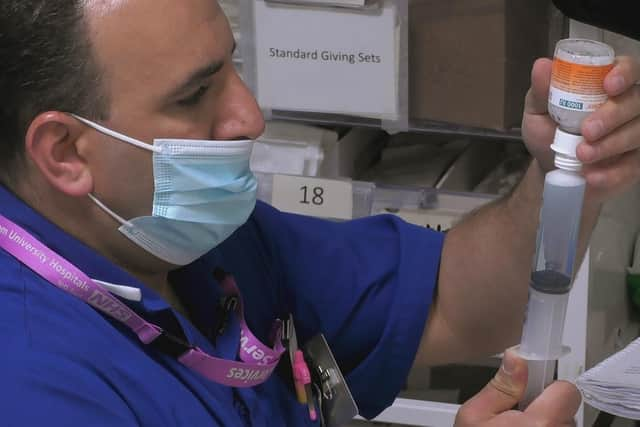
So here comes stroke nurse Zaki with his calm reassurance and his Vitamin K injections to counteract the effects of a blood thinner David has been taken since he had huge aneurysm removed from his chest.
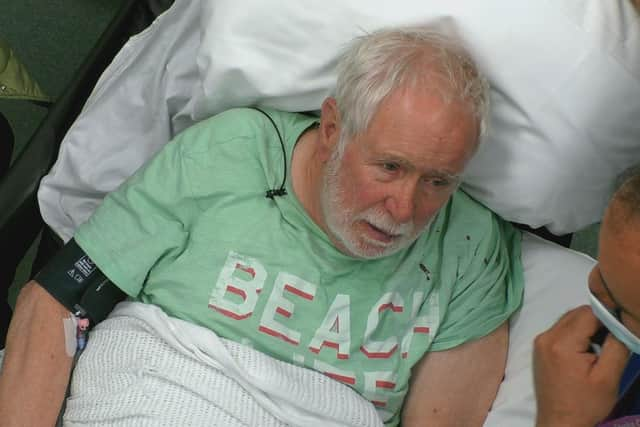
An incident his son Matthew said made him certainly re-evaluate his life, and his all-consuming work in the fashion industry.
Motorbiker Cecil had made similar adjustments to his life, getting away from small town Northern Ireland and the spectre of the Troubles as soon as he could, joining the RAF and seeing the world.
Now living back in the UK, he arrives in A&E after coming off his motorbike in a 130mph crash at nearby Donington Park race circuit.
Incredibly – despite the doctors; initial fears of a spinal injury – it seems he gets away with a severely dislocated shoulder. It may seem a bad injury, but considering what the appalling consequences of such a crash could have been, it seems like a lucky escape.
Cecil, bald-headed but with one of the best beards you're ever likely to see, seems blithely unaffected by it all. He seems the sort of person who has escaped a life confined by the peculiar strictures of his background – particularly its religious strife – and is now just delighted by life, in all its capricious forms.
Tanya, 31, has a similar story. Married and a mum by 18, new husband in the Army and deployed to Iraq, isolated away from home on a barracks in Gloucester, she struggles with her mental health.
But now, having got divorced and moved back home, she has also found a sort of freedom. Only slightly curtailed by a sudden collapse in a Nottingham rock club.
While all these stories have happy(ish) endings, 24 Hours in A&E reminds us that life is fragile, and one decision, one movement, one moment of bad timing can change those lives in an instant.
And it also succeeds in reminding us how lucky we are to have the NHS. That – at some of the most stressful times in our lives – we are not worrying about a bill for an MRI scan, or chemotherapy, or even a night on a ward.
Maybe that's why it's easy to wallow in the Chicago-based dramas of ER. The medical grass is greener on our side of the pond.