
A House Through Time review: Forget your kings and queens, history comes alive from the stories of ordinary people
History is too often confined to the kings and queens, the politicians and the statesmen, the generals and the great thinkers. But here's David Olusoga with a new series of his brilliant A House Through Time (BBC2, Thurs, 9pm) to remind us that the lives of others are just as fascinating, just as heart-breaking, just as important as the bigwigs and the boffins.
This time, he looks at a house in Edinburgh, buried into the side of Calton Hill, as if trying to hide itself from the hustle and bustle of the city centre.
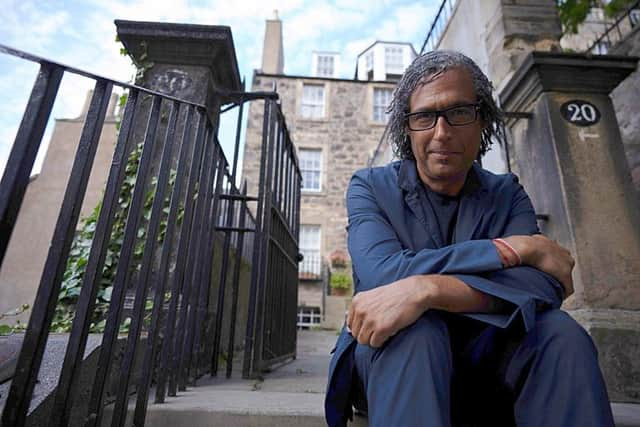

It may be slightly hidden away, but Prof Olusoga and his time have unearthed fascinating tales of bankruptcy, spying and the revolutionary wars in France.
And through those stories, he reveals how the turbulence around the beginning of the 19th century reached into the lives of ordinary people, as the Industrial Revolution gathered pace and Edinburgh began to expand beyond the medieval town of Auld Reekie.
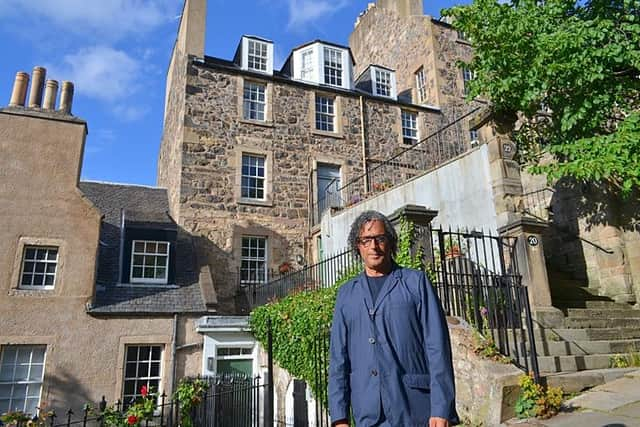
They are fascinating stories, not least that of Francis Ronaldson, who moved into the lower two storeys of this five-storey house in the 1780s.
Francis was employed at the Post Office, but his job went far beyond a delivery round, surveying postal routes and ensuring the growing commercial presence of Edinburgh was able to spread far and wide.
All well and good, but things take a sinister turn, as stolid, middle class Francis joins up to a paramilitary organisation of fearful members of the petit-bourgeois determined to stop in its tracks any radical thinking among the lower orders.
As well as his opposition to such far-out ideas as everyone having the vote, Francis went further in his mission.
His Post Office job left him well-placed to intercept and read mail between radical groups across the country, and he had no second thoughts about doing so, sending his analysis up the chain to his boss and, eventually, the Home Secretary.
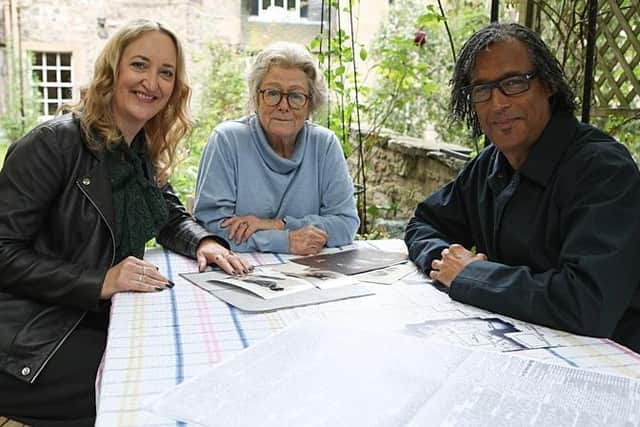
Incredibly, Prof Olusoga and his team discover Francis's literal paper trail, finding a letter he sent outlining his fears arising from the intercepted letters.
“God only knows what may occur from the atrocious and appalling conduct which has so lately happened,” he writes.
It's a demonstration of the power of Prof Olusoga's story-telling that scenes of him sitting quietly thumbing through old documents thrum with tension, as you hang on every word, wanting to learn the latest twist in each tale.
And he's admirably even-handed, even when it comes to old spying guy Francis.
He points out how Francis's job improving the postal system helped radicals of the time send their pamphlets and letters more efficiently around the country, actively working against his sideline in suppressing independent thought.
There are more fascinating stories, of expert craftsmen brought low by their ineptitude at business, and of a compassionate churchman who helped French prisoners of war escape in a night-time flit.
And there is an unexpected twist in the tale involving a family in debt, sculpture and Sir Walter Scott.
Each twist and turn seems revelatory, Prof Olusoga's soft delivery hiding a zeal to tell these stories, each with its own dramas, each seemingly with some resonance for today.
It's a masterly series, masterfully done and should be shown to anyone who claims history is dull and dusty.
Prof Olusoga and his team discover that, even within the most fragile and sepia-tinged documents dwell the very stuff of life, death, birth, marriage, heartache, struggle and triumph.
And when he pulls out mid-19th century photographs of some of the residents of this house, they suddenly brim with life.
Forget the George Threes or Dukes of Wellington, real history comes from the lives of the Pirnies and the Ronaldsons, the Steells and the Fitzsimmons. From the lives of us, not the lives of others.