
Come waltz with me - the joy of the BBC Proms Viennese concert
Ready for an evening of flirtation, intrigue, misidentity and bedhopping? We are not previewing the next series of Love Island.
We are going upmarket with a visit to the Proms – one of the world’s largest and longest-running classical music festivals.
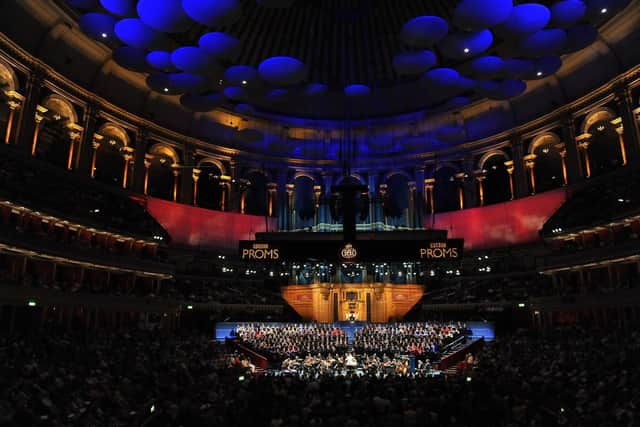

It was founded in 1895 by Robert Newman, was initially known as Promenade Concerts and focused on making classical music accessible through affordable prices and a relaxed atmosphere.
The Proms are held annually at the Royal Albert Hall in London and span eight weeks, featuring orchestral concerts, chamber music and other musical events.
The BBC took over the organisation and broadcasting of the Proms in 1927. The season has been on television since 1947.
The season is an oasis of class and culture in the malestrom of reality television. I do not want to watch much of it, but that thousands of other people do – and want to go to the events – is a comfort in a world of instant gratification and love is pretended to win a competition.
Give me a Viennese whirl – the music, not the biscuit – and I’m as happy as a snob in a music salon.
Viennese Waltzes at the Proms was an invitation to step into a glittering world of dance and romance as the BBC Concert Orchestra marked 200 years since the birth of ‘King of the Waltz’ Johann Strauss II.
The concert was 90 minutes of fizz, flamboyance, flirtation, floaty froth and fun as it took the audience back to the ballrooms of the Austrian capitial.
It was entrancing, jaunty, jingly, uplifting, mischievous, majestic and magnificent. It was easy to imagine a ballroom, hung with chandeliers, where women in silk gowns fanned themselves while waiting for a man in a tux to invite them on to the floor.
That this was a concert for those with plebian tastes was reinforced by the appearance of the modern times ‘King of the Waltz’, Strictly Come Dancing’s best asset Anton Du Beke. The man has class – and a common touch – in spades
He joined Proms host and one-time Strictly contestant Katie Derham in a waltz and to explain why this most elegant of dances was once banned.
The programme opened with Strauss’ Die Fledermaus (The Bat), the operetta described by the concert’s commentator, opera singer Nicky Spence, as “full of flirtation, intrigue, misidentity and bedhopping”.
Included on the programme was Strauss’ The Laughing Song, Franz Lehar’s Land of Smiles and Robert Stolz’s Wiener Café.
“It is serious music,” Spence said, “worn so lightly.” He and Derham also wore their knowledge lightly and were always enlightening and entertaining. When it came to the opera singer – American soprano Erin Morely – I turned over to Bless This House. I am sure she’s brilliant. But lines like: “You little, fragile, fragrant bunch of violets,” touch my funny bone, not my soul. The shrillness of the sound has me fearing for my Texaco wine glasses.
It would not be Strauss without his biggest hit the Blue Danube – used in 2001 A Space Odyssey, a Toyota advertisement and Titanic – the scene where Leonardo DiCaprio enters the first-class part of the ship.
The encore, the Champagne Polka. What other note to end an evening of dance and romance?
Why watch it when you could Bluetooth it? That would be to miss the majesty of the Albert Hall, every member of the orchestra dressed to the nines and the conductor Anna-Maria Helsing radiating joy as she led the musicians along the Danube. Last Night of the Proms is on September 13; watch the concerts so far on BBC iPlayer.