
Flights to Iran: how to claim a refund if your holiday is cancelled by US/Middle East war travel chaos - news

Thousands of British travellers are affected by flight suspensions across the Middle East ✈️
- Major airlines including Emirates, Etihad, Qatar Airways, Virgin Atlantic and British Airways have cancelled or rerouted flights to the Middle East
- UK’s FCDO warns against all travel to Israel and Palestine and urges Britons in Gulf states to shelter in place
- Passengers whose flights are cancelled are entitled to refunds or alternative travel, even during conflict-related disruptions
- Package holiday bookings have extra protections, with refunds or rebooking options from tour operators
- Travel remains highly unpredictable; airspace closures and rapidly changing advice mean flexibility and monitoring updates is essential
Escalating conflict in the Middle East has left thousands of British holidaymakers facing cancelled flights, grounded planes and rapidly changing travel advice.
Airlines including Emirates, Etihad Airways, Qatar Airways, Virgin Atlantic, British Airways and Wizz Air have suspended or rerouted services after military strikes between the US, Israel and Iran led to widespread airspace closures.
Israeli airspace has closed, while several Gulf countries have imposed restrictions. According to aviation analytics firm Cirium, dozens of UK departures to the region have been cancelled in recent days.
At the same time, the UK’s Foreign, Commonwealth and Development Office (FCDO) has updated its advice, warning against all travel to Israel and Palestine and urging British nationals in several Gulf states to shelter in place.
With airspace closures affecting major hubs such as Dubai and Doha, what are your rights if your holiday is cancelled? Here is what you need to know.
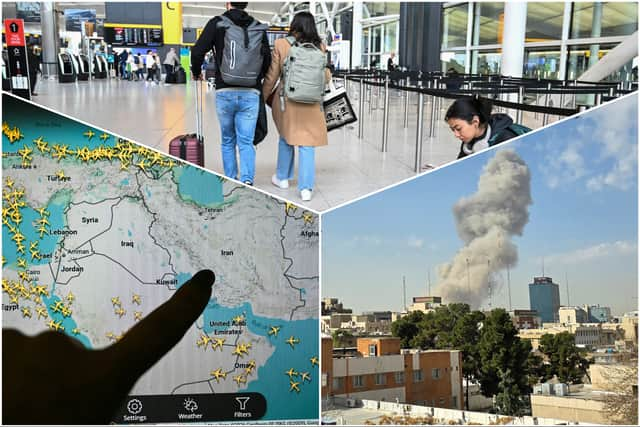

If your flight is cancelled, are you entitled to a refund?
In most cases, yes. If an airline cancels your flight, you are legally entitled to a choice between a full refund of the unused portion of your ticket, or an alternative flight to your destination at the earliest opportunity, or rebooking at a later date that suits you.
This applies even when cancellations are caused by extraordinary circumstances such as war or airspace closures. While airlines may not owe compensation for disruption linked to conflict, they must still offer a refund or rerouting.
To claim a refund:
- Log into your booking via the airline’s website.
- Look for options labelled “manage booking”, “refund” or “disrupted flights”.
- Follow the airline’s online process – most are prioritising digital requests due to high call volumes.
Airlines such as Emirates and Etihad have already confirmed that affected passengers can request full refunds or rebook on alternative services.
If you booked through a travel agent or an online travel platform, you may need to contact them directly rather than the airline.
What if you booked a package holiday?
Your rights are often stronger if you booked a package holiday (for example, flights and hotel together) through a UK tour operator.
If the FCDO advises against travel to your destination, your provider will usually cancel the trip and offer a full refund within 14 days, or the option to transfer to another destination or later date.
If the trip is cancelled because flights are no longer operating, similar protections apply under package travel regulations.
If your holiday company collapses, you may be protected under the ATOL scheme, overseen by the Civil Aviation Authority.
Will airlines arrange alternative travel?
Airlines are required to offer rerouting, but practical options may be limited while airspace remains closed.
Some carriers are rerouting flights to avoid affected areas, while others are suspending services entirely until authorities confirm it is safe to resume.
If you are already abroad and stranded, your airline must provide care and assistance, which can include hotel accommodation and meals while you wait for a new flight. Keep receipts for reasonable expenses, as you may be able to reclaim them.
The FCDO has said more than 100,000 British nationals have registered their presence in the region, and officials are reportedly working on evacuation plans, should the situation worsen.
Is it safe to travel to the Middle East?
Travel advice is changing rapidly, but the FCDO currently advises against all travel to Israel and Palestine.
British nationals in countries including Bahrain, Qatar and the United Arab Emirates have been urged to follow local authority instructions, stay indoors where advised and monitor official updates.
If you choose to travel against FCDO advice, your travel insurance may be invalidated, and many policies will not cover trips to destinations where the Government has advised against travel.
Even in countries not subject to a blanket warning, disruption is widespread. Airspace closures can happen with little notice, and return flights may be cancelled at short notice.
Before travelling, you should:
- Check the latest FCDO travel advice online.
- Confirm your flight status directly with your airline.
- Ensure your contact details are up to date in your booking.
- Review your travel insurance policy carefully.
If your holiday to the Middle East is cancelled, you are entitled to a refund or an alternative flight, even if the disruption is linked to conflict, and package holiday customers typically have additional protections.
But with airspace closures and official warnings in place, travellers should think carefully before proceeding with any non-essential trip. The situation remains fast-moving, and flexibility, along with close monitoring of official advice, is essential.