
Food prices: UK grocery price inflation slows to lowest rate since April 2025 – what news means for your shop

Food bills are still climbing, but the pace is slowing as supermarkets lean on own-label ranges 🛒
- Grocery price inflation eased to 4% in January, its lowest level since April, offering slight relief for households.
- Prices are still rising, but at a slower pace after years of sharp food price increases
- Shoppers are cutting costs by buying more own-label products and making greater use of promotions
- Spending on discounted items jumped, while sales of full-price groceries barely grew
- Supermarkets are expected to keep pushing value ranges as consumers remain price-conscious
Grocery price rises are finally losing some momentum, and while that doesn’t mean your weekly shop is about to get cheaper, it could signal a turning point for hard-pressed households.
New data shows grocery price inflation eased to 4% in January, its lowest level since April and down from 4.3% in December.
Grocery price inflation measures how quickly the cost of food and household essentials in supermarkets is rising over time. When it’s high, shoppers see prices going up faster. When it eases, prices are still rising, but at a slower pace.
After years of sharp food price increases, even a small slowdown offers a bit of breathing room for shoppers trying to reset their budgets at the start of the year.
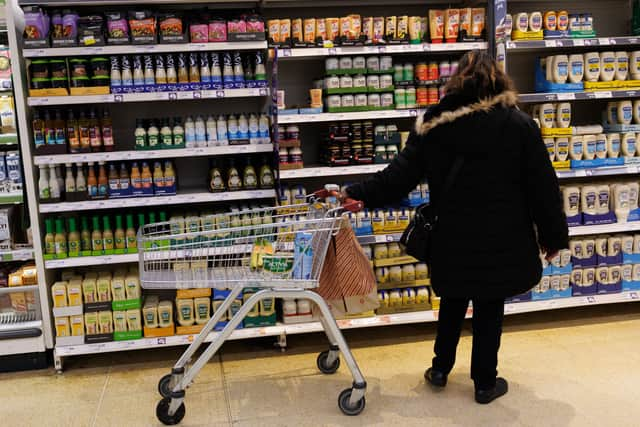

Why is inflation easing?
According to market research firm Worldpanel by Numerator, shoppers are leaning harder than ever into value products.
Supermarket own-label products accounted for a record 52.2% of grocery spending in January, meaning more than half of all food bought came from retailers’ cheaper ranges.
Promotions are also doing a lot of the heavy lifting. Spending on discounted items jumped 10.9% year on year, the fastest growth since October, while sales of full-price products rose by just 1.7%.
That means that people are still buying food, but they’re working much harder to keep costs down.
Worldpanel’s Fraser McKevitt said January is traditionally about tightening belts, and this year was no different. Inflation may be easing, but “value remained front of mind for many”.
Interestingly, many shoppers are still willing to spend more on food linked to health and wellbeing.
Almost a quarter of shoppers looked for high-protein foods in January, while sales of cottage cheese surged 50% year on year. Fresh fruit, pulses, fish and yoghurt also saw solid growth.
“Functional” drinks (marketed for energy, gut health or mood) were bought by 11% of households, despite costing nearly four times as much as standard soft drinks.
That suggests some consumers are cutting back elsewhere to prioritise perceived wellness benefits.
What does it mean for shoppers and shelf prices?
For the average consumer, lower inflation doesn’t mean prices are falling, it means they’re rising more slowly.
Many everyday items will still cost more than they did a year or two ago, but the pace of increases is cooling.
Shoppers can expect supermarkets to keep pushing own-label ranges and promotions, as that’s where demand is strongest.
If inflation continues to ease over the coming months, price rises on staples may become less frequent and less severe, even if outright price cuts remain rare.