
New driveway rule change: planning rule update could save UK EV drivers over £1,000 a year - what's different?

A small change buried in planning rules could make owning these cars simpler, cheaper and far less of a hassle ⚡
- A new planning rule means homeowners can install an EV charger without council permission
- The change could help drivers save up to £1,100 a year on motoring costs
- Home charging is far cheaper than using petrol, diesel or public rapid chargers
- There are still limits on size, placement and property permissions to be aware of
- The rule aims to make switching to an electric car easier for more households
A quiet change to planning rules means thousands of households in Yorkshire could knock more than £1,000 a year off motoring costs.
The change, which came into force last summer, removes one of the biggest headaches facing drivers thinking about switching to an electric car.
Homeowners often had to apply for “householder planning permission” just to fit a single charging point, adding delays, paperwork and uncertainty to an already expensive decision.
But now, households in England can install an electric vehicle (EV) charger on their driveway without any planning permission.
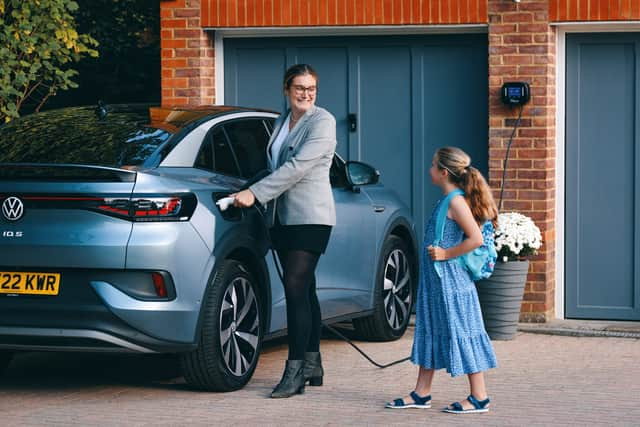

What has changed?
Under the new rules, most people can now install a single EV charging unit at home as a “permitted development”, as long as it is wall-mounted or fixed to a small pedestal.
In practical terms, that means no forms, no planning fees and no waiting weeks or months for a decision from the council.
Why it can save you money
It matters because charging at home is by far the cheapest way to run an electric car. Industry estimates suggest motorists who can charge overnight on a domestic tariff could save up to around £1,100 a year compared with running a petrol or diesel vehicle.
That saving comes from both cheaper electricity and lower maintenance costs, as EVs have fewer moving parts.
The Government hopes the rule change will make electric cars feel like a more realistic option for ordinary households, rather than something only suited to people with workplace charging or easy access to public rapid chargers.
Lewis Gardiner, Operations Director at Osprey Charging Network, described the move as a “hugely welcome and practical change” that removes months of delay and helps get vital charging infrastructure installed more quickly.
The limits you still need to know about
The new freedom does not mean anything goes, and there are still clear limits on what can be installed without permission.
For example, a home charging unit must not exceed 0.2 cubic metres in volume and must be positioned at least two metres away from a public road. These rules are designed to ensure chargers do not obstruct pavements or create safety risks.
Property ownership can also complicate things. Leaseholders may still need consent from a freeholder before installing a charger, and some newer housing developments include restrictive clauses in the title deeds that limit external alterations.
Anyone sharing a driveway with a neighbour could also face practical or legal difficulties if agreement cannot be reached.
Despite these caveats, the rule change affects the vast majority of traditional houses with private driveways, and removes one of the last bureaucratic barriers to home charging.
Electric car ownership is rising fast. There are now around 1.75 million fully electric vehicles on UK roads, and demand continues to grow.
According to the Society of Motor Manufacturers and Traders, tens of thousands of new electric cars were sold in 2025, with registrations up on the previous year.