
UK fuel prices: local British energy bills may rise 10% amid Iran tensions as gas prices climb - should I fix?

This article contains affiliate links. We may earn a small commission on items purchased through this article, but that does not affect our editorial judgement.
Global tensions are rippling through energy markets, and experts warn households could feel the impact ⚡
- Analysts forecast the energy price cap could rise by 10% from July, pushing typical bills to about £1,801 a year
- The increase is linked to rising global gas prices amid escalating conflict in the Middle East
- Damage to energy infrastructure and threats to the Strait of Hormuz shipping route have heightened market volatility
- Experts warn the UK remains highly exposed to international gas markets, meaning global events can quickly affect bills
- Campaigners say another price rise could add pressure to households already struggling with energy debt
Households across Yorkshire could face a significant jump in energy bills this summer, with analysts forecasting a 10% rise from July amid surging global gas prices.
Experts at Cornwall Insight have warned that the cost of the typical dual fuel household, which covers both gas and electricity, could reach £1,801 a year for the July to September period.
That would be an increase of around £160 compared with the April price cap, which was set at £1,641.
The increase, Cornwall Insight said, is largely driven by volatility in international energy markets, particularly amid escalating tensions in the Middle East.
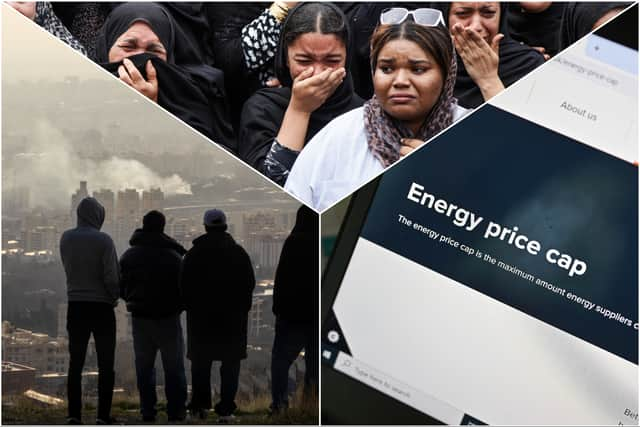

Why is the Middle East conflict affecting UK energy prices?
Following US and Israeli missile strikes on Iran, retaliatory attacks have damaged oil and gas infrastructure across key Gulf states.
QatarEnergy, for example, has temporarily paused production at several liquified natural gas (LNG) facilities, while Iran has issued warnings to ships not to use the Strait of Hormuz, a critical shipping route for about 20% of the world’s oil and gas.
While the UK does not rely heavily on Qatari LNG, disruptions in the Gulf are expected to intensify global competition for energy supplies, pushing prices higher.
The knock-on effect is that European and UK consumers feel the impact, even if direct supply from the region is limited.
How do wholesale prices affect my energy bill?
Dr Craig Lowrey, principal consultant at Cornwall Insight, said: “This latest forecast puts the role of wholesale markets firmly back in the spotlight and illustrates how exposed UK households remain to international market movements.
“Events like this reinforce the case for greater home-grown renewable generation. Reducing the UK’s reliance on volatile global gas markets is the most durable way to protect households from future price shocks.”
The price cap itself, set by energy regulator Ofgem, is calculated using average wholesale prices over a three-month period.
That means the final figure for July to September will depend on how long prices remain elevated, rather than reacting solely to the current spike.
Ofgem chief executive Jonathan Brearley told MPs this week that while households should not panic, global events remain a key factor for domestic energy costs.
“Clearly, as we saw in the Russia Ukraine conflict, our gas supply cannot be separated from global events,” he said. “In the short term until the end of June, customers will be on fixed tariffs or protected by the price cap.
“Although we remain at the early stages of this conflict, if the Strait of Hormuz remains closed for a prolonged period of time it is likely this will create significant upward pressure on prices that customers will pay for their gas and electricity.”
How will rising energy bills affect Yorkshire families?
For Yorkshire families, the news comes at a particularly challenging time.
Simon Francis, coordinator of the End Fuel Poverty Coalition, warned that any price increase could undo modest savings delivered by recent government measures and add further strain to households already struggling with energy debt.
“The price cap may smooth out sudden spikes, but as long as the system remains tied to volatile global gas markets, households will continue to feel the impact of every international shock,” he said.
Government officials have also cautioned that short-term wholesale price movements are not always reliable indicators of what bills will actually be.
A spokesperson for the Department for Energy Security and Net Zero said: “The price cap is fixed until the end of June and energy bills for households will go down for its three-month duration thanks to government action.
“The only way to protect ourselves from these price spikes is to get off the rollercoaster of fossil fuel markets.”
What can households do to protect themselves?
While the July to September price cap could see a noticeable increase, the precise impact will depend on how global energy markets evolve over the next few months.
In practical terms, households may want to consider reviewing their energy usage, comparing tariffs, or exploring government-backed schemes that support switching to low-carbon energy solutions.
As global events continue to unfold, the coming months could see further volatility, but energy experts stress that informed household planning remains the best defence against sudden shocks in the market.

Want 500 real Lotto lines for just £9? This exclusive deal from You Play We Play lets new customers join a managed National Lottery syndicate and play 500 lines across Wednesday and Saturday draws – all for 70% less than the usual price. You’ll be part of a 50-person group, sharing any winnings fairly while massively boosting your chances. And yes – these are official Lotto tickets, not bets, so every line supports UK good causes.