
2025 Budget: when is the next 2025 UK Autumn budget, new November day date - predictions and what to expect

The next Budget could decide whether growth lasts, or household costs keep climbing 📉
- The Autumn Budget will take place on Wednesday, November 26, 2025
- Rachel Reeves faces a £50bn fiscal gap, with tough choices on tax and spending ahead
- The IMF says the UK will be the G7’s second-fastest-growing economy next year, behind the US
- But Britain is also forecast to have the highest inflation in the G7 through 2025–26
- Reeves is expected to focus on growth-boosting investment and planning reforms in her Budget
The UK may be on course to outpace most other advanced economies in 2025 – but the picture is far from rosy.
According to new forecasts from the International Monetary Fund (IMF), Britain will be the second-fastest-growing economy in the G7 - the group of the world’s seven largest advanced economies - behind only the United States.
Yet, at the same time, it’s set to endure the highest inflation of any major Western nation.
That uneasy balance of growth without comfort sets the scene for Chancellor Rachel Reeves’ next Budget later this year, one that’s expected to come with difficult decisions on both tax and spending.
But when exactly can we expect that Budget announcement, and what might be included within it? Here is everything you need to know...
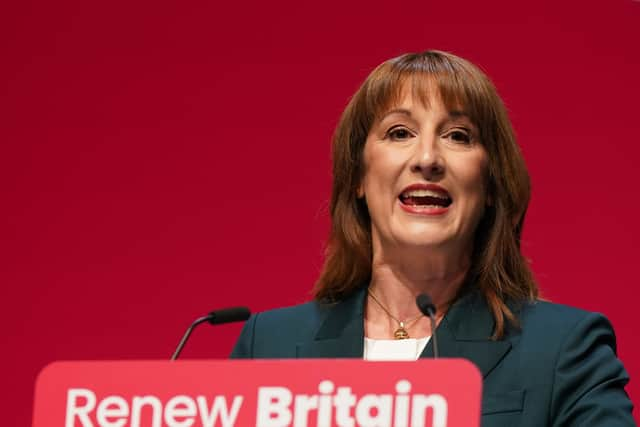

What is Rachel Reeves facing?
Reeves has already acknowledged that her November Budget will have to tackle a £50 billion fiscal black hole, fuelled by sluggish productivity, stubborn inflation, and rising borrowing costs.
Speaking ahead of a trip to Washington for the IMF’s annual meeting, she said she would “not duck those challenges,” adding that the numbers “will always add up with me as Chancellor.”
The Chancellor blamed the shortfall partly on what she described as the “lingering impact” of Brexit, austerity, and the financial fallout from Liz Truss’s 2022 mini-budget.
She said the Office for Budget Responsibility has “consistently overestimated” the UK’s productivity, meaning future forecasts are likely to be revised down, tightening the squeeze further.
“Already, people thought that the UK economy would be 4% smaller because of Brexit,” Reeves said.
“Now, of course, we are undoing some of that damage through trade deals with the US, India, and most importantly with the EU. But there is no doubting that the impact of Brexit is severe and long lasting.”
How is Britain’s economy performing?
Despite the gloomy backdrop, Britain’s economy has performed better than expected this year, and the IMF has upgraded its 2025 growth forecast to 1.3%, placing it second only to the US among the world’s richest democracies.
That comes after stronger-than-expected activity in the first half of the year, as households and businesses brought forward spending before new tariffs kicked in.
But the same report warned that inflation, which hit 3.8% in July and August, will remain the highest in the G7 in both 2025 and 2026, averaging 3.4% next year before falling slightly to 2.5% in 2026.
The IMF said rising food and hospitality prices were major contributors, alongside higher labour and tax costs. Water bills and rail fare increases were also cited as “temporary factors” pushing up prices.
While that may sound manageable compared to the double-digit inflation of recent years, it still leaves UK households facing higher costs for longer, especially with energy bills and mortgage rates stubbornly high.
When is the Autumn Budget - and what to expect
With the IMF’s forecasts offering both encouragement and alarm, all eyes now turn to Wednesday, November 26, when this year’s Autumn Budget will be delivered.
Reeves faces a tricky balancing act; she has pledged to follow her fiscal rules, meaning the Government must pay for its everyday spending through taxes rather than borrowing - economists say she may need to find £50bn a year by the end of the decade to do so.
That could mean targeted tax rises or spending cuts, though Reeves has not yet confirmed where the axe might fall.
Earlier this year, it was reported that a range of measures were under consideration, including tax changes targeting high-value properties and inheritance.
Options thought to have been discussed include scrapping the capital gains tax exemption for expensive homes, reforming inheritance tax rules, and introducing a national property levy to replace stamp duty on homes worth over £500,000.
Officials were also reportedly exploring a tax on landlords’ rental income, potentially raising around £2 billion.
In terms of personal taxes on everyday earnings and expenses, the Treasury has said it will seek to avoid raising income tax, VAT, or employee National Insurance contributions.
Whatever happens, Reeves has insisted that any measures will be “fully costed”, a reminder of the chaos unleashed by Liz Truss’ unfunded tax cuts in 2022.
The Chancellor is also expected to focus her Budget on unlocking growth through investment, including reforms to planning rules and a renewed push for infrastructure and housing projects.
Are you struggling to make ends meet as costs continue to rise? You can now send your stories to us online via YourWorld at yourworld.net/submit. It's free to use and, once checked, your story will appear on our website and, space allowing, in our newspapers.