
‘I helped bring the Royal Armouries to Leeds - there was a sense we couldn’t do it’

The Royal Armouries is celebrating 30 years in Leeds - Laura Reid looks back at the controversial decision which saw some of the Tower’s treasures brought to the city
It was a bold move, taking the headquarters of a centuries-old institution out of London and establishing a national museum away from the capital. Some said the team behind the creation of the Royal Armouries in Leeds wouldn’t be able to do it – and some said they shouldn’t.
But three decades ago this year, the museum opened its doors to the public, built not only to display the national collection of arms and armour but also to bring the story of its development to life through combat displays and performances.
Guy Wilson was Master of the Armouries at the time of the £42.5 million project, which saw the museum launch in March 1996 after just over two years of construction.
“We were all exhausted by that point,” he told the Yorkshire Post, 30 years on.
“The creation of an entirely new museum was quite an effort for a relatively small number of people... The only thing that was displayed by Christmas of ‘95 was the Hall of the Steel – all the rest of the displays were put in during those first few months in 1996. Consequently, we spent a lot of late nights and early mornings opening packing cases and putting things into their showcases... So we were pretty tired when the opening came. But it was, of course, an amazing day."
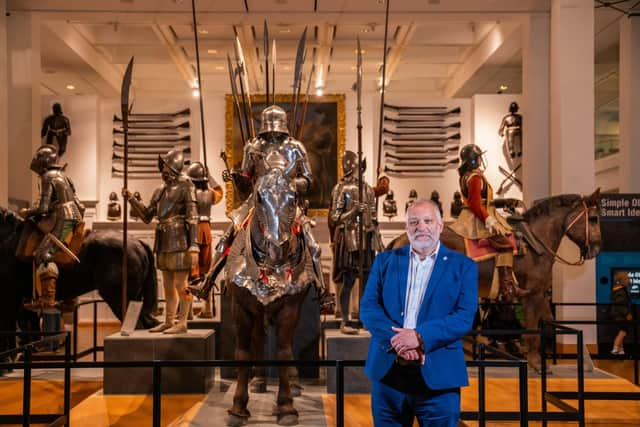

The late Queen Elizabeth II was present at the opening, witnessing the performance of a masque to mark the occasion. Guy, now 76, had to give a speech. “I was advised that, unlike my normal habit of that time, I should have a scripted speech because more seasoned campaigners than I have been known to break down in the emotion of the moment when the Queen was present. We’d all done the best we possibly could, and on behalf of everybody, I was dedicating the museum to our children and our children’s children – so it was emotional. But the only time I came to tears on that day was after the Queen had left and I was just walking around the galleries and chatting to the guests. My family had come, and my eldest son came up to me, and he hugged me and said, ‘Dad, I’m proud of you.’ That was it. I was gone.”
The opening that day had been a culmination of many years of work to provide the National Museum of Arms and Armour with a suitable infrastructure to preserve, display and interpret its collections. Even with the foundation of the Museum of Artillery at Fort Nelson in 1987, space remained constrained inside the collections’ original home – the Tower of London.
Guy says: “We couldn’t properly display the Tower-related material (in situ) because there was so much else in our collections. And that developed into everyone recognising that whether they liked it or not, if they were to succeed in doing what they wanted to do, which was really to interest people more in the subject which intrigued them, they couldn’t do it inside the Tower. Instead, we had to create a museum outside the Tower, and that museum had to be large enough to become the new permanent headquarters of the Royal Armouries, with the Tower of London displays becoming an outstation in London. That was a complete change in national museum philosophy.”
“There was a lot of criticism, as you would expect,” continues North Yorkshire-based Guy, who remained Master of the Armouries until 2002. “The oldest museum in the country had always been in the Tower of London – so what on earth were we thinking of taking material away from there out of London to the provinces? There was certainly a sense that we couldn't do it.”
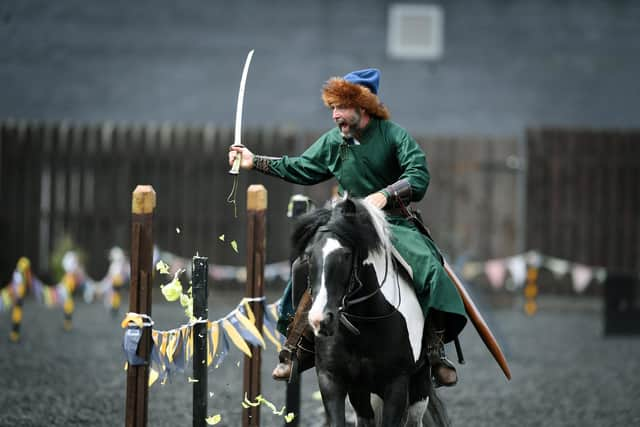
In January 1991, detailed discussions about locating the new museum in the north of England began, and in June that year, Clarence Dock in Leeds was chosen as the site for the new Royal Armouries. A purpose-built building was then designed by architect Derek Walker, with spacious gallery areas created to accommodate the largest weapons in the collections and the development of a tiltyard for jousting. The move to Leeds “allowed us to talk about the collections in different ways, to bring in theatre and jousting and live interpretation”, says current Master of the Armouries and Director General Nat Edwards. “It’s changed the way that we worked in all sorts of wonderful ways. We went from being part of a one-off tourist destination visit at an iconic landmark to somewhere where we have visitors who come back time and again and we have a real relationship with the city.
“A lot of my colleagues in other museums spend a lot of time telling wealthy donors about how important and how beautiful and aesthetically important their collections are to try and get donations,” he continues. “I spend a lot of time working with people to talk about how we use our collections to help achieve social benefits like driving regeneration and jobs or helping to reduce violence in the community or helping with peacebuilding and conflict resolution.”
Over the last three decades, Nat says the museum team has also worked to develop the Armouries’ commercial strand to support its operations. That’s meant business partnerships, event programmes and a conference business which has held the likes of UKREiF and the Great North Investment Summit. “The Armouries is in a good year generating probably about £60m for the local economy, and we’re going to increase that by about a third with our new plans,” Nat claims.
That future vision includes developing the galleries to better reflect today’s world and how the history of conflicts shapes that, making the most of new digital and immersive ways of storytelling, and extending conference and event facilities to the tune of £100m to make better use of the Tiltyard complex. All this is set to be celebrated with an anniversary event later this year, providing a time for reflection.
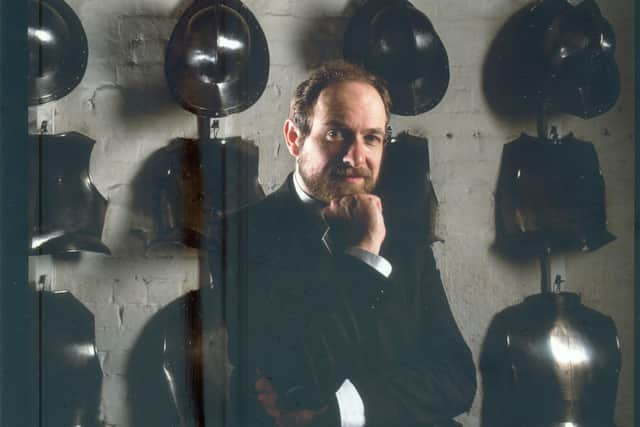
“I’ve worked in museums since 1987,” says Nat, who joined the Armouries in 2022, after a career spanning institutions including the Thackray Museum of Medicine, the British Museum and the Science Museum Group. “And I don’t think I’ve ever really worked in one where the objects in it provide such a direct kind of question and challenge to everybody who comes in. If you look at a sword or a spear or a gun that’s been used, whether it’s in conflict or in hunting or whatever, it immediately puts you in a place where you have to ask yourself, ‘What would I do with this?’ Or ‘How would I behave if this was pointed at me?’.
“It really cuts some very fundamental questions about how we live together as human beings. And a lot of what we do with the Armouries is to try to gently, and sometimes in a very fun way, explore those questions. I think the Armouries’ biggest and most important function is to help people find a way of reconnecting and learn to encounter the other in ways other than violence and fear and suspicion.”
It might be full of guns, knives and weapons that harm, but the Armouries, agrees Guy, provides an important opportunity to learn from a history of conflict and violence. “If you don’t understand man’s propensity to violence and what it has meant for the world and how it has been dealt with, then we are likely to continue repeating it,” Guy says. “It’s about (asking ourselves) why have these weapons and objects in the collections been made? How have they been used? What has been the impact on human beings and animals? And where do we stand on those issues going forwards?”
Visit royalarmouries.org