
How the Caribbean community became the 'spice of Leeds' and continues to empower young people

Leeds would be a markedly different place were it not for the influence its vibrant and passionate Caribbean community has had.
Despite endless battles and obstacles, the community that predominantly settled in Chapeltown since arriving en masse from the 1940s onwards has remained innovate, joyous and determined.
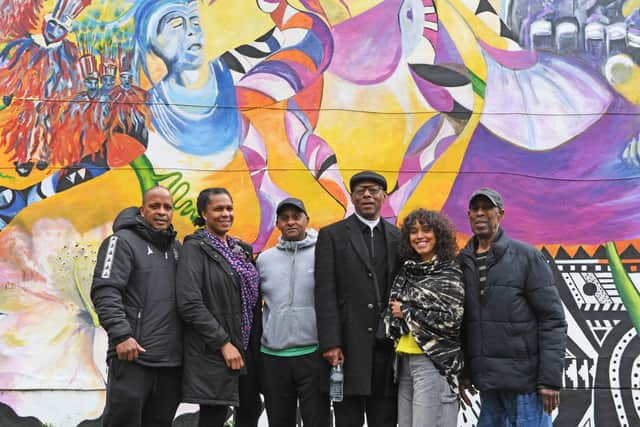

This week we met with key figures as part of our United Leeds campaign, in which we focus week-to-week on a different community and culture that has helped contribute to making the city region the wildly diverse metropolis it is.
Last week we met with members of the Irish community to reflect on how they travelled in hoards to help build the city as we now know it before implanting their culture and influence within The Leeds Irish Centre.
Those from the Caribbean community explained how their hard-earned influence has had a seminal impact on popular culture and the fabric of Leeds; though intrinsic racism, structural obstacles and daily misunderstandings mean that it has never been straight-forward.
Among the 10 people who joined us at the Leeds African and Caribbean Centre in Chapeltown, which opened in 1982, was Arthur France MBE, who was among the first to settle in Leeds after travelling from Nevis and St Kitts as a teenager in 1957.
The now-90-year-old was one of tens of thousands of well-educated and trained people who travelled from the Caribbean to support the country after the Second World War; though they didn’t receive the reception they were promised.
Mr France said: “When we came here English people didn’t know who we were and they took it for granted that because we were black and African that we didn’t know anything. Yet I was very lucky to be born in and go to school in the Caribbeans.
“One of the things that annoyed me was the only thing that was thought of about Africa was it was ‘the dark continent’. And yet when I learned my African history it changed me.”
Bishop Tony Parry from the New Testament Church of God added: “A high proportion of the people who came in the 50s and 60s had disappointing experiences.
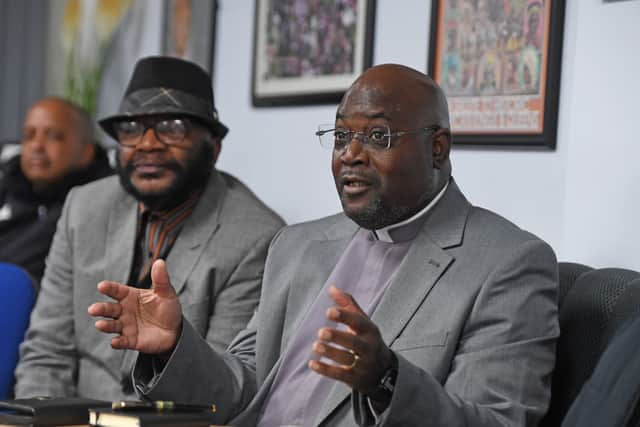
“Many planned to come for five years, get money and then go back home but they got stuck. They found the streets were not paved with gold.
“They came with qualifications based on the British system but despite being professionals back home they weren’t seen that way and had to train again.
“That first generation really invested in their children.”
The Caribbean community settled in Chapeltown, which lifetime resident and fellow community stalwart Claude Hendrickson MBE said has been a “historically transitional area of Leeds” that has seen people of various cultures settle upon arrival.
As the level of discrimination became apparent from all sides, whether in housing, education, policing or even in the churches they attended, they became ever closer intertwined and worked to build institutions and community bodies that would support and elevate them through these difficulties.
Bishop Tony Parry explained that faith was a key element to the community and so the church and other local leaders helped set up alternative education provision and youth clubs to “really empower young people”.
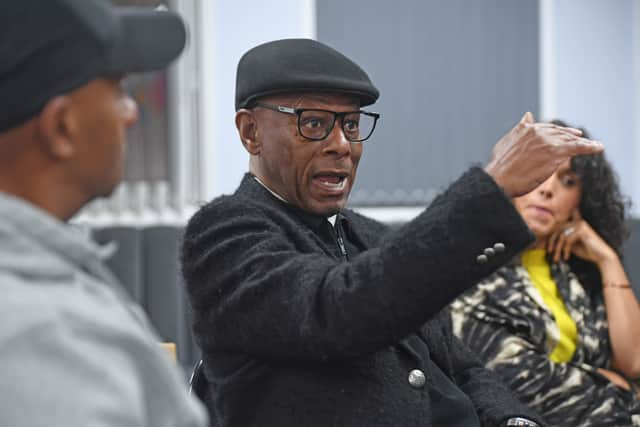
Mr Hendrickson, who became involved in community activism from 14-years-old, was among those to help set up groups to support people with housing and youth development.
He said: “I’m very active now in how we empower the next generation not to make the same mistakes or become fault lined to some of the issues that are still there even after 80s years.
“Our boys are still more likely to get excluded from school and our girls are still in a position where they can be teenage mothers. What’s the meaning of that?”
A distillation of the troubles could be found in the education system, those in attendance stressed, with “hidden exclusions” and communication problems between teachers and parents a reoccurring problem.
But similarly, the community has worked to change the system and “champion education” through influencing the curriculum and ensuring that prominent figures like Gertrude Paul were able to become headteachers.
Mr Hendrickson said: “We’re standing on the shoulders of giants. We started from not being welcome to taking all kinds of different approaches to different situations.”
They’ve also taken a good deal of influence from the more hands-on education system in the Caribbean, where “teachers delivered”.
Sylvester Leader was a late arrival; landing in Leeds in 1980 and working to support young people in education. He said that he worked at a school in the north of Leeds and was suspended “because of what I felt was necessary to do in terms of enhancing the potential”.
He said: “The school felt that I was being demanding.
“I can say now that most of those young men and women have gone on to do great things and whenever they see me, if they’re driving they beep their horns and it makes me feel good.”
A discussion of the impact the Caribbean community has had in the city can’t go by without mentioning Leeds West Indian Carnival, which was launched by Mr France and other community leaders in 1967 to celebrate the heritage and impact of Caribbean culture.
Mr Hendrickson said that all of these elements ensured the Chapeltown community became “the spice of Leeds” in that they “created a feeling of difference and have impacted the city across a number of different themes”.
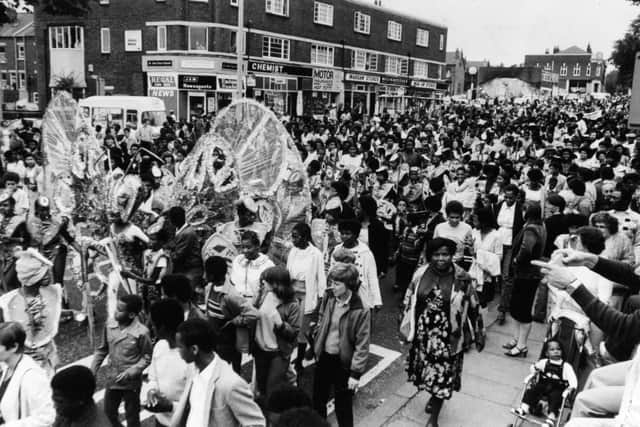
He said: “I think in lots of different things, whether it's across the NHS, youth and community, policing, enterprising business, cultural impact, we have had an impact on the city.”
Mr Hendrickson also highlighted how the community had bounced back in light of the Chapeltown riots of 1975 and 1981 respectively, establishing the Mandela Centre and a community housing project called Unity Housing in response; adding that other cities look to Leeds “in awe” of their accomplishments.
Ezz Witter, who helped develop the Mandela Centre, said that the youth work done in Leeds is “what youth work could and should be about”.
A direct beneficiary of youth work himself from growing up in the area, he added that despite the challenges Chapeltown is a wonderful place to be from.
He said: “Despite all of the oppression, all of that negative stuff, growing up in Chapeltown, especially in the 70s and through the 90s, it was the best place in the world to live in terms of the vibe and how we related to one another and the things we did and the music scene.
“There wasn't a better place to be.”
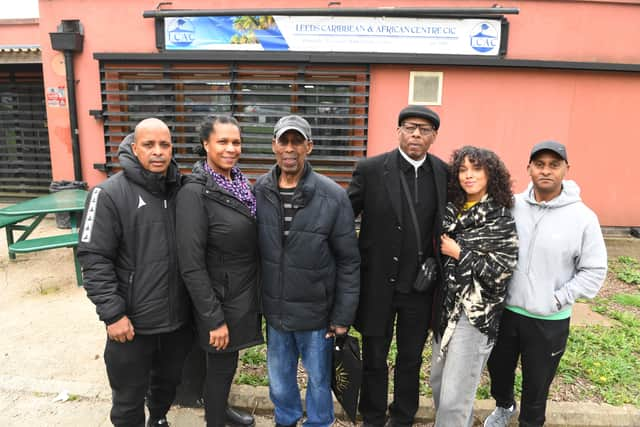
Mr Witter added that to this day the Caribbean and black community’s influence in Leeds and across the country is patently evident, saying: “I believe the impact and the influences on popular culture is probably more significant than any other, and I stand by that 100 per cent.
“If you look at youth culture now - it’s black culture.”
Tony Parry added that there are many success stories within the African Caribbean community, but always with the caveat that they excelled “in spite of” the challenges faced.
“I think there are green shoots opening”, he said. “There are individuals who have really achieved a great deal in our city but when you talk to them they have barriers they had to overcome. It’s not been a level playing field at all.”
Those struggles still persist to this day but there are still groups and figures working to ensure that there are resources and outlets for young people coming through.
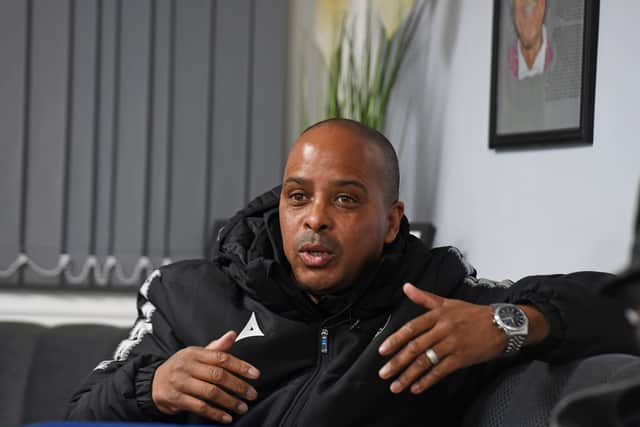
Among them is former footballer Lutel James, who helps run Chapeltown Youth Development Centre. He said that he wants to focus on current solutions to problems like housing, employment and connectivity to ensure young people have a future, saying: “There needs to be less gibbering and more action when it comes to what the community’s going to look like for the next generation. Without it we’re in trouble.
“A lot of the history supports where we are now but it’s not the making of where we’re going in the future. Sometimes I think we get drowned in the past and I don’t think it defines where we are now.”
With divisions and tensions at a high, there was legitimate fear that the historical troubles faced by the community were not likely to let up soon.
Mr Witter said: “I have really serious concerns about the politics of the country currently and I'm sure everybody here will reflect that.
“It feels politically now in 2026 as it did in 1980 and I think we've got some serious battles to fight going forward.
”There’s still many of us that revolted at that time and personally, I'm ready for the battle.”
The famous Maya Angelou quote ‘And still I rise’ was poignantly referenced; summing up how the Caribbean and African community in Leeds has always stood strong and found new ways to persevere in the face of challenges.