
Iconic Pocklington gold panel receives an iconic home
An iconic Anglo-Saxon gold panel found near Pocklington and saved from export by Pocklington District Heritage Trust (PDHT) is going to be housed in an equally iconic showcase.
The tiny piece, dubbed the Pocela Panel after the name of Pocklington’s Anglo-Saxon leader of the same era, will be a prime exhibit when PDHT opens its museum in Burnby Hall.
The trust bought a second-hand display case from Sherburn in Elmet manufacturers, Glasshaus, in readiness for the panel’s arrival; then discovered that their new purchase had added value.
For the past decade the case had housed ‘The Ashes’, the world’s most famous cricket trophy, in the MCC museum at Lord’s cricket ground; and had even had a trip to Australia as part of an Ashes exhibition. PDHT chair, Phil Gilbank, said: “Buying the Pocela Panel was a major coup in itself, especially with competition from other established institutions. And massive thanks are due to the 150 people who made it possible by generously contributing to the crowdfunding. “But meeting the Government's £4,000 valuation was just one part of a demanding process to bring it home to Pocklington. The authorities required a series of reports and agreements, which is almost complete, plus assurances about future public access and that it will be kept in secure museum-grade conditions.
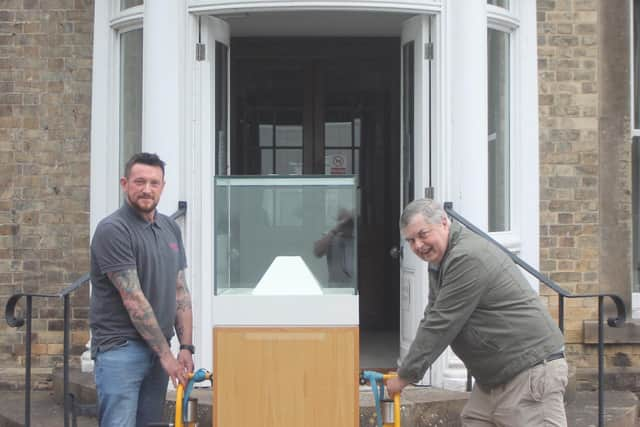

“A new case would probably have cost more than the gold and garnet piece itself, so we were really pleased to hear Glasshaus had an older one available after fitting a replacement, then thrilled to discover it’s unique background.” The Lord’s cricket museum also gave the trust the thumbs up, with MCC media manager Adam Matthews saying: “We’re delighted to hear it has a new lease of life.”
The gold and garnet panel, dated to c600-650AD and discovered by a local metal detectorist in 2013, was acquired by a foreign collector last September.
However, the Government imposed an export bar and appealed for a British buyer after British Museum experts highlighted similarities with Sutton Hoo craftsmanship stating: “The object is of outstanding significance for the study of artistic, political and cultural exchange between different regions and kingdoms in Early Medieval England during a formative period.
“Its rarity makes it significant in itself, but more pertinently, it also raises broader questions about the relationship between two of the most powerful kingdoms in 7th Century England: East Anglia in the east, and Northumbria in the north.”