
'The whole community pulls together': How Armley is redefining its reputation - past, present and future

Although it gets a ‘rep’ for being considered one of Leeds’ roughest areas, as local Benjamin Jackson explains, there’s an awful lot of community spirit going on despite the headlines.
I was born in the North West. When I moved to New Zealand lived in West Auckland, and then coming back to Yorkshire, I moved to West Leeds.
I think it might be something about the point on the compass, or maybe it was because, despite being born on ‘the wrong side of the Pennines’ (all loving banter, I can assure you) all my family are Yorkshire born.
But the moment my wife and I found a place in LS12, faces dropped in shock and horror.
Cries of “don’t move there” and “I’ll pay you money not to move there, please” followed, and admittedly, at the time, it had a ‘rough’ charm to it, I could only fathom that the issue might be that it didn’t have a Marks and Spencer’s, or a Little Waitrose.
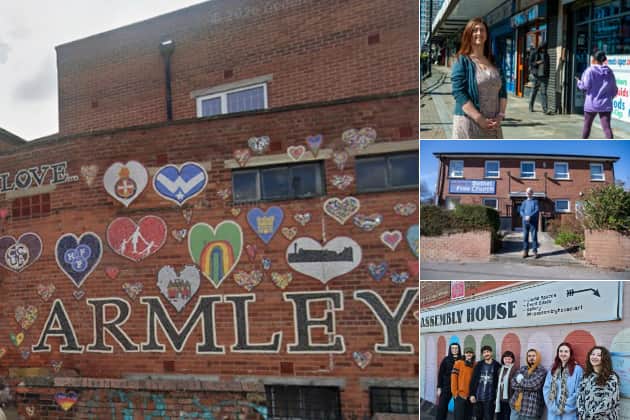

Be that as it may, though, many moons have passed, and my first home also happens to be in LS12; so I guess for as much flak that Armley and New Wortley get, this is my home now.
A home I am proud to say has not only a rich history and a bright future, but a sense of community spirit.
Don’t believe me?
Well, it might not be hopping in a DeLorean anytime soon, but come with me as we hark back to the days where Irish railway workers were desperate for a place to pray, while in recent years, a staple of the Leeds music scene now calls the outskirts of the city its home.
Hopefully, by the end of it, I’d have convinced you that LS12 is A-Okay.
The past: “An Avenue for Hope”
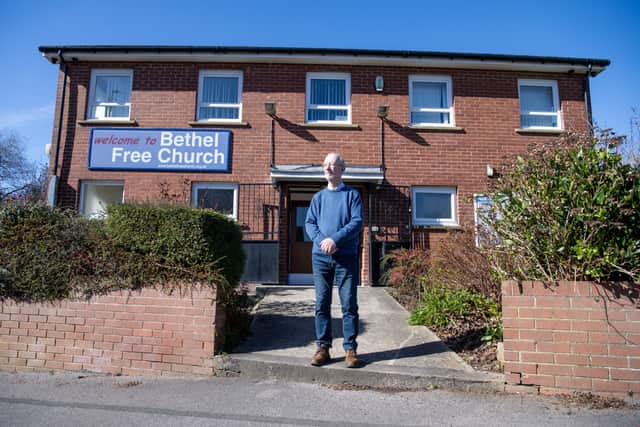
To understand the soul of New Wortley, you have to look at the ground beneath your feet - specifically, the ‘lost’ avenues.
Before the 1970s, the area between Green Lane and the current Bethel Free Church was a dense labyrinth of 10th, 11th, 12th, and the unusually numbered 13th and 14th Avenues; these were tight-knit rows of back-to-back terrace houses built in the mid-1880s for the lifeblood of the city: the railway workers.
"What shook me was that some people were still living in what appeared to be lean-to temporary sheds after the war, even into the 1960s," says Mike Donoghue, the Elder Pastor at Bethel Free Church.
Mike has been the ‘caretaker’ of this corner of LS12 since 2005, but the church’s roots go back much further, to a 1893 mission built for men who didn't quite "fit" elsewhere.
At the time, the Victorian gentry in their ‘Sunday clobber’ weren't always welcoming to the soot-stained railway men who worked gruelling shifts.
That’s why Bethel Free Church was founded on a simple, radical principle that Mike maintains today: "Come when you can, go when you must."
"The first trustees were auctioneers, solicitors, and a railway worker," Mike explains. "I think that’s a wonderful testament to why it was built. It was built so that railway workers would have a place of worship."
Today, the "soot" might be gone, but the shift-work struggle remains.
Mike describes a modern congregation of zero-hour contract workers and care workers - many from the local African community - who arrive at the church doors straight from 4am cleaning shifts.
But it hasn’t always been easy; 10 years ago, the church nearly closed.
The congregation had dwindled to six people, and the building was a target for local youth; Mike still points out the scorched marks on a back door where rags were pushed through and set alight.
But instead of bolting the doors, they prayed for "workers" - and they stayed.
"Our primary aim here is to bring hope to people’s lives," Mike says.
"Areas like this are constantly being denuded of the talent that is required because people move away for better schools. My heart’s desire is for this place to stay open for the next generation."
The Present: “The community that pulls together despite all the other issues”
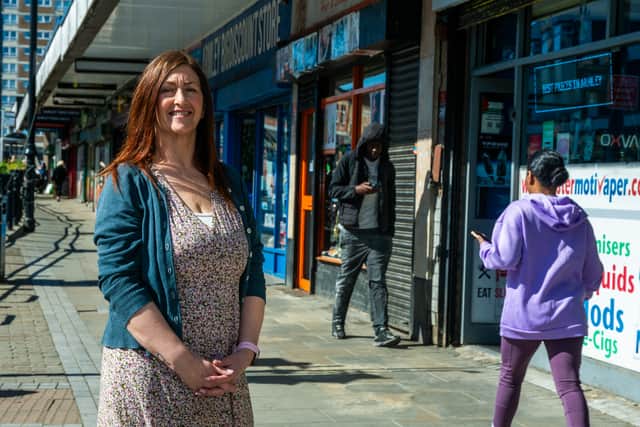
The old railway avenues might be gone, but they haven’t been left empty.
If you stand outside Armley Library today, the 'rough' reputation that has dogged LS12 for decades starts to feel like a dated caricature.
While moving from one part of LS12 to another, I saw it first-hand: the streets aren't emptying; they are filling up, with an influx of new multi-cultural families moving in and local schools buzzing at 3pm, the narrative has shifted from ‘survival’ to belonging.
It’s a sentiment that Councillor Lou Cunningham also agrees with.
We sat in Leon's on Town Street for a mug of coffee - a spot that serves as a perfect vantage point for the midday hum Lou describes as the real metric of the area’s health.
"Today is a midweek day, and there are so many people around of all different ages," Lou notes. Having navigated a high street where she is still simply 'Lou' to the families she’s known for decades, she gestures to the lively scene outside.
"I’ve been in the library earlier, and there were lots of different families in there using the library as the access point for information... it’s just really lively. It’s really nice to see so many people out and about."
However, Lou is under no illusions about the neighbourhood’s external image.
"It would be sugar-coating it to say we don’t have any of the issues people talk about," she admits, noting that concerns regarding anti-social behaviour and the safety of the high street are real.
Yet, for Lou, the headline isn't the problem - it's the response.
"The difference where Armley is concerned is that the community pulls together despite all the other issues that are going on,” she explains.
Instead of focusing on the negatives, she points to a "host of things" driven by the residents themselves.
From volunteer litter-picking and the preservation of green spaces to groups dedicated to combating loneliness, the energy is almost entirely community-led.
"Most of it is community-led and community-driven," she says.
This resilience is manifesting in a neighbourhood that is effectively "future-proofing" itself; from the arrival of the Leeds Baby Bank on Wellington Street, providing a vital lifeline for the ward's newest residents, to the ‘zero-to-over-a-hundred’ support network offered by the New Wortley Community Centre and Armley Helping Hands, the infrastructure of care is solid.
"We are seeing that many families are moving into some of the flats and tower blocks," Lou explains, emphasising the need to create space where children can "grow and flourish".
But the growth isn't just social; it's industrial and artistic.
Lou notes that the area is increasingly a magnet for "creative people," citing the presence of local musicians and the "amazing" work of the Assembly House collective.
It is this specific brand of creativity (the kind that doesn't work in solitude but becomes "enmeshed in the rest of the community") that is defining the next chapter of LS12.
As the focus moves from the high street to the repurposed industrial engine rooms nearby, it becomes clear that Armley isn't just a place where artists live; it's where the future of Leeds is being built.
The Future: “Art - and Armley - is for everyone”
Following Lou’s lead on the neighbourhood’s "creative pull," the road leads naturally to Assembly House, a former textile mill turned artistic engine room that proves Armley isn't just a place where artists live; it's where they build.
Inside, the space is a "cocoon" of activity. What was once an empty, dusty warehouse with no running water and broken windows has been transformed over the last twelve years into one of the largest independent studio spaces in Leeds.
Today, it houses around 65 artists ranging from recent graduates to retirees taking a "scary leap" into a second career, and not just in the realms of painting.
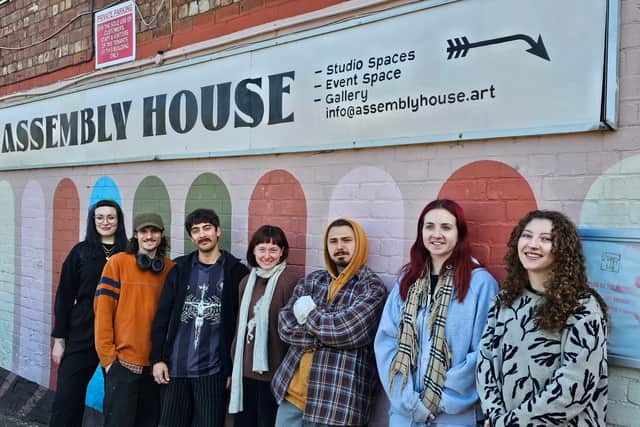
Assembly House is a collection of multiple disciplines, with Director Alice Boulton-Breeze walking me through the catacombs of creativity, showing me spaces that deal with acrylics, woodworking, photography and even a recently inherited space (what once was a Martial Arts centre) where among those that call it home are writers wanting to trade the comforts of home for a community environment.
"Often, those areas that can sometimes be painted with a bad rep. What you find when you join them is that they actually have a stronger sense of community," explains marketing coordinator Kai Brooks.
For Kai, the studio has acted as a "myth-busting experience" for LS12. Rather than being an isolated island of gentrification, the collective is "enmeshed" in the ward, spearheading projects like the Armley Sculpture Trail.
Alice, who also grew up in the area, sees this as a vital homecoming for Armley’s identity: "I want people to feel really proud that where they live has an art gallery," she says, noting that the area is flourishing because residents seem "more organised" in their pursuit of community pride.
That pride is visible in the plans for a new community garden and the diligent work of Archie Brooks, whom I caught mid-task assembling 20 brand-new studio spaces, ensuring lowered walls to befit the sharing of ideas among the space’s denizens.
The expansion is being handled with particular regard to the space not being closed off, ensuring there is still that community feeling of idea-sharing, no matter what experiences you may have in the art world.
As producer Beth Waite explains, the collective is open to basically all art forms, of all entry levels (not just those holding university degrees) and aims to offer a community where everyone can collaborate or ask for advice.
"The whole organisation is the community," Beth emphasises.
By moving away from "stuffy" gallery tropes and focusing on accessible engagement, Assembly House ensures that no one is judged for their level of understanding.
“So art is for everyone, and so is Armley,” I suggested to Alice as we wrapped up our tour.
“Exactly,” she responded.
Is LS12 A-Okay?
Armley and New Wortley may have originally been defined by grit, but is now being refined by the hands working to polish it.
You find it in Mike’s mission at Bethel, where hope is a literal "Avenue."
You see it in Lou Cunningham’s tirelessness, measuring the neighbourhood’s heartbeat by the buzz of the library, and you feel it in the high-ceilinged studios of Assembly House, where industrial bones now support a creative future.
The "rough" charm hasn't vanished, but instead it has been revealed as resilience.
Armley doesn't need a Waitrose; it has a community that refuses to be "denuded of its talent" and instead chooses to stay, build, and belong.
So, is LS12 A-Okay?
If you look past the caricatures and into the catacombs of creativity or the sanctuary of the Fourteenth Avenue pews, the answer is clear; this isn’t just a point on a compass or a place to "get by."
It is a home to be proud of. And as Alice said, art - and a bright future - is for everyone here.
It is also what I am proud to continue to call my home.
In our weekly In Your Corner series, we’re visiting suburbs across the city to explore the issues that matter to you. From a litter picking army in Pudsey to the community garden changing lives in Horsforth, we’re shining a spotlight on the people of Leeds who bring every corner of our city together.