
Support Dogs could inspire Japan’s first autism assistance dogs
A trailblazer of the assistance animal world could use the Support Dogs charity’s pioneering work as the blueprint to introduce autism assistance dogs to Japan.
Sam Tawada, a respected figure in the global Guide Dogs movement, visited the Sheffield-based Support Dogs headquarters on a fact-finding mission to help inform him on how he might set up Japan’s first certified autism assistance dogs provision.
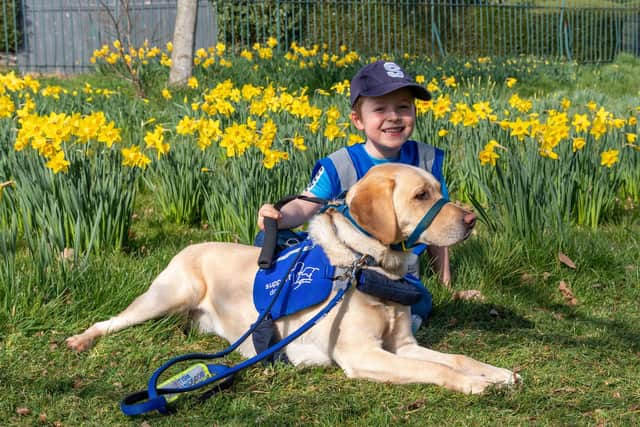
Ground-breaking Support Dogs, founded in 1992, trained the UK’s first-ever autism assistance dog in 2008. The dogs are taught to provide safety for autistic children and to reduce stress in social environments and support them through developmental stages as they grow.
Sam is senior co-ordinator with the Japan Guide Dog Association, having started as an apprentice 51 years ago.

He said he is an ‘honorary grandfather’ to two autistic children - one of whom lives in Canada and has had their life changed by an autism assistance dog - and it inspired him to want to establish a similar scheme in Japan.
But Sam said “legislation” and “culture” have been obstacles to something being set up there previously.
However, he gained an invaluable insight into how things are done at Support Dogs, learning about the charity’s life-changing pooches.
As well as meeting the charity’s training manager Katie Burns and trainers Joe Dickinson and Emily High, along with dogs Ellis and Sascha, he also spoke with clients, Vicki Whitbread, whose daughter Scarlette has benefitted from the help of support dogIvanhoe, and Paul Fletcher, whose son Thomas is thriving thanks to support dog Marky.
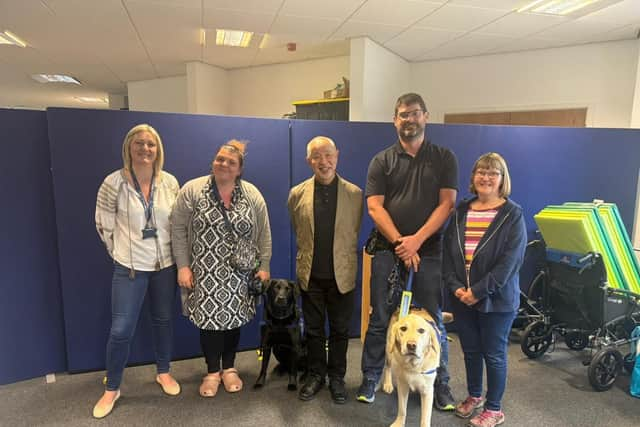
“There’s no information at all in Japan because there are no autism support dogs,” said Sam, who is based in Yokohama City. “Japanese culture is quite different regarding disability - it’s quite hard to accept.”
Sam added: “This was a great opportunity to meet with families in the real world.
“The most impressive answer I got was when I asked how long it took to see a change in the child once the dog came. The answer was ‘immediately’.”
Vicki, of Hackenthorpe, Sheffield, described support dog Ivanhoe as “like a co-parent” to 11-year-old Scarlette, while Paul, of South Anston told Sam how Marky helped Thomas to walk safely while out and about, and also “broke down barriers” while playing with younger brother William.
A large-scale 2020 study in Yokohama found autism spectrum disorder (ASD) prevalence among children aged five to eight at 3.1%, aligning with global trends. This rise is largely put down to expanded diagnostic criteria and better recognition by healthcare professionals and educators.
Rita Howson, chief executive of Support Dogs, said: “It was a pleasure and an honour to welcome Sam and Helen to our training centre. We hope Sam found his visit very useful and wish him the best of luck in establishing an autism assistance dogs programme in Japan – something that is very much-needed, now that attitudes appear to be changing.”
As well as autism assistance dogs, Support Dogs also trains and provides specialist epilepsy seizure alert dogs and disability assistance dogs for people with mobility problems.
To find out more about Support Dogs, please visit supportdogs.org.uk or call 0114 2617800.