
'Honest is the word': How the Leeds Irish Centre left its mark on community and welcomed others to city

If you’re going to talk about the cultural impact the Irish have had on Leeds, there’s only one place to go.
The Leeds Irish Centre was the first purpose built centre of its kind in the UK when it opened in 1970 and has been the beating heart of the community since.
As part of our United Leeds campaign, we met with key figures from the Leeds Irish contingent to discuss their history and relationship to the city, as well as the challenges they’ve faced.
In this part, we look at how the Irish culture - embedded in the centre - has helped shape the city and how the Irish community has embraced and interacted with those from other backgrounds who have made Leeds their home.
Those we spoke to included Tom McLoughlin MBE, who has been the manager of the centre for 50 years and become affectionately known as the “father of the Irish community”.
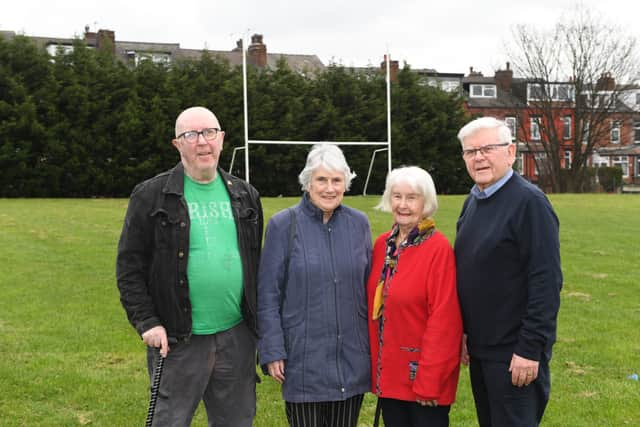

Tom greeted me at the centre with a warm and typically Irish reception; ribbing me for my unkempt hair (”did you not want to get a cut for our big meeting?”) before bantering with staff and customers to his heart’s content.
‘Your family from home’
He explained that throughout the 1800s and 1900s there was a close comradery between the Irish workers who had come to work in and help build the city and that pubs were established for them to socialise and support each other.
A former construction worker himself of 20 years, Tom said: “You could be working with guys all week and then on Saturday night you would still go out because you would create this friendship.”
Archivist Christine Byrne added: “They were your community. Your family from home. Whatever part of Ireland you were from, whether the north or the south, there was no difference.”
Tom said: “A lot of them were in lodgings so the landlady wouldn’t want them sitting around. So they would be in the local pub, and that’s why you had them around Harehills and Sheepscar. But they’re all gone now.”
Leeds Irish Centre is born
He explained that one of the Irish Community’s main hubs was in a small upstairs room on Briggate, where a committee first conceived plans for their own centre in Leeds.
Tom, who was a member from 1960, said: “I remember seeing these plans up on the wall of this place and thinking ‘that will never happen’. But it did because you had the right people on the committee.”
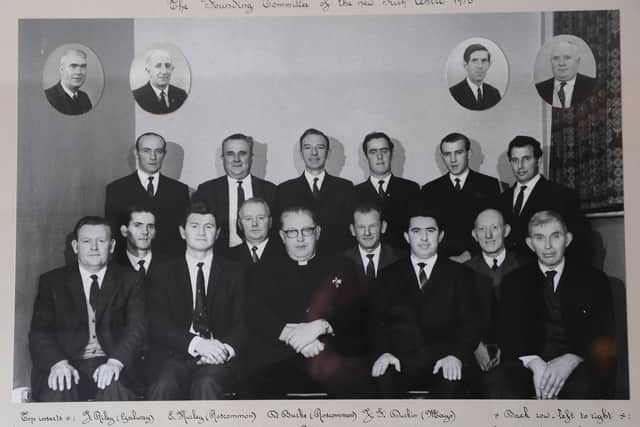
The committee was offered the three acres by York Road “where nobody lived” and took the decision to set up in the “isolated area”.
“It was the best thing they ever did”, said Tom. “At that time the Irish in Leeds was huge. The building of the motorways brought lots of them.”
The Leeds Irish Centre officially opened in June 1970. Tom remembers: “The place was absolutely ram packed.”
Tom takes over
Tom joined as part-time MC before taking over as the manager in 1975. He explained that the centre had an all-day license at the time and so was one of the busiest venues in the city, and also one of the rowdiest.
He pushed to change the license, which resulted in a huge drop of footfall but transformed the centre into the community hub that it has since been known, as well as building closer ties with the authorities and wider city. He said: “We didn’t want people to think this was just a drinking place.”
He arranged for a float on the Lord Mayor’s parade in 1978, saying: “I remember the calls we got from some of the older Irish people who were so moved. That was the start of us getting involved with the city.”
The centre later worked with the council to host an annual St Patrick’s Day Parade from 2000 and holds countless social and community events. Under Tom’s 50 years at the helm, it has raised £5m for charity.
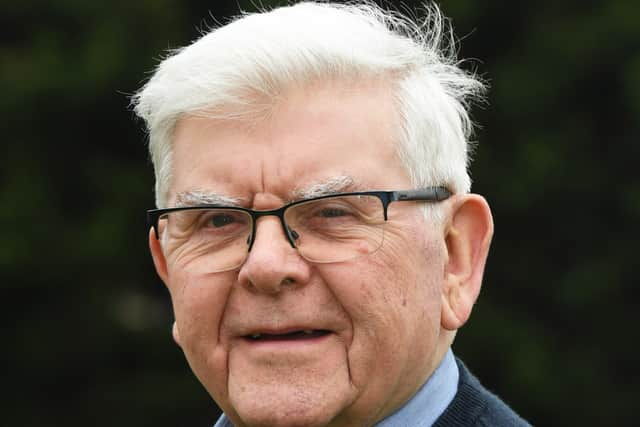
Tom said that there is a close relationship with the local residents and wider Leeds community, saying: “We’ve had to gain that respect. It’s taken years.
“I think ‘honest’ is the word. I had one thing in mind and that was to get the place up and running.”
Co-coordinator Bernard McGrath said: “It’s not an idle boast. It’s the premier Irish centre in the UK.”
The centre has been a haven for the local and wider Irish community, who can always expect a friendly welcome.
Tom said: “When you get strangers coming in from Ireland it’s always good to make a point to chat because you do not know who you’re talking to.
“There was one night in particular when a crowd over from Mayo were playing football and I just went on stage rabbiting on and I said my Godparents came from Castlebar but you won’t know them. Their grandson was in the audience. I couldn’t believe it.”
Sporting prowess
Christine added that the Irish community in Leeds also thrived from creating many local sporting teams in the 1950s.
The Gaelic football pitch to the back of the Leeds Irish Centre is home to one of England’s best teams and the centre has hosted many local sporting greats.
Among them was the former Ireland National Team manager and Leeds United legend Jack Charlton, who often popped in for a Guinness and spoke at a contractor’s meeting that “went down a storm”.
“The Irish absolutely loved him”, said Tom.
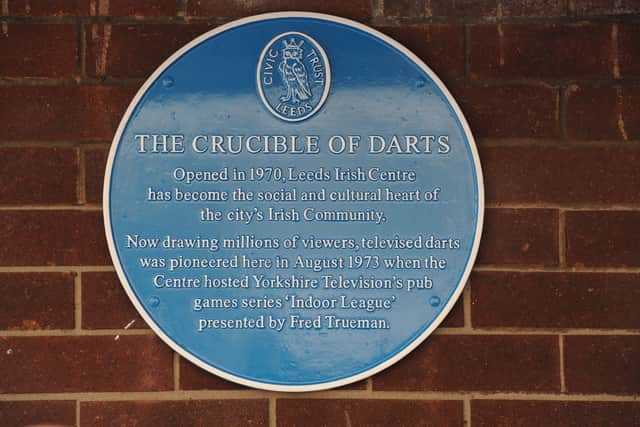
What’s more is that the centre hosted the first televised darts match in 1973, for which a blue plaque stands proudly out front.
Entertainment
To this day the centre and wider Irish community provides groups for singing, dancing and community events, helping nurture talent from Leeds.
The bustling atmosphere and frequent DJ nights provided the perfect ground for the development of future broadcasting giants Chris Moyles and Gabby Logan, whose families visited regularly.
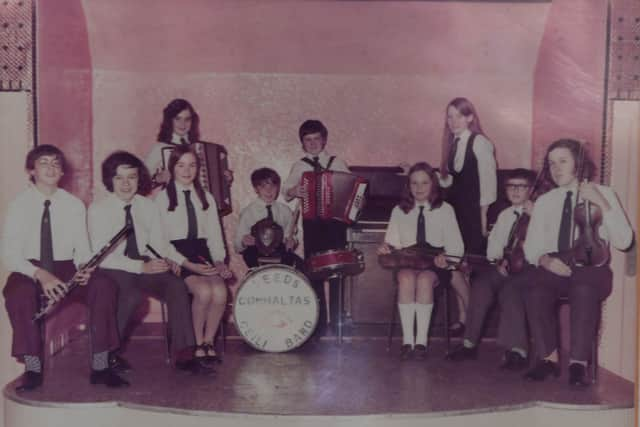
The venue has held countless concerts over the years from traditional Irish acts and more popular bands, with a pre-fame Oasis show in 1994 having gone down in folklore.
To this day the centre hosts shows from modern acts in conjunction with the Brudenell Social Club, brought about as the ability to showcase traditional Irish performers dwindled.
Tom said: “You could tell just before Covid that it was on its way and the people of a certain age weren’t there. So we had to turn over to gigs.
“There isn’t as many showbands coming over and if they are they’d rather play in the theatre and that’s the way it’s gone.
“But the young people in Leeds know now that the Irish Centre is part of the city. And we’re getting more and more a part of it, which is important.”
A warm welcome
The Irish have welcomed other communities and cultures who have migrated to Leeds from the likes of the Carribean, Middle East and India over the years and worked to make them feel welcome.
Christine said: “When you were working, regardless of their nationality you never saw it because you saw them as a person. And I think that’s what you get from the Irish because many in the construction industry worked with a lot of people from the Carribean area and they helped each other out.
“You didn’t see them as being different and I didn’t when I worked. Whether they were students or staff, they were individuals.”
She explained that other communities have requested dancers and performances from the Irish Centre, while Tom and Bernard said that the charity Irish Health and Homes has often worked with the Jamaican society.
Bernard said: “They always get a really good reception.”
‘The Irish have been there’
With tensions at a high point and differences between cultures being highlighted by some sections of the political divide, I asked for their take on what can be gleaned from the Irish migration experience in Leeds to those from other cultures.
Bernard said: “I always think with the Irish relationship to the Muslim community, that the Irish have been where they’ve been.
“In the 19th century the Irish were a suspect community. Many were Irish speaking, had a different religion and politically, also, wanted an independent Ireland. With The Troubles in the 1980s too the Irish became a suspect community.
“I used to work as a teacher and because I was so involved with the Irish community I would get kids asking ‘do you support the IRA?’ and I couldn’t believe they associated the Irish with the IRA.”
Leeds Irish Centre secretary Rena said she has never received any discrimination from her time in Leeds, adding: “My attitude was always that I’m a guest in this country. I slot in and I don’t criticise, even though it’s very different to what I know.
“I think a lot of the time it’s because people make an issue out of something that is none of their business.
“I think if you come to a country then you have to go with their culture to a degree.”
Bernard added that the discrimination faced by some cultures was “disgusting”, saying: “These people have left warzones. No one voluntarily leaves their homeland to go somewhere else. There has to be a good reason to do so.”
There have been various reasons that generations of Irish have come to Leeds over the centuries, but through their hard graft and unique perspective they have certainly made their mark.