
Back to school: Can my child walk to school alone this year? The official age guidelines

There are also some simple tests you can try to see whether they’re ready 🚸
- Children across the country will be returning to class in the next few weeks for a new school year
- There is no legal minimum age for children to walk to school alone
- But parents are urged to make sure their child is well prepared before they give it a go
A new school year is almost here, and older children already settled in to school routines may be ready for a little more independence.
Across England, the summer holidays are drawing to a close, and most schoolchildren will be returning to the classroom for the start of the 2025/25 academic year in early September. As new cohorts of children enter the next year in their formal education – especially milestone ones like Year 6, the final year of primary school – many of their parents will also be tossing up whether they can handle some new responsibilities.
Walking to school unaccompanied is a big one. It can help to free up time on busy mornings, but can also be risky if children aren’t ready for it. Ahead of the new school year, we’ve revisited what the official guidance has to say on the matter.
We’ve also looked at tips from our partner First News – the UK’s only newspaper specifically for young people – on how to assess whether your child is ready to start walking to school alone. Here’s what parents need to know:
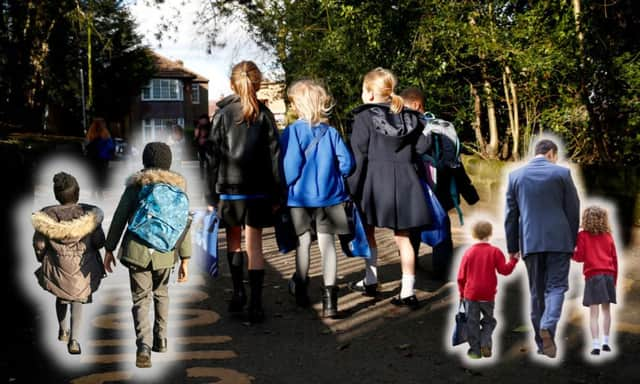

How old is old enough – what official guidance says
Currently, there is no specific legislation which sets out a legal minimum age for walking to school alone. But guidance from local authorities generally recommends eight as a good age to start learning.
This generally lines up with other guidance from councils on how far children should be expected to walk at each age. Children who attend the closest state school are usually eligible for free transport if they have to walk more than two miles to school for under-eights, and or three miles if they’re older.
But, as children’s charity NSPCC says, ultimately it’s up to parents to decide when they feel their child is ready to tackle this new challenge. “Parents and carers should make their decision based on their child’s maturity, ability and the safety and distance of the route to school.”
Tips for testing whether your child is ready
First News has come up with eight different ways parents can put their child to the test, to make sure they’re mentally, physically and emotionally ready to hit the streets alone once the autumn term arrives. Here are a few of them:
- While grocery shopping, ask them to go and get you something from a different aisle
- Have your child walk to a friend’s house alone – making sure the friend’s parent is waiting to meet them
- Get them to collect dinner from the local takeaway themselves (which will also ensure they feel comfortable talking to grown-ups)
- Make some flashcards and quiz your child on different road safety signs and crossing types (zebra, pelican etc.)
- Ask them to name three landmarks between home and school they can use to orient themselves if they get confused
- Try a few different routes, then ask your child which they think is safest - and why
- Talk through some ‘stranger danger’ scenarios to check whether they know what to do to keep themselves safe
- Quiz them on your full name, address, and phone number, as well as the emergency numbers
How to get them started safely
First News also had some expert tips for parents on preparing their child to start walking to school alone, which can easily be arranged or phased into morning routines over the coming weeks and months. Here were a few of them:
- Buy bright coloured coats or clothing more likely to be seen by drivers
- Brush up on road safety using neighbourhood walks to make sure your child understands basic signs and crossings
- Walk the route together a few times beforehand, pointing out landmarks, shops, or interesting houses on the way
- Choose the safest route for them to walk, preferably well lit and with minimal busy crossings
- Have an alternative planned in case of surprise roadworks - and make sure they know it off by heart too
- Brief them on stranger danger, and what to do if someone makes them feel unsafe (whether it be going back to school or into a familiar shop)
- Consider getting them a phone if they’re old enough - and teach them emergency numbers
- Enforce a strict no-headphone rule so that they’re aware of what’s going on around them
- See if there are any local walking buses, or friends or neighbours that walk the same way - and set up a buddy system if possible
This article is produced in partnership with First News, an award-winning newspaper for children read by 2.6 million each week. To find out more about getting First News at home or in your child’s school, or even to browse its other online offerings for young people, you can visit its website here.