
Britain's most unique schools: This school for neurodiverse pupils combines in-house therapy with life skills

Burlington House is thought to be one of just a few UK schools where all of its pupils are neurodiverse 🏫
- This London-based independent school has been designed for pupils with dyslexia, dyspraxia, ADHD and autism
- It has in-house occupational, and speech and language therapists - and even counsellors
- The school limits class sizes to just 12
- Life skills are also woven into every lesson
Every young person learns slightly differently, but children with ‘specific learning differences’ can often benefit from specialised support to thrive in education.
In a new series of special reports, our partner First News – the UK’s only newspaper specifically for young people – spoke with some of Britain’s most unique schools. One of these was Burling House School in London, thought to be one of just a few schools across the UK where all of its pupils are neurodivergent.
It comes as the Government is working on sweeping reforms to the systems in place for children with special educational needs and disabilities (SEND) across England’s schools. A recent Parliamentary education committee inquiry found that there were currently “unacceptable” inconsistencies in the support available across different parts of the country, and that current level of funding provided to schools was “inadequate”.
Originally called The Moat School, Burlington House was set up in 1998 by a group of parents whose children all had dyslexia. At that time, they said there were not a lot of educational options for neurodiverse children – something they wanted to change.
The independent school’s motto is ‘think differently, teach differently,’ and as such, everything about it is aimed at supporting its student body to succeed. Here’s what makes it so unique, and what it’s like to be a pupil there:


How does Burlington House support its pupils?
The word neurodivergent describes someone whose brain processes information and experiences in a way that is different to what is generally seen as ‘typical’. Burlington House told First News that the school is specifically designed for young people with neurodiversities, including dyslexia, dyspraxia, ADHD and autism.
It is set up to help them succeed academically and in their future career of choice. To make learning more accessible to its pupils, the school has smaller class sizes, its team says, limited to just 12. It also has specialist staff who are qualified to work with neurodiverse pupils.
But it goes a few steps further, too. Traditional lessons are woven together with sessions with in-house therapists – including occupational therapists, speech and language therapists, and even counsellors.
What is it like being a pupil there?
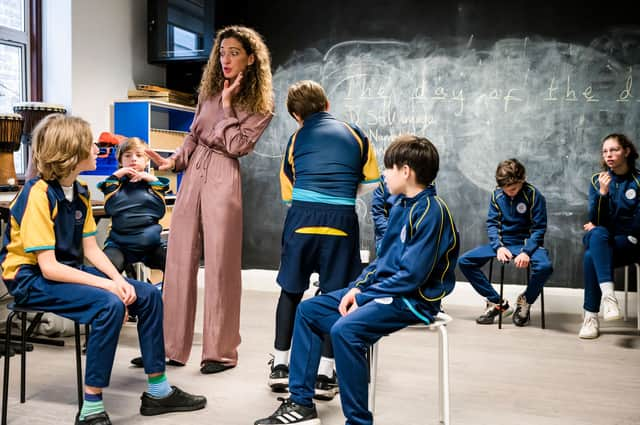
Pupils at Burlington House will study core subjects like English, maths and science, but there’s also a focus on creativity, sport, and life skills – something staff try to bring into every lesson. Many pupils cook weekly as part of the food education programme, and they can study further subjects like art, 3D design, music, and drama.
Because of the smaller classes, lessons are very interactive, the school said. As an independent school, its curriculum is also able to be tailored to individual learners, whatever their personal strengths or individual challenges.
There is no shortage of extracurriculars or enrichment either, with pupils regularly visiting museums, galleries, theatres and workplaces. It also runs residential trips, skiing trips and offers the Duke of Edinburgh’s Award. All of the trips are supported by therapeutic staff, who both help pupils engage and encourage them to do it independently.
This article is produced in partnership with First News, an award-winning newspaper for children read by 2.6 million each week. To find out more about getting First News at home or in your child’s school, or even to browse its other online offerings for young people, you can visit its website here.