
SEND researcher calls for 'acceptance of all' in libraries across Leeds

A leading SEND researcher in Leeds has called for an “acceptance of all” at libraries across the city.
Dr Tracy Laverick, Senior Lecturer in the School of Education and Childhood at Leeds Trinity University, is one of the only researchers in the UK whose work focuses on the role of Special Educational Needs and Disabilities (SEND) casework officers within local authorities.
As part of an in-depth interview into the struggles facing the country’s SEND casework officers, Dr Laverick had her say on the Yorkshire Evening Post’s Leeds Reads campaign and called on libraries to offer spaces suitable for all.
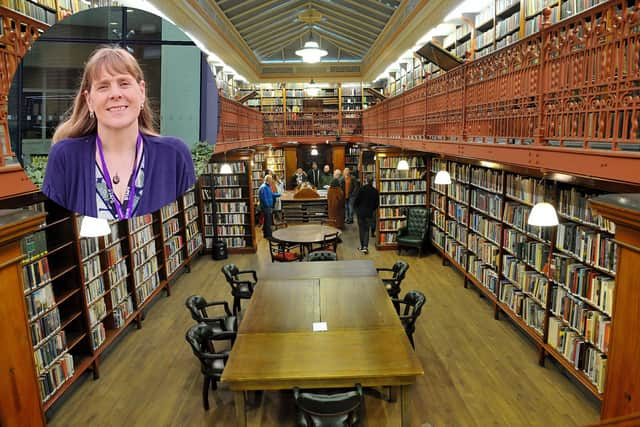

“I love libraries, I think they’re great and I think it’s about creating spaces that offer an acceptance of all types of learning requirements,” Dr Laverick said. “I think it’s really important for libraries to have that openness, have spaces where it’s ok to talk, and so many do now.
“It’s about all of us being open to the fact that we all do things a little bit differently and that’s ok. Some of us need the quiet, some of us need the background noise and all of that is fine. Find what works for you.”
Inspired by the National Year Of Reading, the YEP’s Leeds Reads campaign aims to get the city once again immersed in books and wandering those halls of imagination.
Leeds City Council has said that there are currently 37 libraries and community hubs across the city, with many offering spaces designed at catering to a wide range of needs.
Reflecting on her own style of reading, Dr Laverick revealed that she wrote her thesis in a coffee shop due to her need for background noise.
“I like busier spaces. You always get that you should be in a quiet room with all distractions turned off but that’s the worst space for me. I need the noise,” she said.
“I wrote my thesis in coffee shops because I needed that hustle and bustle, I was the person with coffee noises on in the background during Covid, and my son’s exactly the same.”
Dr Laverick spoke to the YEP about her research into SEND casework officers, where she uncovered that despite the importance of the role, it requires no formal qualifications or training, there is no structured career path, and there are no minimum standards that underpin their work.
The wider role of caseworkers include dealing with queries, resolving concerns and managing complaints and appeals. They are usually the first port of call for families and providers in navigating the complex SEND system and are effectively the outward facing delivery arm of the local authority.