
Bereaved families demand independent Leeds maternity inquiry after 'years of neglect and cover-ups'

Bereaved families who experienced inadequate care are demanding a statutory public inquiry into Leeds’ maternity services, citing years of neglect, cover-ups, and systemic failures.
The Leeds Hospitals (LTHT) Maternity Family Support Group, founded by affected families, met with Health Secretary Wes Streeting today (September 17), renewing calls for an independent inquiry led by Donna Ockenden, known for previous reviews of maternity services in Nottingham and Shrewsbury.
It comes after a damning report by the Care Quality Commission (CQC) downgraded the trust to “inadequate” following findings of significant risk to the safety of women and babies at Leeds General Infirmary (LGI) and St James’s Hospital.


On Monday (September 15), the government announced a review into maternity services at 14 NHS trusts in England, following a damning report published for the first time by the Department of Health and Social Care (DHSC), which ranked LHTH 96th out of 134 trusts.
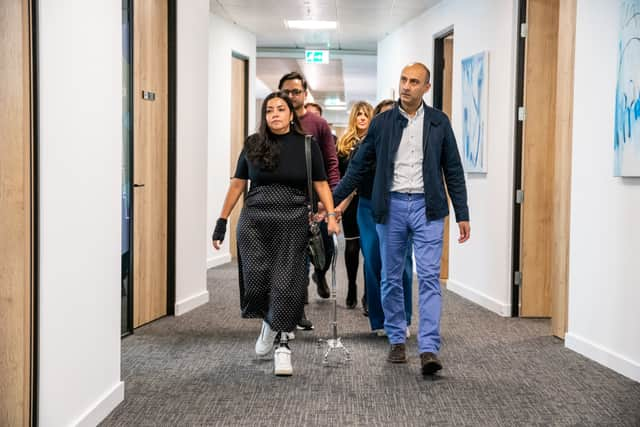
The group, which included Cecilia Deita, Angela Welsh, Fiona Winser-Ramm, Lauren Caulfield, Amarjit Matharoo, Mandip Matharoo, and Damon Green, convened with the Health Secretary in the wake of a letter from Mr Streeting, who initially declined to launch an independent inquiry in Leeds.
However, after hearing harrowing testimonies, Streeting left the meeting “seriously reflecting on his decision,” acknowledging that “the problems in Leeds are way beyond what a national maternity investigation will be able to achieve,” the group said.
Families shared deeply personal stories of loss, trauma, and a lack of support from Leeds Teaching Hospitals Trust. Mrs Welsh, whose son died in 2011, said: “There was no help, there’s no support, there’s no counselling, there was nothing offered to me. And it’s only through this group that I’ve been able to finally speak out today. If there are any other mothers out there who have suffered this in Leeds or any other hospitals, please come forward. It’s very important.”
Recounting her horrific story, Mrs Deita told the press how she lost her legs and hands to sepsis despite repeatedly reaching out to midwives: “We tried to tell them I had really bad symptoms. For days, almost a week, I was throwing up intensively, without stopping, and it wasn't until I went into multi-organ failure and septic shock that they intervened.
“I lost my legs and my hands and a lot of quality of life, but I made it. All it would have taken was to have been listened to. A simple course of antibiotics would mean that I would’ve had my hands and my legs today.”
Another campaigner described the Secretary of State’s reaction: “He was clearly moved, shocked, horrified and appalled, I think, by the things that he was hearing, not just from the accounts of families, but also from the staff perspective of what is going on in Leeds and what has been going on for such a significant amount of time.”
At the meeting, the group displayed a 10-metre washing line adorned with 56 baby grows and two adult-sized T-shirts, representing the avoidable baby and maternal deaths uncovered by the BBC between 2019 and 2024.
“It is a horrific sight to see; it stretched the full length of the room. And I don’t think anybody could look at that and not be moved, not be horrified. We become statistics. We become numbers. We become just a piece of paper, and we wanted to portray to the Health Secretary that we are people, that our children are people, that they mattered then, they matter now.”
Mr Streeting, initially resistant to a public inquiry, was described as “really active” and “listening.”
“From going from a position of walking in and saying no, he left the room saying, ‘I’m coming back to you. I’m coming back for another conversation about this.’ So we’ve moved the point from a no to a ‘I’m considering now what’s going on.’”
Campaigners highlighted repeated failures in care, a “tick box culture,” and a lack of accountability from both the Trust and national regulators: “A healthy child does not die of neglect. And it’s not a one-off thing. Neglect doesn’t just happen. It’s a thing that’s been built up by a culture that surrounds an individual.”
Another mother recounted: “We weren’t offered any counselling, just sent home with a leaflet. We weren’t offered any bereavement counselling. Our parents were hurt, our other children, the siblings, were hurt.”

The group also raised concerns about conflicts of interest, particularly the former CEO of Leeds Teaching Hospitals Trust, Sir Julian Hartley, now leading the CQC: “There is zero faith that they will prosecute based on him being the CEO of the hospital at the time. They will not go against their boss in that way; there is no chance that they will be held accountable in my own child’s case, simply because of his existence there.”
Dr Magnus Harrison, LTHT Chief Medical Officer, welcomed the government's announcement earlier this week, saying: “We recognise that we have not always delivered the highest quality of care to every family, and we are extremely sorry to the families who have lost their babies or had poor experiences when receiving care in our hospitals. Families will be at the heart of this national investigation, and we are fully supportive of this.
“We want to reassure families in Leeds that we have already taken significant steps to address improvements to our maternity and neonatal services since the publication of our recent Care Quality Commission (CQC) reports. However, we know there is still much more we can do.”
The Yorkshire Evening Post has contacted Wes Streeting for a comment.