
Boy, 5, died at Leeds General Infirmary after 'failure' to diagnose and treat sepsis

A five-year-old boy who died from sepsis should have been given antibiotics sooner at a hospital in Leeds, an inquest has found.
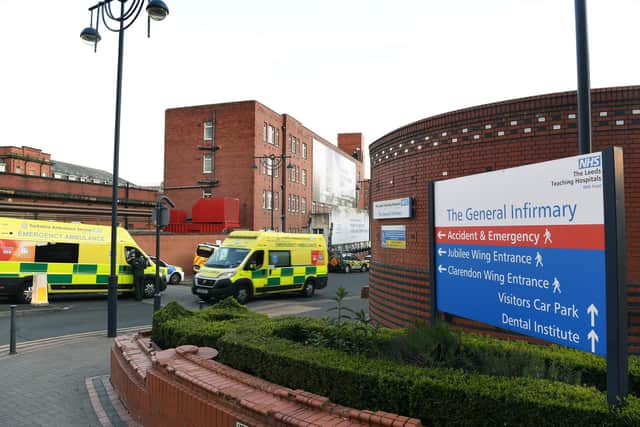
Edward Richard Jones was admitted to Leeds General Infirmary (LGI) on the morning of February 18, 2023, with severe leg and abdominal pain, but deteriorated during the day and died just before midnight - 18 days after his fifth birthday.

A Prevention of Future Deaths report, issued by HM Area Coroner Oliver Longstaff, detailed how discussions were held by hospital staff about the possibility of sepsis, but certain tests were not carried out as the youngster had a normal temperature.
It revealed that a blood gas test showed Edward had a raised lactate, but this was not repeated, and a communication failure meant the Paediatric Registrar believed it had been repeated and was now normal. The hospital trust’s Sepsis Screening Tool was not used at any time.
The report said: “Shortages in both medical staff and beds on the general paediatric ward compromised Edward’s clinical management, in that shared care between the Paediatric Emergency Medicine and Paediatric General Medicine teams was prolonged while EJ remained for an extended period (up to 13 hours in all) in the PED.
“The indication for antibiotics was considered several times, but on each occasion prior to Edward’s severe clinical deterioration the threshold was not thought to be reached. The hospital trust formally admitted that a decision to administer antibiotics should have been made at each of these occasions.”
Coroner Longstaff concluded despite potential alternative diagnoses, Edward should have been given antibiotics at earlier discussion stages, as “direct harm would have been unlikely” and it would be possible to stop them once sepsis had been excluded on blood culture or an alternative diagnosis reached.
The inquest also heard that Edward's death was due to him developing Invasive Group A Strep (iGAS). This was caused by bacteria invading parts of the body like the blood, muscles, or lungs, which then leads to severe, potentially life-threatening infections, such as sepsis.
Mr Longstaff noted that there were currently no national sepsis screening rules for paediatric departments in hospitals, adding this “needs to be addressed” and he would be writing a report on the issue to the National Institute for Health and Clinical Excellence (NICE) to call for action.
In a statement provided to the BBC, Dr Magnus Harrison, chief medical officer at Leeds Teaching Hospitals NHS Trust, said: “We are extremely sorry the care Edward received was not to the standard it should have been and I can't imagine how painful this must be for his family.
“We have carried out a detailed investigation and the coroner has heard evidence about the learnings we have already put in place. We recognise this will bring little comfort for Edward's family and our deepest condolences are with them all at this difficult time.”