
'A tragic death': Family's heartbreak as coroner rules 'deficient' monitoring led to baby's death

Her heartbeat was not properly monitored for over 30 minutes
A family left heartbroken by their baby’s “tragic” death say they hope no other families have to go through the same pain.
It comes as a coroner ruled “deficient” heart rate monitoring led to the death of Delilah-Jayde Arnold at Leeds General Infirmary.
She died at one week old on December 4, 2024. An inquest heard that a pathologist concluded that her brain had been starved of oxygen during, or just after, birth.
On the final day of the hearing, Wakefield Coroner’s Court was told her heartbeat was not properly monitored for between 33 and 42 minutes during labour because midwives had struggled repeatedly to attach a special electrode to the baby’s head.
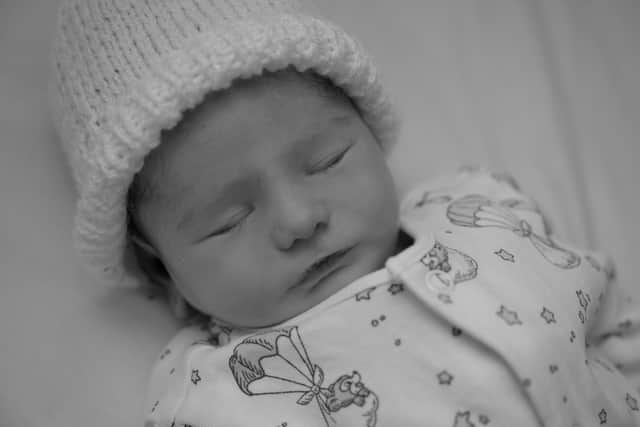

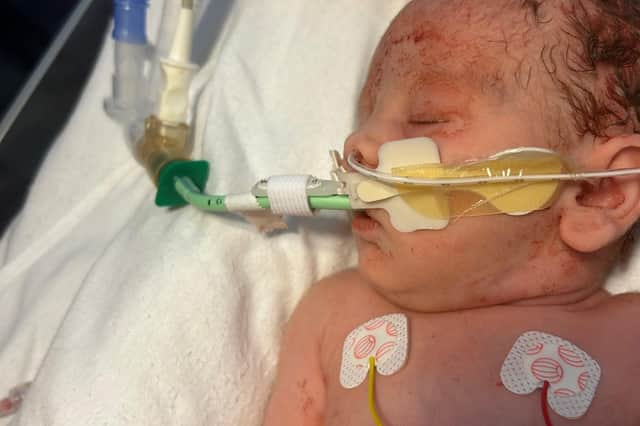
Delilah was born by emergency C-section at 6.07pm on November 27 2024 with no signs of life and a heart rate of 60bpm. She was given CPR until her heart rate recovered and was then taken to the neonatal ward.
When baby Delilah’s mother, Kelly-Marie Harris, who clutched a white knitted heart throughout the inquest, came round from the surgery and visited her baby, she was told her daughter had no brain activity.
Giving evidence, Consultant Obstetrician at Leeds Teaching Hospitals Tracy Jane Granville, who had just started her shift, said that the problem detecting the heartbeat had not been escalated to her and that she was first made aware of the issue when she entered the room.
An internal hospital PMRT (Perinatal Mortality Review Tool) review, later rated the quality of Miss Harris and baby Delilah’s care as a “D” - the lowest possible rating.
Concluding her evidence, Dr Granville addressed Delilah’s parents directly and added: “I’m very sorry. I would like to extend my condolences to you and your extended family again.”
At the time of Delilah’s death, there were no formal guidelines nationally or locally about how soon the alarm should be raised. These have since been updated and now state that midwives must raise the alarm within minutes of a problem being identified.
The family's barrister, Richard O’Keefe said that “systemic and structural dysfunction” had led to the death of Delilah and asked the coroner to conclude that there had been a “gross failure to provide basic medical attention.”
“This is such a tragic death which clearly could have been avoided,” he said. “Hopefully lessons have been learnt as well as systems and policies changed to ensure this does not happen again.”
Acting Senior Coroner Oliver Longstaff, concluded that “deficient” monitoring of baby Delilah’s heart rate was “directly causative” to her death.
He added that had it been managed in line with the protocol introduced after her death, it is “likely she would not have died when she did.”
He stopped short of finding a ruling of neglect, stating: “You can’t find gross failure when something is being done, regardless how badly.”
Coroner Longstaff confirmed that a Prevention of of Future Death Report will be produced and sent to the Clinical Director of NICE.
Speaking after the ruling, Delilah’s mother Kelly-Marie Harris said: “If they had escalated the loss of contact after three minutes as per current trust protocol, Delilah would have been saved.
“We are disappointed that the failure to escalate was not considered by the Coroner to be a ‘gross failure to provide basic medical attention,’ such as to warrant a conclusion of neglect.
“We are however pleased that the Coroner has made a Prevention of of Future Death Report and hope that NICE will implement that change nationally so that the families don’t have to go through this in future.”
The ruling comes as senior midwife Donna Ockenden prepares to lead a review into maternity and neonatal care failings at Leeds Teaching Hospitals NHS Trust (LTHT).
A review into Leeds was ordered by then Health and Social Care Secretary Wes Streeting in October 2025 following a string of damning investigations that revealed severe and systemic failings into maternity care at Leeds General Infirmary and St James's University Hospital.
In a statement, Dr Elizabeth Garthwaite, Chief Medical Officer at Leeds Teaching Hospitals, said that she is “deeply sorry” that failings in care were identified and that their thoughts remain with Kelly and her family.
“Our thoughts remain with Kelly and her family, and we offer them our sincere condolences following the tragic loss of Delilah-Jayde,” she said. “We recognise the profound impact this has had on them and the lasting grief they continue to experience.
“The circumstances surrounding Delilah-Jayde’s death have been thoroughly reviewed internally and externally. We are deeply sorry that failings in care were identified through these reviews, and for the pain and distress this has caused Kelly and her family.
“We have put in place all the safety improvements that have been recommended. We have developed new guidelines and processes for monitoring babies’ heart rates in the womb, and for taking action quickly when there are issues with monitoring.
“These are now being used by other hospitals across the region. We have also improved the equipment, training and education available for maternity teams. We hope these actions taken help improve care for women, babies and families in the future.
“We recognise that nothing can change what happened or diminish the loss experienced by Kelly and her family, and our deepest sympathies remain with them at this difficult time.”