
Will I catch Covid or the flu on a plane? How to avoid getting ill when flying this summer

This article contains affiliate links. We may earn a small commission on items purchased through this article, but that does not affect our editorial judgement.
Covid doesn’t take a summer holiday 🤧
- Cases of Covid are on the rise across the UK, according to the latest data.
- Despite it being summer, illnesses such as Covid and the flu are still around.
- The last thing you want is to find yourself falling ill when you go on holiday.
- We’ve shared four top tips on how to avoid getting sick on the plane.
With so many of us preparing to jet off on our summer holidays, the last thing you’d want is to come down with something.
Despite the warmer weather, illnesses such as the flu and Covid are still circulating, with the latest data from the UK Health and Security Agency (UKHSA) finding that Covid cases have increased by 8.3% up to the week of July 16.
The NHS has advised that if you test positive for Covid you should avoid people for five days. Some people may confuse their symptoms for hay fever, or not test, meaning that if they get on airplane, there is a risk they could pass it onto fellow passengers.
Here is everything you need to know about how to avoid catching Covid or the flu on a plane this summer.
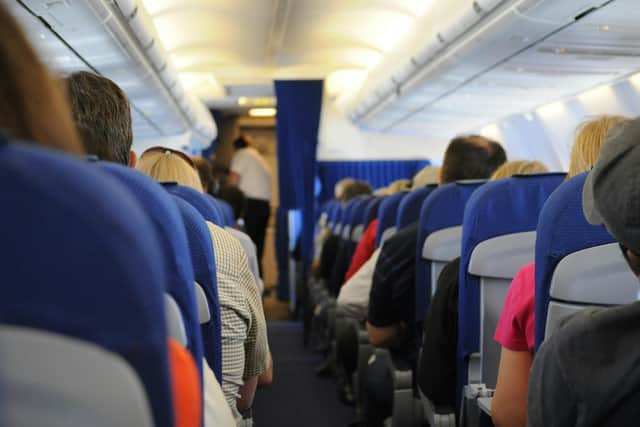

How to avoid catching Covid or the flu on a plane
Going on your summer holiday is something you wait all year for, with many us opting to fly abroad. However, despite the warmer weather, cases of Covid are still on the rise and the last thing you’d want is to find yourself feeling under the weather.
Here are four ways to avoid getting ill while flying:
Hand washing
Washing your hands is the single most effective thing you can to protect yourself from becoming unwell. It’s important to wash your hands often throughout your journey and after going to the bathroom with warm, soapy water. You can also use anti-bacterial hand gels, but be mindful that they are not effective against norovirus.
Wipe down surfaces
As well as making sure your hands are clean, another good option to ensure your seat area on the plane is sterilised, is to wipe down any surfaces you may come into contact with anti-bacterial hand wipes. Things such as your armrest, tray table and window blind - they’ll also come in handy for the airplane bathroom.
Choose your seat wisely
A study in 2018, found that sitting in a window seat gave you a lower chance of catching an infection, as these seats are the furthest from the aisle.
The study, carried out by scientists at Emory University found that window seats are the most sterile, with a 0-1% chance of infection, compared to aisle and middle seats at 4 to 5%.
This is because window seat passengers are less likely to get up and are also around fewer people.
Use the overhead fans
Using the overhead fans can help to filter the air around you. Planes use high-efficiency particulate air (HEPA) filters, which capture airborne viruses. As an additional precaution, especially if there’s someone beside you coughing, you could also opt to wear a face mask.
🧪 Boots COVID-19 Test Kits
While free testing is no longer widely available, Boots continues to offer a range of COVID-19 lateral flow kits for home use, with results in under 30 minutes.
They’re available individually or in multipacks, with options for general use, travel, or workplace settings.
Can you fly if you’re sick?
It’s not recommended to fly if you are unwell or not fit to. Not only could this potentially cause a medical emergency if you take ill during the flight or if you have the flu or Covid then you risk potentially infecting your fellow passengers.
There is also a risk of pressure-related injuries if you travel with the common cold or a respiratory virus. Finnair’s Medical Director Kimmo Ketola explained: “Common cold during air travel is associated with the risk of pressure-related injuries in the middle ear and nasal sinuses.
“At its mildest, ear pressure injury can cause a feeling of ear blockage or mild pain, whereas at its most severe, it can lead to intense pain, dizziness, and even inner ear damage. Pressure injuries in the nasal sinuses can cause severe pain in the forehead, eye area, and cheeks, as well as various mucosal injuries.”
Are you planning on travelling abroad with your weight loss medications? We’ve written this helpful piece on how to travel with weight loss drugs and the legal rules to follow.