
'I see homelessness every day in A&E - but this small change is making a big difference'

How a mobile phone is providing a lifeline to homeless people attending A&E in Leeds
Laura Finch saw only too well the impact homelessness had on accident and emergency departments at hospitals in Leeds.

The Royal College of Emergency Medicine Advanced Clinical Practitioner was frustrated at the volume of re-attendances from those who are homeless or at risk of homelessness.
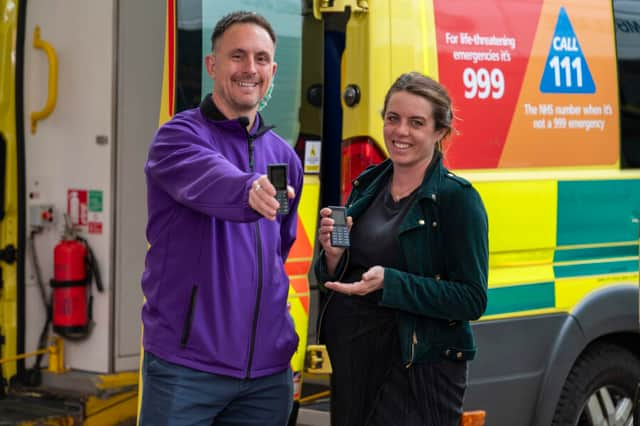
And she has become the driving force behind a new initiative, funded by Leeds Hospitals Charity, aiming to give a mobile phone to every person at risk.
The phones provide a key point of contact for arranging follow-up appointments, engaging with street outreach support, and improving personal safety. They also contain contact information for services and charities that vulnerable people may benefit from.
She said: “Working in the city’s emergency departments you see first-hand how homeless people are forced to live – you see what their lives have become and what they’re subjected to. Society does not work in their favour, and they need help if they’re to have any chance of improving their lives.
“Many of the vulnerable people who we see in our emergency departments are regulars.
“They simply don’t have the means to get out of their situation – the odds are stacked against them. Often, they end up being trapped in a vicious cycle of antisocial crime, short prison sentences, and homelessness.
“If you’re homeless, you’re also more likely to be assaulted. It’s a desperate situation.”
The initiative started when Laura decided to apply for a small grant from Leeds Hospitals Charity, to fund a pilot project over 2023-24 to trial donations of cheap mobile phones to homeless people presenting at the emergency departments.
She said: “Many of us take mobile phones for granted, but it’s only when we don’t have one that we realise how much we depend upon a phone for daily life.
“Phones give people choice and autonomy – they’re incredibly empowering.
“Homeless people are accustomed to having doors shut in their faces – they’re just not used to getting something for free. My hope is that these phones might do something that will change their lives.”
Each phone was a simple Nokia device costing £30, with a prepaid SIM. The device was loaded with contact details for services and charities working in the city which vulnerable people could approach for help. With each phone Laura gave out a small slip of paper, saying that she would be in touch.
More than 400 free SIM cards with unlimited credit were gifted to the initiative by Vodafone, which means the charitable funding can go towards purchasing more phones and potentially extending the project further.
Rebecca Baldaro-Booth, director of grants and impact at Leeds Hospitals Charity said: “We are proud to have funded this pilot back in 2023, developing an initiative that provides vital support to patients across our local communities here in Leeds.
“These mobile phones provide patients with access to street outreach support programmes and other local support networks. It’s also an essential way for Leeds Teaching Hospitals to contact them for follow-up appointments and treatment, ensuring that every patient can access the care and support they need.
“Any help can make a huge difference – it gives hope to someone who has none.”