
'I was facing cancer surgery and a colostomy bag - then a trial gave me hope'

Grandfather given a second chance with pioneering trial led by academics at University of Leeds and Birmingham
For Yorkshire grandfather Hugh Chown, the prospect of cancer treatment came with a frightening possibility - that beating the disease could mean permanently changing the way he lived his life.
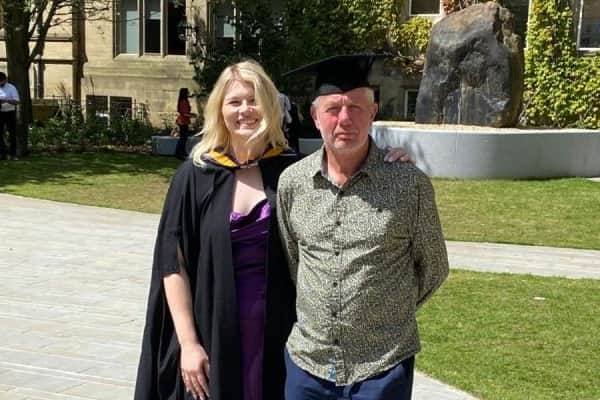

When Mr Chown, 65, was diagnosed with rectal cancer in December 2020, he was told that the usual treatment would involve major surgery and that he was highly likely to need a permanent colostomy bag.
But thanks to a pioneering trial Hugh received chemoradiotherapy at Leeds Teaching Hospitals NHS Trust and has avoided the need for surgery and a colostomy bag.
Three months after treatment, his cancer had disappeared, and he remains cancer-free.
It comes as a major international trial co-led by the Universities of Leeds and Birmingham saw early-stage rectal cancer patients treated without the need for major surgery and a permanent colostomy bag.
Mr Chown said: “I’d had two to three months of occasional bleeding, so I contacted my GP and was sent for a colonoscopy. On 30th December, I got the diagnosis – it was totally unexpected. I was shocked but accepting of it. I knew worrying wouldn’t help, so I just focused on living life.”
When he was told about the trial he added: “The decision wasn’t difficult. The worstcase scenario was that the treatment wouldn’t work and I’d need surgery anyway, which would be delayed by about three and a half months because of the trial. But the cancer was at a very early stage.
“Before my treatment started, I was advised to get as fit as possible so I did two hours a day of cycle training in the weeks leading up to it.
"My treatments consisted of taking tablets morning and evening and receiving one radiotherapy session a day, five days per week for five weeks.
“For the first two weeks, the side effects were minimal but by the middle of the third week, I started to feel run down and tired and this got worse as the treatment went on.
“At the end of 12 weeks, I had another colonoscopy. The consultant said I’d had a perfect result and the cancer was gone, but because it was part of the trial, I had another one at 16 weeks and all was still clear.
“After that, the treatment ended and I moved on to regular checks for the trial which lasted a total of three years, then standard NHS cancer checks for a further two years. My last check was in May this year and everything was fine."
Published today in the Lancet and funded by Cancer Research UK, the initial results suggest that organ preserving treatment may be a realistic option for many people with early rectal cancer – and has fewer side effects than major surgery.
The trial, named STAR-TREC, was co-led by Professor David Sebag-Montefiore in Leeds and Professor Simon Bach at UCL, and co-ordinated by the University of Birmingham. Patients were recruited to trial centres in the UK, the Netherlands, Sweden, Denmark and Belgium.
Prof Sebag-Montefiore said: “These exciting results are an example of how a smarter, kinder radiotherapy treatment may allow patients to avoid the need for major surgery.
“It is gratifying that patients experienced a relatively low level of severe short-term side effects as a result of the smaller, more targeted radiotherapy approach that we specifically developed for STAR-TREC.”
Michelle Mitchell, Cancer Research UK’s chief executive, said: “This breakthrough could be life-changing for thousands of people.
"Thanks to bowel screening, more rectal cancers are being spotted at an earlier stage, where people are more likely to survive the disease, but that hasn't made treatment any easier - many patients still have to cope with extremely difficult and often life-altering side effects.
"Remarkably, that could finally be about to change with this new treatment option, which has the potential to transform the lives of people affected by this cancer and their families.”