
'I've been an opera singer all my life but Sjögren’s syndrome meant I couldn't even see the conductor'

As a professional opera singer, Sue Lees has performed on countless stages over her decades-long musical career.
But in her early days, she couldn’t even see the conductor, struggling with the impact of what she now knows is a condition called Sjögren’s syndrome.
The rare autoimmune disease, where the body’s natural immune response attacks organs like the salivary glands and tear ducts, can lead to dry eyes and mouth, aching muscles and joints, extreme tiredness, and difficulty swallowing.
Sue, now in her seventies, has had a long career, training at the Royal Academy of Music and winning the 1971 Gold Medal there, before becoming a soloist with the Royal Opera House and English National Opera.
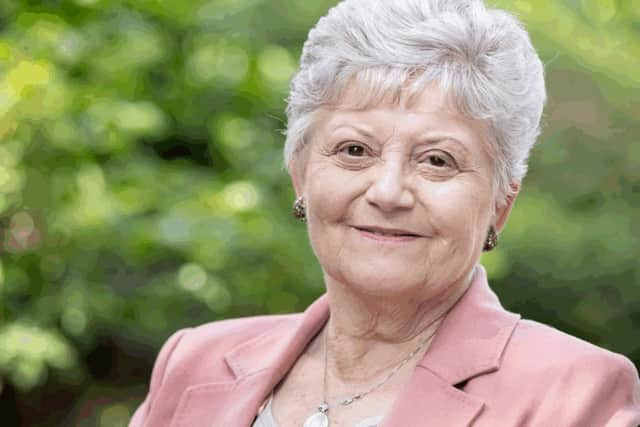

She was also a founding chorus member of Opera North in Leeds, performing various roles with the company until her retirement in 2009. Since then, she has taught at the universities of Hull and Leeds, The Leeds Conservatoire, local schools, whilst also organising charity concerts.
“I’ve been a professional opera singer all my life and I wasn’t able in my early career to be able to wear contact lenses or anything like that because of my dry eyes so I never saw a conductor once - I was blind almost,” Sue says.
“It wasn’t easy being a professional singer because there were so many problems and I didn’t know what was going on at the time because there wasn’t much awareness about the condition in my 20s and 30s,” she adds. “I found it very hard to tolerate contact lenses…and bright lights were also quite a problem being on stage.”
Since being diagnosed with Sjögren’s in 2017, Sue has become involved in research into the condition. She has been participating in the NECESSITY trial, an international trial, which is running at Leeds Teaching Hospitals NHS Trust and six other centres in the UK.
The trial is testing whether combining hydroxychloroquine, a standard first line treatment for Sjögren’s, with one of two other medications - leflunomide and mycophenolate - can offer improved relief from symptoms.
“No matter what the research is and no matter the illness, they’re so important are clinical trials,” Sue. “If taking part can help me, but more so the next generation, then it’s worthwhile.”
Leeds is also one of the hubs supporting an NHS initiative to expand access to cancer vaccine research.
Last year it was announced the city’s Clinical Research Facility (CRF) was supporting a trial investigating mRNA vaccines for patients with advanced head and neck cancer, having previously facilitated referrals to the NHS Cancer Vaccine Launch Pad for colorectal cancer patients.
Professor Chris Twelves, a specialist in Clinical Cancer Pharmacology and Oncology and the Director of Leeds CRF says: “We know that if people get infections, to an extent the body is able to fight them off and (we also know) that vaccines can be used to prevent infections.
“When the invader isn’t a bacteria or a virus - when the invader is a cancer that’s come from the patient’s own body - then clearly the body isn’t able (itself) to eliminate that consistently or else people wouldn’t develop and die from cancer.
“There’s been an interest in using the body’s immune system for many years to try to fight cancer and that has included cancer vaccines.
“But until very recently they’d had rather limited success, ahead of the Covid pandemic. “(Then) there was a resurgence of interest in cancer vaccines and the new vaccine technology that allowed the Covid vaccines to be developed very rapidly has been applied to cancer vaccines.”
Leeds is also leading a trial investigating a treatment for Duchenne muscular dystrophy (DMD), a genetic condition that causes progressive muscle weakness, with restricted mobility and a shorter life expectancy.
The GUARDIAN trial is looking at the long-term use of vamorolone, a newly-approved treatment which aims to help children with DMD maintain muscle strength for longer, whilst reducing some of the most difficult side effects associated with existing medications, related to growth, mood, and behaviour.
Dr Anne-Marie Childs, Consultant Paediatric Neurologist and Chief Investigator for GUARDIAN, said last year: “As with all new drugs there are many ‘unknowns’ with vamorolone’s use in clinical practice. It is, therefore, essential to gather further data on its longer-term effectiveness and side effects which is why the GUARDIAN study is so important for both the UK and the international DMD community. We are delighted to be at the forefront of this work, as chief investigating UK site and the first to recruit to the study.”