
'Nobody listened to me': Leeds mum reveals how damp and cold in home left her child ill every day
A Leeds mum said that living with damp and excessive cold in her home for years left her feeling “hopeless” and fearful for her children’s health.
Leah (not her real name) first moved into her council flat in 2009 and from the start of her tenancy, she remembers never feeling warm in her home.
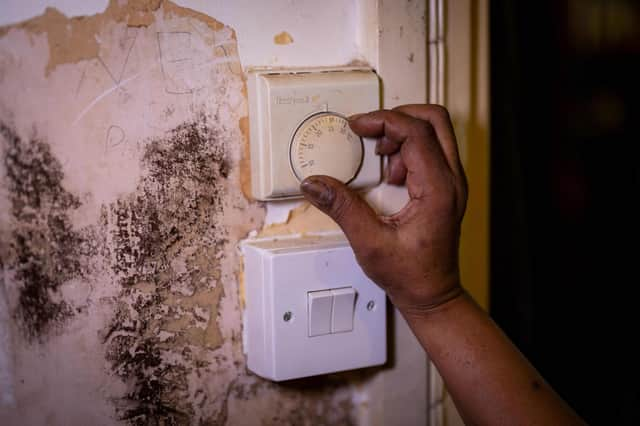

She told the Yorkshire Evening Post she had to use blankets constantly for warmth and could see water droplets on the windows even in the summer.
Over the years, she claimed the problem worsened and when Leah had her children, she noticed that their health was adversely impacted by the damp and the cold.
She said: “With my first child, she was shivering all the time.
“Then with my second child it got worse. She was sensitive and any smell made her cough and sick all the time.”
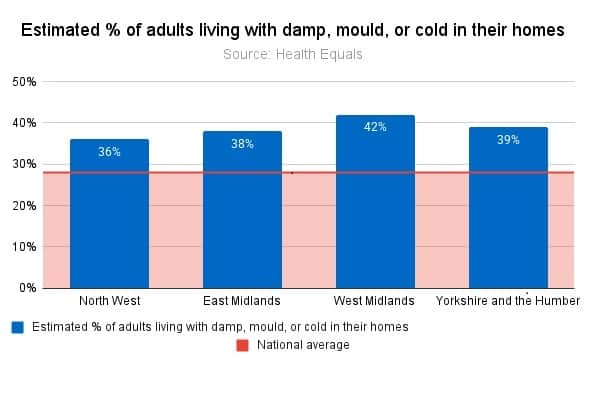
According to new research from campaign group Health Equals, almost two in five adults in Yorkshire and the Humber live in homes with mould, damp, or cold.
The data, sourced by a nationally representative survey, found that an estimated 39 per cent of adults in Yorkshire and the Humber are living in homes with damp, mould, or cold, compared to a national average of 28 per cent.
Damp and mould are usually caused by excessive moisture within a home whereas cold is a result of insufficient insulation.
The presence of damp, mould, or cold, in a home can worsen health conditions such as allergens and asthma, and cause symptoms such as coughing, wheezing, heart palpitations, stress, and anxiety.
Leah spent years trying to find help for her family but claimed she felt ignored by local authorities including Leeds City Council.
As damp could be found in her flat’s kitchen, living room, and bedroom, Leah began growing increasingly worried for her children’s health.
She said: “I feel emotional when I talk about these things.
“It was very painful because I could see my child coughing and vomiting all the time because she had never been warm.”
Leah recalled taking her child to the doctors everyday because they were coughing and vomiting due to asthma and allergies.
Eventually, she found support from a local charity who advocated for her and helped her find new accommodation which she has been living in for the past year.
Leah said: “Before I found them my life was at its worst and nobody listened to me.
“I was hopeless but when I shared my story they helped me.”
On October 27, a new law was introduced in England to protect tenants such as Leah from hazards in their homes.
Awaab’s Law requires social landlords to inspect damp and mould within ten days and make it safe within five days after the inspection.
The law is named after Awaab Ishak, a two-year-old boy from Rochdale who died from a respiratory condition caused by prolonged exposure to mould in his home.
For Leah, though the measure is progress, she’s still seen other parents struggling due to damp, mould, and cold in their home.
As to what will create change, Leah said it is critical that tenants are listened to.
She said: “We need understanding, respect, and to be looked at as a person.”
A representative from Leeds City Council said that they take all reports of damp and mould in homes “extremely seriously” and that they encourage residents to report any problems.
They said: “We have a dedicated damp and mould team that is trained to conduct thorough investigations, and arrange necessary remedial work, within the timescales set out in Awaab's Law.
“Additionally, we have preventive programmes in place and have trained staff and contractors to identify and address damp and mould problems.
“We acknowledge that residents can sometimes be unhappy about our handling of their reports, and how long it takes us to fix issues. We always encourage residents to contact us and talk to us if they have concerns.”