
NHS trusts ranked in new national league tables - where does Leeds rank?

Leeds’ NHS trusts have been ranked for the first time under new national league tables designed to drive up standards across the health service.
The Department of Health and Social Care (DHSC) has placed all 134 trusts in England into one of four segments, based on performance in areas such as waiting times, routine operations, emergency care and financial stability. The tables will be updated every three months.
Health Secretary Wes Streeting said the reforms would “shine a light” on how hospitals and community services are performing.

Mr Streeting said: “We must be honest about the state of the NHS to fix it. Patients and taxpayers have to know how their local NHS services are doing compared to the rest of the country.
“These league tables will identify where urgent support is needed and allow high-performing areas to share best practises with others, taking the best of the NHS to the rest of the NHS.
“Patients know when local services aren’t up to scratch and they want to see an end to the postcode lottery - that’s what this government is doing.”
Trusts in the top segment will receive extra investment and greater freedom to manage services, while those in the lower segments will be given targeted support.
- Leeds and York Partnership NHS Foundation Trust (mental health and learning disability services) is the city’s best-performing organisation, ranked 15th nationally with a score of 2.13, placing it in Segment 2.
- Leeds Community Healthcare NHS Trust, which provides services such as district nursing and community therapy, sits in Segment 4 - the lowest category - ranking 52nd with a score of 2.80.
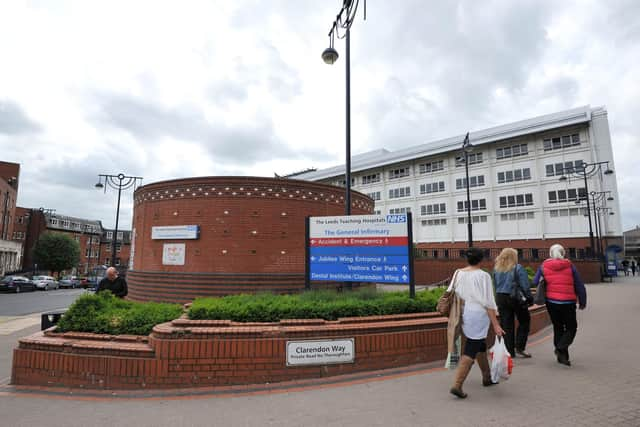
- Leeds Teaching Hospitals NHS Trust, which runs Leeds General Infirmary and St James’s Hospital, is in Segment 3, ranked 96th out of 134 with a score of 2.57.
Specialist trusts dominate the top of the tables, including Moorfields Eye Hospital, The Christie cancer centre, and the Royal National Orthopaedic Hospital.
On the opposite end, The Queen Elizabeth Hospital in King’s Lynn performed the worst, followed by Countess Of Chester Hospital NHS Foundation Trust.
The government says the rankings will give patients clearer information and encourage improvement.
Sir Jim Mackey, Chief Executive of NHS England, added: “NHS staff across the country work flat out to deliver the highest standard of care to their patients and every day we see or hear fantastic examples of this, but we still have far too much unwarranted local variation in performance.
“Letting patients and the public access more data will help to drive improvement even faster by supporting them to identify where they should demand even better from their NHS and by putting more power their hands to make informed decisions on their choice of provider.
“The data also supports local NHS Trust Boards and leadership teams to more easily identify the highest performing services in the NHS and adapt how they deliver care to drive improvement even faster going forward.”