
'It makes you want to go to work': Meet the Leeds business leading the way for Endometriosis support

A Leeds campaigner is calling on more employers across the city to re-think their HR policies to support women suffering a silent battle with endometriosis.
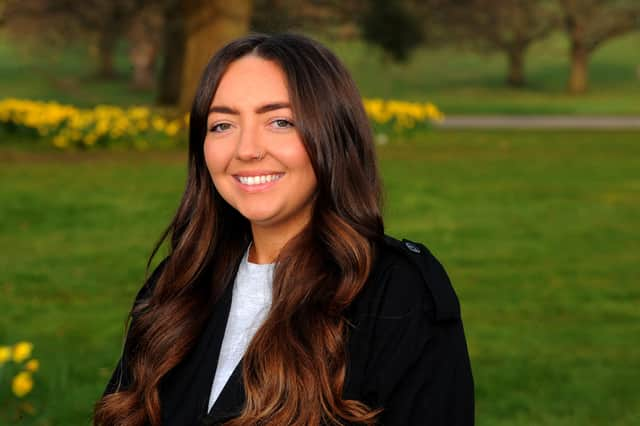
Eva Hague, a project manager with First Events who lives with the debilitating condition and has had three surgeries so far, told us how her symptoms had been repeatedly dismissed, despite experiencing “constant excruciating pain”.
But she is now calling on employers to do more to support those living with the condition to help achieve their full potential in the workplace and to feel “safe”.
Describing the ordeal to get a diagnosis as “exhausting”, Eva first experienced symptoms when she was 15, fighting for 10 years to get her diagnosis. She said: “I would just get told to go on the pill, that it will eventually sort itself out.”

However, her symptoms of heavy, painful periods and pelvic pain persisted and had a significant effect on her education.
Eva said: “It really had an impact, having to have time off, but because we didn't know what it was, it was ‘Eva's attendance is bad because she's having too much time off’, so there wasn't any support at school.”
When asked to be referred to a gynaecologist, Eva was told she was “too young”, only receiving the referral at age 18. Her symptoms were again dismissed as “normal”, and it wasn’t until she was 20 that she first heard of endometriosis and thought, “this sounds like what I’ve got.”
She started advocating for herself during doctor appointments, telling them she suspected she had endometriosis, but “still kept getting pushed back”. It wasn’t until during Covid that she saw a different gynaecologist who agreed to refer her for a laparoscopy, which is a minimally invasive surgery that is used to both diagnose and remove (excise) endometriosis.
Eva said: “I got diagnosed with endometriosis, and then I was allowed to see an endo specialist, and that's when I started getting answers and support.
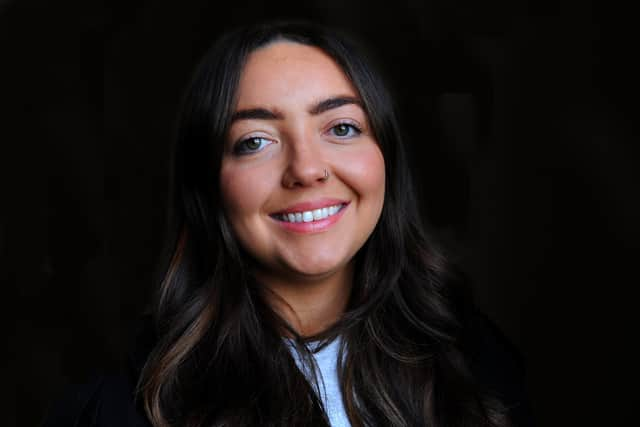
“It was almost a relief to be diagnosed and know that it wasn't all in my head, and that it’s not normal. But on the other hand, I was like, oh, great, I'm stuck with something now with still no answers.”
Eva has had three surgeries since her diagnosis and was put into temporary menopause to reduce her pain. Last year, she had one of her ovaries removed, and whilst it’s helped with symptoms, it has affected her fertility, and she is now having to explore paying for egg freezing as it isn’t offered to endometriosis patients on the NHS.
Eva’s experience to get a diagnosis is not unique; a new report published by Endometriosis UK and Cysters in March found that the average wait to get a diagnosis of endometriosis has increased. Patients now wait on average nine years and four months to get answers, up from an average of eight years previously in 2020. Whilst those from ethnically diverse communities have an even longer average wait of 11 years.
The impact this can have when seeking employment can be substantial. In 2025, the Office for National Statistics found that those living with the condition experienced a significant decrease in earnings and impact on employment.
However, for Eva, her employer, First Events, has supported her throughout her journey, thanks to launching a bespoke Chronic Condition Policy. The organisation were also a headline sponsor for Harrogate’s Endo Gala as part of a range of initiatives taken in support of Endometriosis Action Month.
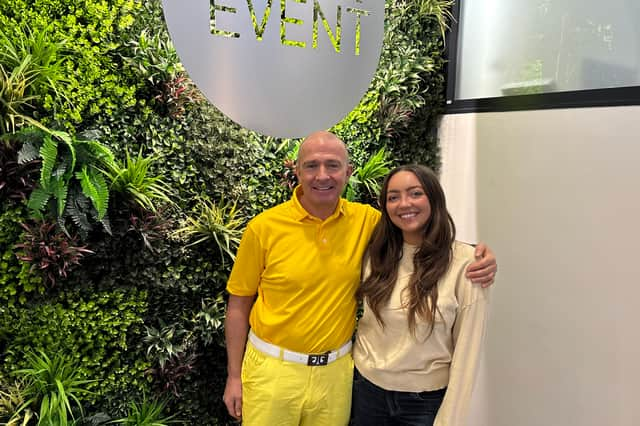
Eva said: “For me, it was so important that First Event listened when I told them that I had the condition, they straight away wanted to support me and become an endometriosis-friendly employer.
“It was so important to me because previous jobs I've had, I've been pulled into meetings about attendance because of it, and I've not felt I've been looked after.”
The policy is available for anyone with a chronic condition and aims to give them support, such as flexible hours and understanding around medical appointments and time off during flare-ups.
Eva said: “I think it's so important that they've put this chronic condition policy in place, not just for endometriosis, but for anyone at work going through something similar, because now we've got some sort of protection and we feel safe, that it is understood that we might have to have an appointment here and there, or a day off.
“It makes you want to go to work, it's just amazing to work in an environment like that, and it actually reduces the stress, which makes me not get as many flare-ups.”

Catherine Wallace, Employee Relations Manager at First Event said: "As an Endometriosis Friendly Employer, we already embed inclusive day-to-day practices, including true flexible working, unlimited leave, remote working, and access to mental health first aiders that support colleagues living with chronic conditions.
“Our new chronic illness policy builds on this foundation, formalising our commitments into a clear, consistent framework that ensures equitable support across the organisation. By strengthening psychological safety, clarity and accountability, the policy completes the jigsaw - reinforcing our values and future-proofing our approach as we grow. With women making up 79% of our team, this initiative reflects our deep commitment to wellbeing, inclusion and meaningful sector-wide change.’’
What is endometriosis?
Endometriosis is a chronic inflammatory condition where tissue similar to the uterine lining are found growing elsewhere in the body. It can cause debilitating symptoms, including painful periods, painful bowel movements, painful urination, pain during or after sex and infertility.
If you have been affected by the content of this article or suspect you may have endometriosis, you can find out more about how to access support at Menstrual Health Support Leeds.