
‘She mattered then and she matters now’: Grieving parents’ fight for inquiry into Leeds maternity failings

When Fiona and Dan Winser-Ramm entered Leeds General Infirmary (LGI) on New Year’s Day 2020, they expected to leave with their healthy newborn daughter. Instead, they left with their world shattered.
Their baby, Aliona, died just 27 minutes after she was born in what an inquest in 2023 ruled were “gross failures of the most basic nature.” The couple said her death was preventable - and compounded by a culture of cover-ups and denial.
“We were made to feel like we were making a fuss out of nothing,” Fiona tells the Yorkshire Evening Post. Despite repeated calls to the hospital about changes in movement, she was told everything was fine and to stay home.


Medical records, the couple later discovered, had been forged to suggest they had been fully informed.
“They should have called the consultant, but they decided to wait and see,” Dan says. “You’re talking about the lives of women and children. A ‘wait and see’ culture does not sit side by side with safeguarding.”
At first, Fiona and Dan trusted the staff who told them nothing could be done to save the life of their daughter. “We believed everything we were being told at face value. We blamed ourselves to the point that neither of us wanted to be alive anymore,” Fiona says.
Only three years later would an inquest confirm their fears. But even then, accountability proved elusive. The Care Quality Commission (CQC) failed to prosecute the trust, with crucial evidence left until the statute of limitations expired. “This should clearly have been a case for prosecution,” Dan says.
Through Freedom of Information requests, Fiona and Dan uncovered patterns of systematic failings stretching back decades. After learning they were far from alone in their experiences at the trust, they connected with other families. And what began as informal support between bereaved parents has since grown into a national campaign for maternity safety.
“We have this compulsion to do this, not only because we have to fight for Aliona - we have to be her voice. She mattered then, and she matters now,” Fiona says. “But it’s also about protecting future babies.”
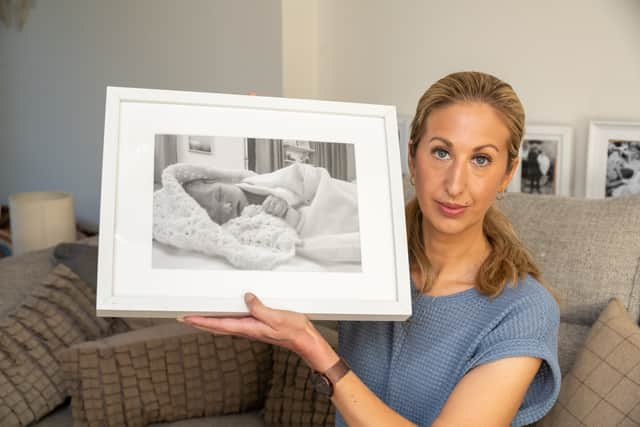
That fight has now been taken to the government with one clear demand: a full, independent, inquiry into maternity services at Leeds Teaching Hospitals NHS Trust - one of the largest of its kind in Europe. A demand they and other families presented to Health Secretary Wes Streeting at a meeting in Leeds last week.
“We and a group of other families also put it to him that the most appropriate action would be a national statutory public inquiry,” Fiona says. “One that would compel regulatory bodies to give evidence. We believe it should be both: a national statutory inquiry and a full independent inquiry in Leeds.”
The group wants Donna Ockenden, who led landmark maternity reviews in Nottinghamshire and Shrewsbury, to oversee Leeds. “She is thorough,” Dan says. “She inserts herself into the heart of culture. She understands the concerns of parents. She holds the trust to account in real time alongside the investigation.”

Earlier this month, the government announced Leeds and Bradford would be part of a “rapid review” into 14 NHS trusts in England, a decision welcomed by Dr Magnus Harrison, Chief Medical Officer at Leeds Teaching Hospitals NHS Trust. He said: “We welcome the inclusion of Leeds in the national maternity and neonatal investigation and fully support its focus on improving maternity and neonatal safety across the country.
“We recognise that we have not always delivered the highest quality of care to every family, and we are extremely sorry to the families who have lost their babies or had poor experiences when receiving care in our hospitals. Families will be at the heart of this national investigation, and we are fully supportive of this.”
Parents, however, have dismissed the review as a half-measure: “What we’ve ended up with is this rapid review that’s going to take longer to get off the ground than it should,” Dan says. “Most hospitals already have action plans, but they’re not being held to account. There’s no real accountability, no transparency, no impetus for change.”
For Fiona, the message is blunt: “Until the trust is prepared to see that they are the problem, not the people calling them out on it, then nothing is going to change.”
As pressure mounts on the NHS and the CQC, Fiona and Dan remain determined. “We’re not going away,” Fiona says. “We want transparency, we want justice, and we want real change.”