
RAF veteran helps revolutionise cancer treatment
An RAF veteran, who was treated for anal cancer, has welcomed University of Leeds led research which shows that giving a lower dose and a shorter course of radiotherapy is more effective than traditional treatment.
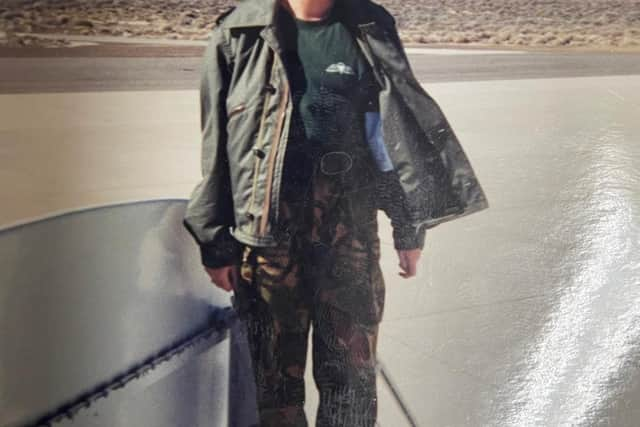
Sam Panter, 48, a former RAF Air Steward, was diagnosed with anal cancer after experiencing symptoms she initially thought were piles (haemorrhoids).
Sam, a mum of two, said: “I first went to see my GP in March that year, after experiencing bleeding and was sent for a colonoscopy which came back clear. But after some weeks, the symptoms persisted and I developed what I thought was hemorrhoids, and I initially tried to treat it myself.
“When that didn’t help, I decided to go back for medical advice and was sent for further examination under a general anesthetic. A few days later I was asked to come into hospital to discuss the results and to my utter shock I was told I had anal cancer. Fortunately, they believed it was very treatable as it was still in an early stage.”
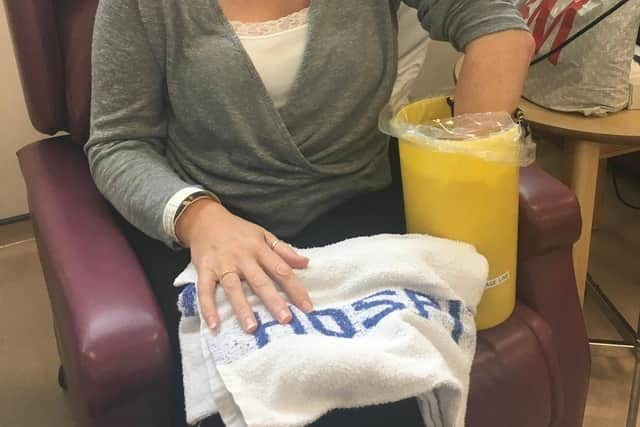

Anal cancer is a rare cancer that starts in the anus, the last part of the digestive system. Around 1,600 people are diagnosed in the UK each year. Symptoms of anal cancer can include bleeding, bowel changes, severe itching and pain.
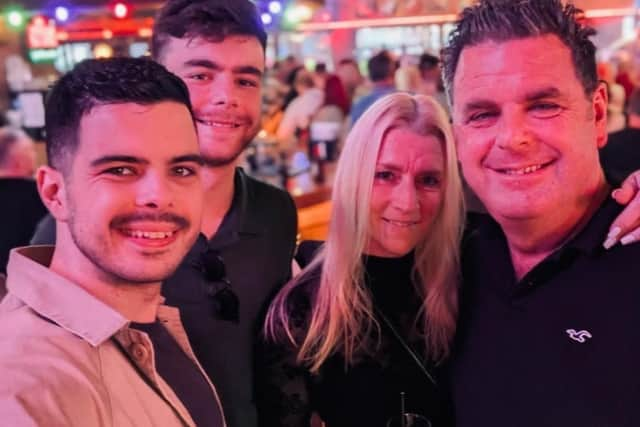
After breaking the news to her two sons, Lawrence and Jack, Sam “went into action” and began treatment.
Sam, who is married to Chris a former RAF and commercial pilot, said: “I never thought it was going to be cancer, but once I’d gone through the heartbreaking part of telling my family, I was ready to get on with treatment and do whatever needed to be done.”
As part of her treatment plan, Sam, who now lives in the Alicante region of Spain, was invited to take part in PLATO, a clinical trial funded by £1.94million from Stand Up To Cancer for Cancer Research UK (CRUK), which aimed to improve treatment for patients with anal cancer.
Chemoradiotherapy treatment for anal cancer has remained largely unchanged for the last 30-years, with a ‘one-size-fits-all’ approach.
PLATO, which is made up of three clinical trials (ACT 3,4,5), looked to address the need for improved and more personalised treatment options and is led by Professor David Sebag-Montefiore and the Leeds Cancer Research UK Clinical Trials Unit at the University of Leeds.
The aim of the ACT4 trial was to establish whether a lower dose and shorter course of radiotherapy combined with chemotherapy over four and half weeks, can still achieve the same high rate of local eradication of the cancer as traditional treatment, whilst also reducing the side effects.
Current treatment delivers a standard dose of radiotherapy combined with chemotherapy over five and a half weeks. The study was conducted across 28 sites across the UK and included 163 patients.

Professor Sebag-Montefiore presented the results last week to cancer experts from around the world at ESTRO 2025, (European Society for Radiotherapy and Oncology congress), the largest European radiotherapy conference, and they have been hailed as groundbreaking, with the potential to change clinical practice for anal cancer treatment internationally.
The ACT4 trial, which Sam was recruited to after her diagnosis in September 2019, is the first clinical trial in the world to randomise patients with anal cancer between different doses of radiotherapy- using a random selection- between standard and lower dose treatment.
Researchers found that the shorter, lower dose of radiotherapy resulted in a high level of complete disappearance of the cancer with fewer short term side effects.
The trial’s long-term results showed that 88 out of 100 (87.6%) patients were successfully treated and remained free of cancer three years later, demonstrating the success of the treatment. In the standard-dose group it was 84 out of 100 (83.6%).
Patients also reported fewer side effects, which can include sore skin, diarrhoea, incontinence, fatigue, vaginal irritation and loss of sexual function.
Sam joined PLATO ACT4 and received the standard dose of radiotherapy across five and a half weeks. She also received the standard course of chemotherapy.
Sam, who after leaving the RAF worked as a Physiotherapist Assistant in the NHS, said: “I tolerated my treatment well until about the halfway point, when I started to suffer quite badly from side effects. I had big blisters around the radiotherapy site and a constant feeling of having a urine infection, which was extremely uncomfortable.
“I remember getting to the halfway point and thinking how am I going to carry on to the end? It had got so uncomfortable, and travelling to and from appointments each day for treatment, which was an hour journey each way, was taking its toll and I had extreme fatigue.”
The results provide critically important new knowledge and are likely to lead to a change in clinical practice globally, meaning patients like Sam would have to endure less treatment and therefore reduced side effects.
Professor Sebag-Montefiore, Chief Investigator of the PLATO study and Clinical Director at the Leeds CRUK Clinical Trials Unit, said: “The side-effects of radiotherapy treatments have a significant impact on the lives of patients, both physically, mentally and often financially to attend appointments.
“The current approach for anal cancer treatments is essentially a ‘one size fits all’ where the dose of radiotherapy is similar whether the tumour being treated is very small or very large. The results will transform the lives of patients with early stage anal cancer by using a shorter, lower dose of radiotherapy that does not compromise cure rates and reduces the side effects of treatment.”
Dr Alexandra Gilbert, Associate Professor at the University of Leeds, who presented data on patient reported quality of life, said: “For the first time, we can see the true impact of anal cancer and treatment from the patient point of view using the two treatment approaches. We also see a trend towards improved sexual function in the longer term for men and women using the shorter, lower dose treatment.”
Professor Sebag-Montefiore, who is an honorary Clinical Oncologist at Leeds Teaching Hospitals NHS Trust, added: “The results from the trial represent a major step forward in personalising radiotherapy treatment for patients with anal cancer. It also demonstrates that despite the rarity of the disease, high-quality randomised clinical trials are feasible and crucial for advancing patient care.”
The current standard of care for anal cancer is chemoradiotherapy. While this practice results in relatively high cure rates there are significant side effects as a result. A key benefit of this new approach for patients with early-stage anal cancer is the reduction in treatment burden for patients and healthcare systems.
Professor Sebag-Montefiore said: “These results are a major breakthrough for patients like Sam and future anal cancer patients. The shorter, highly effective radiotherapy course not only reduces side effects, it reduces hospital visits and optimises the use of healthcare resources.
Sam successfully completed her treatment and, in December 2024, was given the all-clear by her clinician after five years cancer-free.
Sam said: “When I was invited to be part of the trial I decided to take a leap of faith. Without research we can’t learn, and I put my trust in the clinical team. Knowledge is power and the results from this trial show how important it is that we all play our part.
“I’m so proud to have been part of this work and I really hope it leads to improved treatment options for people around the world who face a diagnosis like me.”
Dr Iain Foulkes, Executive Director of Research and Innovation at Cancer Research UK, said: “Anal cancer is a devastating disease, and treatment often comes with severe side-effects. There is a real need for treatments that can help people live a better quality of life.
“The PLATO trial is an outstanding example of harnessing the latest advances in radiotherapy technology to target cancer cells and minimise side effects and personalise radiotherapy treatment in this rare disease.
“The results have been received with great excitement amongst the scientific community at ESTRO. ACT4 is regarded as a practice changing trial that will result in changes in how anal cancer is treated around the world.”