
Cottage Road: The oldest surviving cinema in Leeds that overcame two World Wars, arrival of TV, film piracy, streaming services and the pandemic

Cottage Road is the oldest surviving cinema in Leeds and has overcome numerous historic challenges including two World Wars, the arrival of TV and film piracy.
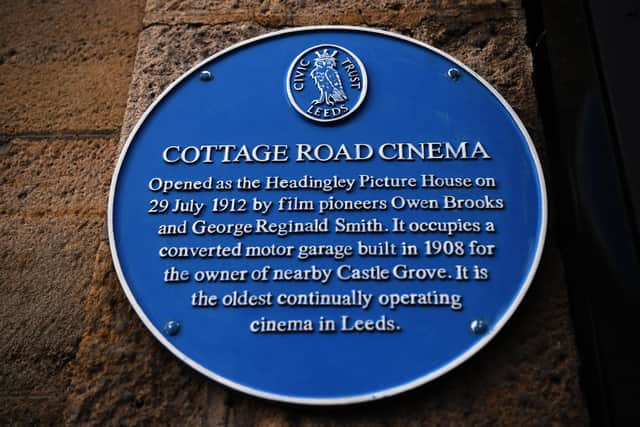
Cottage Road Cinema is the oldest of its kind in Leeds and is believed to be the oldest continually operating and independently owned cinema in the UK.
It began life as a stables for one of the houses in the area in the early 1900s before it was turned into a motor garage in 1908 for one of the local motoring pioneers.
Local filmmaker Owen Brooks and motoring engineer George Smith bought the building in 1912 and turned it into the cinema it is today.

Following George’s death 10 years later, Owen and George’s widow partnered with Alfred William Atkinson, a photographer. The business was sold to Associated Tower Cinemas in 1938 and over time cinemas were struggling.
Following the closure of The Lounge, Headingley, in 2005, rumours spread that Cottage Road was on the brink of closure too. The cinema was saved by proprietor and tenant, Charles Morris, along with his wife in July 2005 and it has been running as a traditional cinema ever since.
“We were rather taken with it. We couldn’t bear to see an independent cinema close,” Mr Morris said.
“We reached an agreement and the following day my wife and I went over, signed the lease, two hours later we were showing films there and we’ve been there ever since.

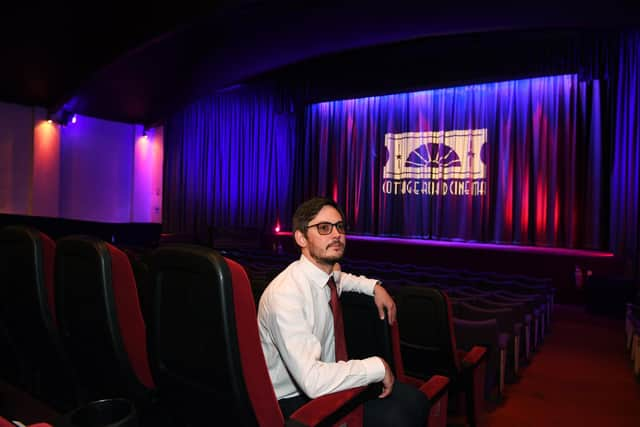
“We’ve updated things, updated the comfort and facilities as times have gone on but we still try to run it as a traditional, single-screen cinema.
“It’s complete with the trappings that always went with the cinema experience: the screen curtains, the coloured lights, the suitable music, the dimming of the lights and [so on].”
The cinema has been through a range of challenges since the early 1910s, from the First and Second World Wars and arrival of TV to film piracy and the introduction of streaming services.
“We have had and still do have our ups and downs but cinemas had to survive during the war and afterwards,” Mr Morris said.
“They were pretty run down and due to the unobtainable investments people couldn’t get building permits to rebuild or refurbish. It was a rough ride.
“It wasn’t too long after the war when television arrived, particularly in 1953 when the Queen’s coronation was screened on TV, that caused a lot of people to buy TV sets, and the decline started then.
“ITV came along in about 1955 or 1956, colour TV came along at the end of the sixties, video came out in the early 1980s, then DVDs and it wasn’t too long after that that film piracy started becoming a problem.
“Then we had lockdowns [during the Covid-19 pandemic]. After lockdown, there weren’t many films to choose from because people hadn’t been making any.

“There was that problem where during lockdown [people] relied upon streaming and now a lot of films go straight to streaming.”
Despite its challenges, the cinema is ‘still here’, Mr Morris said.
“I was particularly annoyed that the film Thursday Murder Club went straight to Netflix, it would have been a dead ringer for all my cinemas,” he said.
“We’ve had all these challenges and a lot of cinemas did disappear in the 1950s and 1960s and continue to disappear, but one of the reasons we’re still able to survive is that we are still here.
“There’s no opposition in the form of single-screen cinemas so we’re one of the few that are still left. People seem to like what we offer, it’s in a good area.
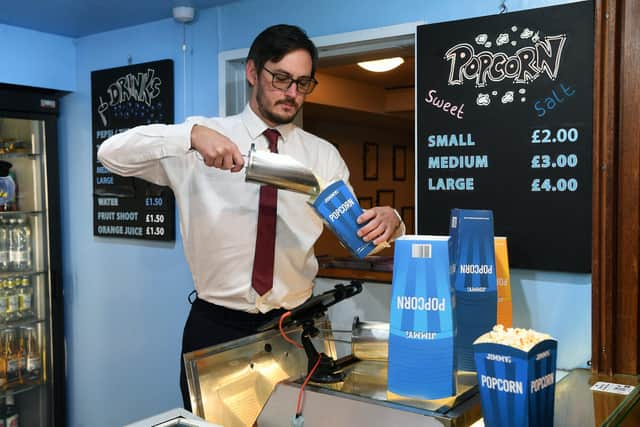
“We run it along traditional lines; customer service is paramount, the manager and permanent staff there have got to know a lot of the customers by sight and by name.
“We try very much to make the whole experience a night out in its own right, rather than just a slot.
“Although it’s not a purpose-built cinema, it’s been going as a cinema since 1912 and it’s never been closed as far as we’re aware apart from during lockdown.”
Cottage Road will have shown most of the classics as they came out over the years, Mr Morris said.
“Indeed we’ve been re-running a lot of them as part of our classic season,” he said.
“By the time we opened in 1912, the films that were screened then were silent of course and they had been accompanied by a piano or maybe a three-piece or five-piece orchestra.
“It would have been a collection of short films. It wasn’t really until the late teens and early 1920s that feature films started to show. All the films were an hour or two hours by W.D. Griffiths, Chaplin’s classics.
“Throughout the 1920s the sound films came out at the end of 1928. We had Gone With the Wind and films like that coming out in the 1930s.
“Cinema Scope was an innovation in the 1950s to try and combat the influence of TV. All the classics you can think of probably would have found their way back to the Cottage Road.
“We’re still lagging behind our position before lockdown, but you still get people saying there’s nothing like seeing a film on the big screen.”
The 35mm reel was the industry standard since 1912 and Cottage Road continues to show them.
“I’ve still got a lot of 35mm films in my collection including these old adverts which we put on with the classics series,” Mr Morris said.
“We’ve still got the 35mm projector in the cinema as well as the digital one and we do sometimes still show 35mm films because it’s a bit like how people are still interested in vinyl records, there is certainly a faction that would like to see the real film.
“Not so long ago we showed Psycho on 35mm film, we’d shown it a few years earlier but on this occasion with the 35mm film we almost doubled our attendance.
“We like to show 35mm where we can, from our own point of view it’s so much more fun. It was more labour intensive but it was much more fun and to be honest it was more dependable than digital projectors.
“For all we’ve managed to get men on the moon in 1969, the digital projectors do go wrong sometimes and they are very expensive to put right. But the 35mm projectors could go on forever.”
There are certain films that go better at the Cottage Road than others, Mr Morris said.
“We [were] showing Downton Abbey: The Grand Finale and that’s a typical Cottage Road sort of film, as indeed that Netflix film Thursday Murder Club would have been,” he said.
“There’s a film coming up in November called The Choral which will be good for us too.
“I think it’s the way we operate that has kept it going the way it is and a certain amount of persistence bordering on stubbornness if I’m honest.
“It is the sort of business where you’ve got to stick with it and ride through the bad times and try and make the good times or wait until the good times come.”