
Joash Woodrow: The significance of the Yorkshire post-war artist
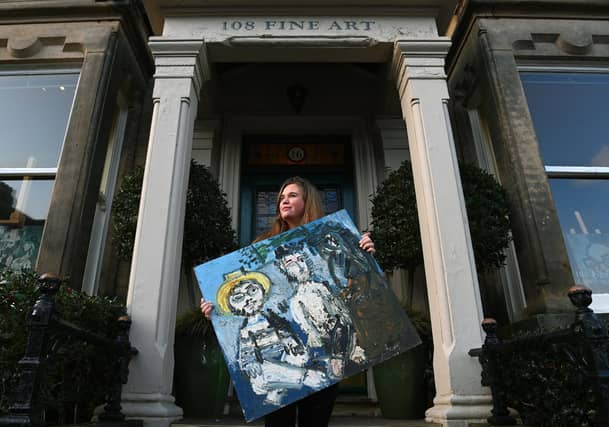

Celebration, an exhibition at 108 Fine Art in Harrogate, brings together paintings and drawings from the Joash Woodrow Archive, many unseen for nearly 25 years. Shown together, they reaffirm Woodrow as one of the most powerful and original figures in British post-war painting, and underline the continuing relevance of his work today.
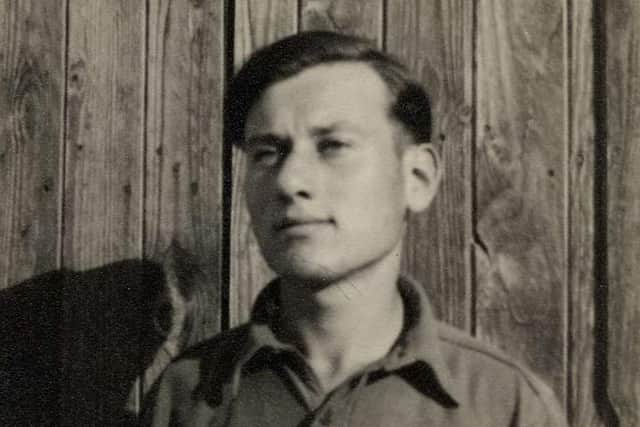
The story of Joash Woodrow is inseparable from the wider story of post-war Britain. Born in Leeds in 1927 into a large family of Polish Jewish heritage, he came of age during a period marked by war, austerity, and reconstruction. He trained at Leeds College of Art before completing National Service as a cartographer in Egypt between 1945 and 1948. He later studied at the Royal College of Art in London, where contemporaries included Frank Auerbach and Peter Blake, and where tutors recognised his seriousness and depth at an early stage.
Yet Woodrow’s life took a quieter course. Following illness, he returned to the family home at Allerton Grange Gardens in Chapel Allerton, Leeds, where he lived and worked for the remainder of his life. For decades, he painted and drew almost continuously, responding closely to the landscapes, interiors, and people of his immediate environment.
When more than 700 paintings and over 3,500 drawings were discovered at his home in 2000, the scale of Woodrow’s achievement was revealed for the first time. That year, the discovery attracted national attention, with media outlets reporting on the extraordinary body of work found at Allerton Grange Gardens. What emerged was not a marginal practice, but a sustained engagement with painting over more than half a century. Since then, Woodrow’s work has entered major public collections including Leeds City Art Gallery, Manchester Art Gallery, the Ben Uri Gallery in London, and Pallant House Gallery in Chichester, while collectors from across the UK and internationally have continued to seek out his work.
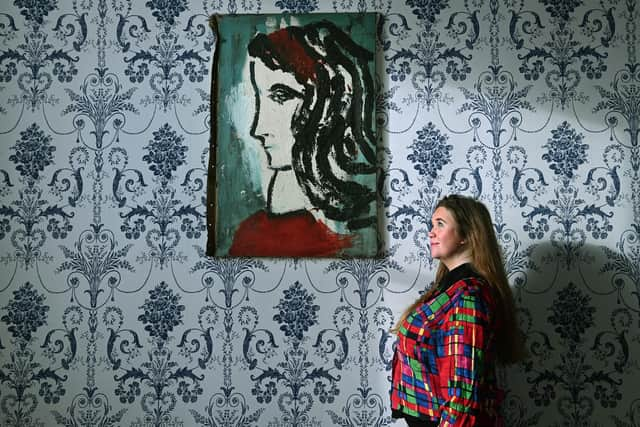
Central to this rediscovery has been 108 Fine Art, founded in 1997 by Andrew and Gillian Stewart. Since the first Joash Woodrow exhibition in 2002, the Joash Woodrow Archive has been housed at the gallery, with its care and presentation shaped through close, ongoing collaboration with the Woodrow family, especially Saul and Sylvia Woodrow. Over more than two decades, the gallery has grown alongside the story of Joash Woodrow. Following the death of Andrew Stewart in 2022, 108 Fine Art entered a new phase, led by Gillian Stewart and their daughters, Scarlett and India.
“Our relationship with Joash’s family has always been central,” says Gillian. “Saul and Sylvia were deeply involved in the early years, and Andrew and I worked closely with them as Joash’s work began to be shared. That understanding continues to guide how we approach the archive today.”
Beyond the gallery walls, this approach extends into the local community. Works from 108 Fine Art can be encountered in selected settings across Harrogate, including Jonny’s Bar and Interior Designer showrooms across the UK and Woods of Harrogate.
The gallery’s relationship with Woodrow’s work is also a deeply personal one. For Scarlett and India Stewart, now co-directors alongside their mother Gillian, the paintings have been part of daily life since childhood.
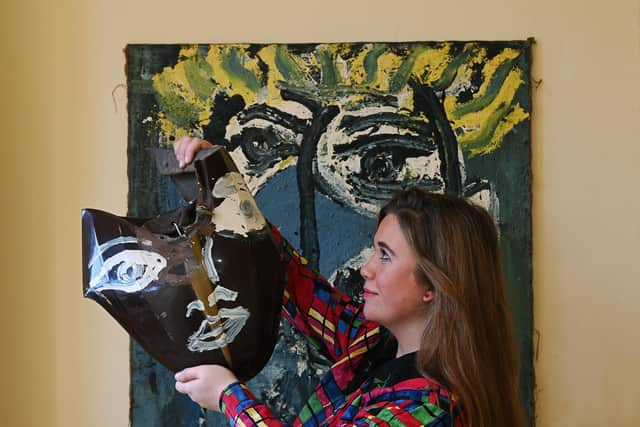
“We grew up in the gallery,” says Scarlett Stewart Mason. “Art and conversation were part of our upbringing, so continuing the gallery over the past four years has felt natural.”
Scarlett and India bring their own creative backgrounds to the gallery’s evolving programme. Scarlett trained in fashion, while India comes from animation having studied at the RCA herself. Together they have allowed the programme of exhibitions to develop organically, introducing new artists alongside long-established figures, while keeping Joash Woodrow at the core of the gallery’s identity.
“Our dad is still very present in how the gallery works,” Scarlett adds. “In the work we represent and our personal customer experience. But we’ve been able to find our own way of doing things too.”
That sense of continuity has taken on new meaning through motherhood. “I now have a daughter,” she says. “Raising her around the gallery feels exciting. It’s a place full of creativity, ideas, and people. Being able to share that with her feels very special.”
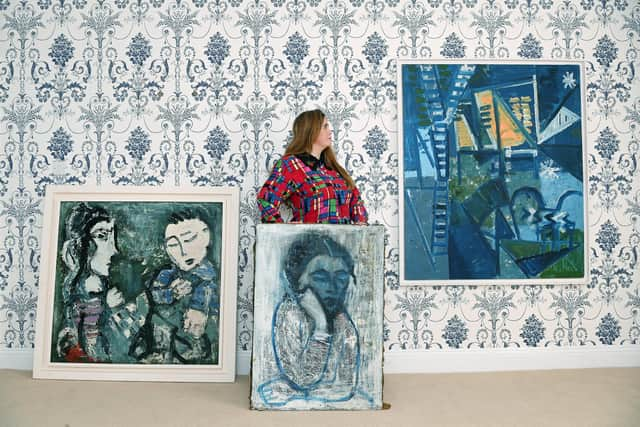
The current exhibition, Celebration, also reflects the broader cultural reach of Woodrow’s life and work. During the exhibition opening in November 2025, the gallery hosted a screening of The Resonance of Seclusion, the stage work by Liz Postlethwaite inspired by Woodrow’s life. Originally performed at The Lowry in 2003, the work offers another lens through which to consider Woodrow’s enduring impact beyond painting.
Landscape remains central throughout the exhibition. Woodrow’s views of Leeds and its allotments are attentive, grounded, and deeply rooted in the communities he observed. In 2007, art historian Philip Vann and Jackie Wullschlager wrote Joash Woodrow: Landscapes, produced in association with 108 Fine Art. The publication remains a key reference point in understanding Woodrow’s relationship to place and his position within post-war British painting.
Celebration brings renewed focus to an artist whose work continues to gain recognition while remaining rooted in place. For those encountering Joash Woodrow for the first time, it offers a clear introduction to an artist of national significance with deep Yorkshire roots.
For those already familiar, it provides fresh perspective and the pleasure of rediscovery.
108 Fine Art is open Tuesday to Saturday, 11am to 5pm and Celebration can be seen until until 7 February 2026. Walk-in visitors are welcome, and private appointments can be arranged.
For more information visit www.108fineart.com.