
Rhubarb Triangle: Yorkshire's famous Rhubarb Triangle under threat as just nine growers remain

A garden and greenhouse grower’s staple, a Sunday dessert delight and now a favourite fragrance for household products - rhubarb has enjoyed a renaissance in recent years. But is this versatile vegetable under threat?
As Yorkshire’s famous ‘Rhubarb Triangle’ gears up for harvest and the region’s annual February Rhubarb Festival returns this week - fears have grown in recent years about the impact climate change is having on supply and availability of one of the nation’s most historic dishes.
It comes, however, as Yorkshire’s rhubarb growers struggle to keep up with demand for the product. Last year, Tesco revealed customer demand for out-of-season forced rhubarb rocketed by 200 per cent compared with the same time in 2024. Ocado also revealed an 88 per cent increase in year on year sales.
A 150-year-old family farm on the rural edge of Pudsey, West Yorkshire is run by Robert and Paula Tomlinson with some help from their son, David, when he is not at agricultural college.
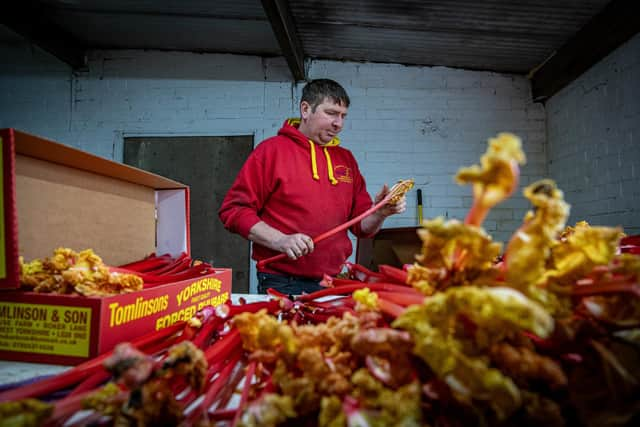

Between the three of them, they pick, clean and pack into boxes every stick of rhubarb which they harvest by hand.
Each year they produce 42,000 tonnes and sell 7,000 boxes of rhubarb. Ninety per-cent is sold to restaurants and bakers with custom coming from the farm gates in Pudsey, but also from Edinburgh to Devon, New York, Paris and Copenhagen.
“I know every single stick in this shed is sold and I could have sold it twice to be honest”, says Mr Tomlinson. “Demand has increased, we are growing to keep up with demand.”
However, Mr Tomlinson is bucking the trend as other growers in the Rhubarb Triangle call it a day.
At the height of rhubarb’s popularity there were 200 growers, now there are just nine with half of them the same age as Robert’s father who is in his 80s.
The Rhubarb Triangle - a nine square mile area of West Yorkshire which touches Leeds, Bradford and Wakefield - has ideal cold, wet soils for growing forced rhubarb.
Around October, roots go dormant after a first frost to conserve energy until warmer temperatures.
From November, the rhubarb is dug up from the field and placed in dark, warm sheds to ‘force’ or trick it into thinking it is spring.
This makes rhubarb grow again rapidly, using stored energy which is turned into sugar instead of more acid tasting chlorophyll because there is no photosynthesis.
However, extreme flooding in Spring of 2024, followed by prolonged drought and heat last year, combined with milder winters, is affecting the natural process.
The frosts, which used to come in September, no longer do and it could be November before this corner of West Yorkshire gets its first frost.
Roots are not developing as strongly, weather conditions are making planting harder and it is putting growers on the back foot.
Mr Tomlinson expects yields to be down this year as the roots are thinner due to the extreme changes in weather.
It is not just an issue affecting rhubarb.
Last year the region’s strawberries ripened much earlier due to hot weather, but were smaller and not as sweet as normal as the sugar hadn’t had time to accumulate.
At Ryedale Vineyards, the prolonged rain of Spring 2024 meant a poor harvest was further hampered by mildew.
Michelle Fletcher, owner, said: “Instead of getting 10,000 bottles we got 5,000. Anybody who owns a vineyard is always worried about something and has an eye on the weather at all times.”
A ‘Review of the state of farming finance and challenges faced’ report, prepared for the York and North Yorkshire Combined Authority in July last year, suggests climate change could lead to profits from agriculture being down by £322m.
The report says wet winter weather in 2023, followed by the dry 2024 summer, meant harvest for wheat, winter and spring barley, oats and oilseed rape was down by 15 per cent in 2023 and 18 per cent on the five-year average.
Further analysis by World Weather Attribution (WWA) found storm rainfall was made 20 per cent heavier by climate change and the number of days with exceptional rainfall has increased by 20 per cent over the past decade compared with the historical average.
Mr Tomlinson relies on the income from four months or rhubarb farming to fund his farm for the rest of the year, but added imports are also hampering the viability of UK and Yorkshire growers.
He said: “A 150 years ago there were no imports, so that is why everybody ate rhubarb in winter. It went out of fashion and died of death in the 70s when imports started coming in and we had strawberries all year round.
"That is why 99 per cent of growers packed in and there are only a handful of us left.
“One grower has packed in this time and another will pack in next time. There are only nine of us left in the Rhubarb Triangle and half of them are my dad’s age.
“One problem is, it is too much hard work. Some try it and think ‘forget this’. Harvesting is the easy bit.
"Splitting the roots and planting them by hand is hard when your feet are sinking in the mud. Even I think I must be mad, it is a real labour of love.
“I have been thinking over the last 20 to 30 years ‘how do you modernise it’, but I don’t think you can. It has to be done by hand.”
When asked what motivates him to spend hours outside planting and digging up rhubarb in the winter months, to then spend weeks in a shed harvesting by candlelight, he says it is simply “tradition” and the journey of rhubarb from the humble crumble to a fine-dining ingredient.
Mr Tomlinson said: “We have always done it. My dad, grandad and great-grandad have always done this.
"And now, where it is going and what’s happening, what chefs are making, the drinks coming out of it - it never ceases to amaze me.
“How creative people get with it is unbelievable. It is not just crumble, it is everything now.
"Twenty years ago rhubarb started to come back around. It has been a steady increase but over the last two or three years it has gone mental and social media has had an impact.”