
Special report: Traders' tales from behind the scenes as Leeds Market faces change

It has been a fixture of Leeds city centre for more than 200 years, and now Leeds Council is looking to build the future of Kirkgate Market beyond 2030.
And with new plans brewing, a tipping point hangs in the balance. Debate is gathering pace over new food hall designs and tempers have been fraught at times.
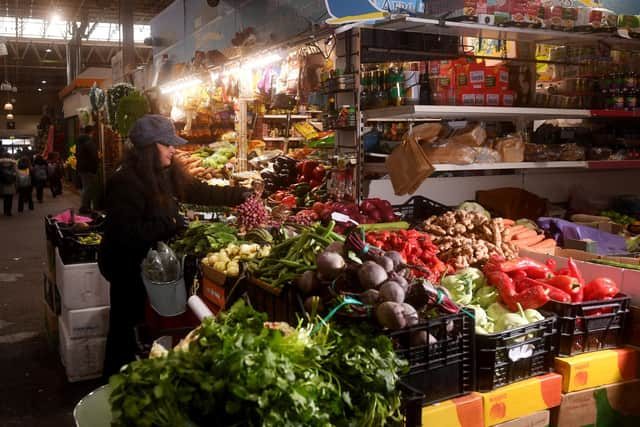
Here, the market has always been busy, bustling and loud. On a windy Thursday, there are still plenty of people passing through. Some are just headed for the bus station, or using the loo.
Leeds City Council (LCC) is pressing ahead with plans for a new food hall outside, and it’s creating a divide.

Kirkgate has always been famous as the place where Marks & Spencers began; still so synonymous today as a hallmark of British quality.
But is it still an “incubator” of entrepreneurial talent? Leeds’s best kept secret, filled with treasures of every invention?
Fabrics and shiny things
To one couple, Owen and Barbara from Skipton, it certainly could be. “We’re looking for a small independent trader if I can find what I’m after,” said Barbara.
“We’re shopping for fabrics, there isn’t anywhere left to buy them but here.”
But glancing around at a row of shuttered shops, she wondered if this world of independents is as thriving as it used to be. And what has changed.
“There’s too many empty shops, that aren’t making money,” she said. “Five years ago there weren’t nearly as many food outlets as there are now. It must be half the market.”
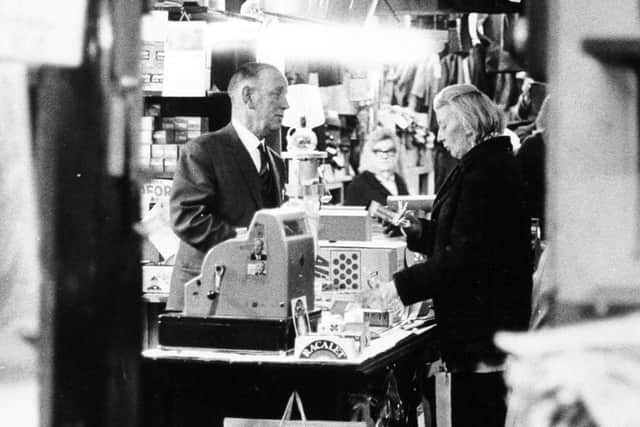
Many Yorkshire folk will remember Kirkgate from years past, as a pick and mix of lively stalls all lining a maze of corridors. A place for bargains and shiny things.
By the noughties’ it was a little more dusty and tired. A fallow time perhaps, in the cycle of shopping habits and council spends. Until a decade ago, when there was a revival.
Today, there are teenagers again, fixing their phones, or sifting through leagues of cloth for their GCSEs. Where else to buy textile fabrics? Funky boots and some LPs.
Fish row
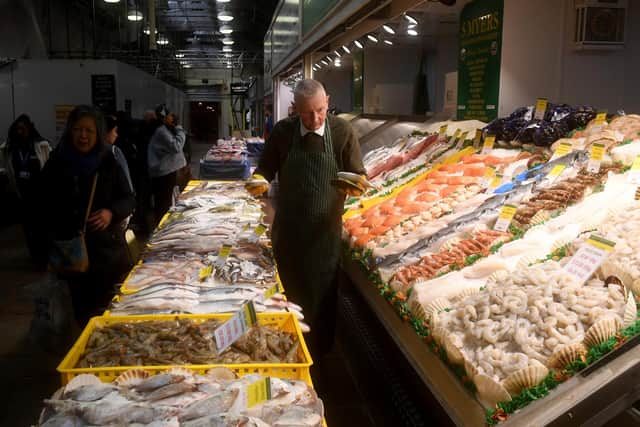
One thing that Leeds is famous for is its ‘fish row’, a street filled with traders with decades of experience between them. Close by is the butchers, and flower stalls.
Fishmonger Stephen Myers has worked the markets for 36 years. “Too long,” he jokes. Now son James, 26, is getting ready to take on reigns.
Mr Myers started on the markets at Bradford, before setting up his own stall at Kirkgate. It’s been hard work at times. Quiet years, rather than months, he said.
Now, he believes, the markets are on the up.
“It’s going in the right direction,” he said. “A lot of new stalls. It has changed.”
And much has shifted, in his time. In the early days as a trader, said Mr Myers, he might have sold a bit of haddock, a bit of cod. Some smoked herring and mackerel.
Now – it’s variety, with mussels, some ponyfish and prawns. What makes a healthy market?, he muses. A good product. And looking after customers.
“People want quality – that’s it,” he said. “They don’t want rubbish. We offer more than a supermarket. That piece of haddock there? It was in the North Sea two days ago,” he added.
“It comes down from Peterhead, brought down overnight to Fleetwood. It’s here 6.30am in the morning – you can’t get fresher than that.”
Treasure trove of curious things
In the main market, in this warren of stands and stalls, there are some curious treasures to find. Someone is asking after a kilt pin. Nodding, a trader knows exactly where one is.
Then the exotic fruits, so alien and strange. Kateeja Sembhoo, at Neil’s Continental, has also worked the markets since she was 18.
This, she said, is where you find the spice of life. It works because of this variety, she insists. And laid out before her is produce in every shape and shade imaginable.
There’s drumstick beans, knobbled and tall, mirroring their moniker. She cooks them with fish. Then turmeric, bright dragonfruit, great bunches of purple shallots.
White guava, a German turnip kohlrabi. And a bitter gourd Ms Sembhoo calls a christophine. Its proper name is a chayote, I learn, and it is native to Mesoamerica.
“I’ve been working the markets 30 years,” she said, shaking her head. “You learn all the names, from all the different countries. You won’t find this in supermarkets.”
But there are some empty stalls. A number of traders have called on the council to lower the rents.
One customer tells me city parking is a problem, adding a £10 tax to a quick shopping trip. Others say the markets need a shiny new jewel in its crown, to draw people in.
A new 'hook' for the markets
In the main area, Nasir Rahmani has run Gourmet Marinated Olives for eight years. He offers up a taster; spicy and sweet, with some fresh feta to balance the flavours.
“When people try it, they see the quality,” he said, hopeful. “And then they buy.” But times have been tough of late, he added. “It’s been quiet since New Year, nobody is spending.
"It is down on last year. We need to bring in a big company to attract more people.”
The question, then, isn’t ‘if’ a new hook for the market would bring visitors in, but what shape this might take.
The Grade 1 listed Kirkgate Market, on George Street, first opened in 1822 as an open-air market, close to the city’s Corn Exchange and Cloth Halls.
It is now home to just over 200 independent businesses. Inside, landlord Leeds City Council (LCC) said in planning papers, 88 per cent of units are in use.
Outdoors, occupancy is falling.
Traders have asked for the space to be smaller, and for a new offer to drive footfall. And in its five-year vision, the authority has set out a strategy to bring people in.
The result is STACK, a £7.5m private food hall, with events space, to be set up in shipping containers outside. Licences have already been approved, with plans to be passed. It’s a strategy that’s worked in other cities. It has caused quite some uproar.
How long can it last?, ask traders, in the food hall. They warn it’s nearing “saturation point”.
'Saturation point'
James Stock, of meat-free American diner Fat Annie’s, has found himself an unofficial spokesman.
He describes the market as Leeds’ “beating heartbeat”. And LCC, he insists, are supportive landlords. The authority buys electricity in bulk, for example, to keep prices low.
But he does worry. Setting up a new food hall - metres away from a food court that is thriving - could prove a tipping point, he fears.
“Food has been successful, it’s been part of the revival story of Kirkgate Market,” he added. “But this is a miss-step. I worry they are going to ruin something really good.
“We could kill the goose that lays the golden eggs.”
‘Container village’
Plans are in for a “container village” at Leeds Market to add a “vibrant new element” to the city’s leisure appeal.
STACK Leisure already runs similar hubs in Lincoln, Newcastle and Sunderland, and would see a two-storey shipping container repurposed in the outdoor area.
It would have space for six bars, eight street food shops, a coffee shop, and a large stage for live entertainment and giant digital screens.
Leeds City Council (LCC) hopes it would increase footfall and draw in a wider customer base.
Back in 2019, around 7m visitors visited the markets. By 2021, mid-pandemic, that had fallen to 4.5m. Last year around 5.9m people are said to have stepped through the doors.
Habits have changed, with online shopping, the council outlined. There is also a shift to working patterns, with more people working from home.
But still, there were 20 new shops opening in the lead-up to last summer. Since 2021, 69 new businesses have launched at Leeds’ markets.
Strategy
LCC considers its plans for the market in five year blocks. The last one, which ends this year, set more than £11m to refurbishment of its old ‘blockshops’ area.
There was a package of support for traders, with discounted rents, and a dramatic expansion of its street food and kitchen areas into its own dedicated space.
Now LCC deputy leader and executive member for the economy, Coun Jonathan Pryor, has said he is confident STACK would generate new custom for existing traders.
By adding a new element to the local food and drink offer, he added, it would also benefit the wider city centre by making Leeds an attractive place to spend time and money.
“Leeds Kirkgate Market has been at the heart of life in our city for generations and we are determined to ensure that it has a future every bit as bright as its past,” he said.
A vivid history
Its history will be forever known as the place where Marks & Spencer started, but Leeds’s Kirkgate Market is far more than the birthplace of Michael Marks’s Penny Bazaar.
Kirkgate Market was established more than 200 years ago in 1822 and has been located at its current site encompassing a whole block in Leeds city centre for more than 120 years.
Originally an open air market, it moved to its existing location in 1857 to cater for a growing population, and is now one of the largest indoor markets in Europe.
Designed by celebrated architect Joseph Paxton, who was responsible for the Crystal Palace which opened in Hyde Park in London to house the Great Exhibition in 1851, Kirkgate was considered a jewel in the crown of Leeds’s growing retail stature.
Its status grew with the city’s and the building saw the glazed and dome roof added to protect shoppers from the weather, and an innovative cooled area for fishmongers bringing fish to ‘fish row’.
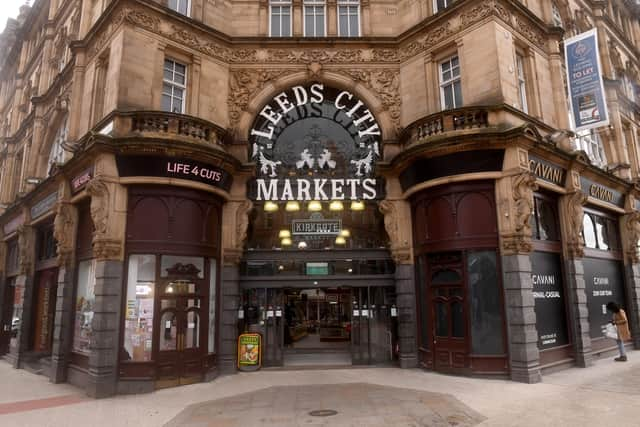
As Leeds was granted city status in 1893, a grand new entrance to Kirkgate was made the subject of a competition, with the eventual winners, John and Joseph Leeming, designing the elaborate gate and facade.
Its part in the history of one of the nation’s favourite retailers came in 1884, when Lithuanian immigrant, Michael Marks set up his Penny Bazaar in Kirkgate, with its famous motto ‘Don’t ask the price, it’s a penny’.
Later he took on a partner, Tom Spencer, going on, as Marks & Spencer, to open a string of shops from their stall on Kirkgate Market.
Wartime raids
Unveiled in 1984, the Centenary Clock in the 1904 Hall marks Kirkgate’s connection to M&S. In 2012, the chain looked back to its humble beginnings by opening a stall alongside the clock.
As the German Luftwaffe waged war above the skies of England during the Second World War, Kirkgate was hit by incendiary devices in March 1941 during the heaviest air raid of the Leeds Blitz, but still the market hardly closed.
Miraculously no-one was killed in the raids.
Enterprising planners even saw an opportunity for further expansion adding “Butchers Row” and the open market.
More than two thirds of the building was destroyed by a huge fire just before Christmas in 1975.
Traders battled to contain the fire as it spread throughout the halls destroying businesses and livelihoods.
Incredibly no one lost their lives, but traders mourned businesses that had served generations of locals.
The 1904 hall remained untouched and the market’s fighting spirit saw it reopen just three days later.
In 1976 and 1981 new halls were opened and Dutch developer MAB (UK) Ltd proposed to expand and redevelop the market further in 1986 – plans that were later shelved.
In more modern times, Leeds Council invested £12m in 2013 to renovate the building, including the creation of an events space with communal seating where shoppers can sit and enjoy street food and live music.
Timeline
1822: Open air market opens on the site.
1857: Leeds Kirkgate Market open as Europe’s largest indoors market.
1884: Michael Marks opens his ‘Penny Bazaar’ stall, a precursor to the Marks and Spencer retail giant.
1893: New entrance added after a competition is launched by Leeds Council.
1941: Kirkgate Market is bombed during the Leeds Blitz.
1975: Fire breaks out in the market on December 13, destroying businesses and livelihoods.
1976 and 1981: New halls developed.
1984: Centenary clock unveiled.
1986: Plans to expand and redevelop the market are shelved. 1991: Grade I listed status granted.