
Tower Works, Leeds: The historic Yorkshire towers inspired by Italian architecture
In the mid 19th century Yorkshire industrialists who had been on the Grand Tour – a traditional foreign trip undertaken by wealthy people with Italy a key destination – returned with heads full of architectural ideas for adorning new mills and factories.
In Leeds, Sir John Barran was inspired to build a copy of a Moorish palace in Park Square, while on the south side of the River Aire “the flax king” John Marshall modelled his spinning mill on a 2000-year-old Egyptian temple.
At Saltaire to the north of Bradford Sir Titus Salt decided his mill chimney should be a copy of the campanile of the Church of Santa Maria Gloriosa in Venice.
It was in this spirit that Colonel Thomas Harding in Leeds approached the design of his new factory for the production of steel pins used in the textile industry’s carding and combing machines.
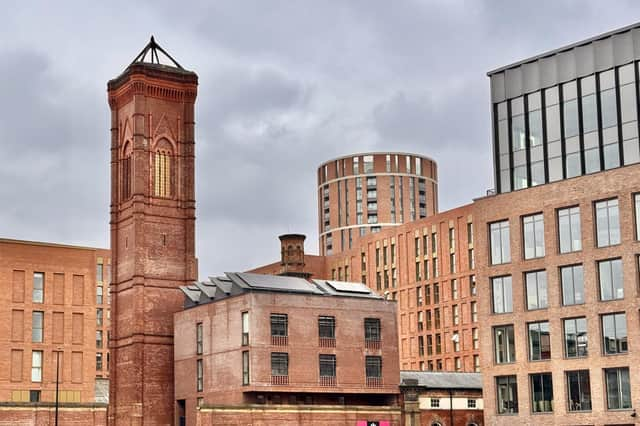

Round the corner from Marshall’s Temple Mill, work began in in the 1860s and was not completed until 1919.
The factory’s three chimneys have made Tower Works famous.
Now surrounded by new developments and difficult to view, one chimney was modelled on the Lamberti Tower in Verona and designed by architect Thomas Shaw.
There was also a small, plain chimney.
The largest and most ornate was based on the 280ft campanile of Florence Cathedral, designed by Giotto di Bondone in 1334.
The Yorkshire architect given the commission to replicate Giotto’s tower was William Bakewell, who was also responsible for Leeds’s Coliseum Theatre and Ilkley’s municipal buildings.
Work was finished in 1899.