
'We bring the hospital to the patient' - Yorkshire Air Ambulance: 25 years of the charity that can mean the difference between life and death

Laura Reid speaks to the chief executive of Yorkshire Air Ambulance about her vision for the future of the charity, which she recently took over after it marked 25 years.
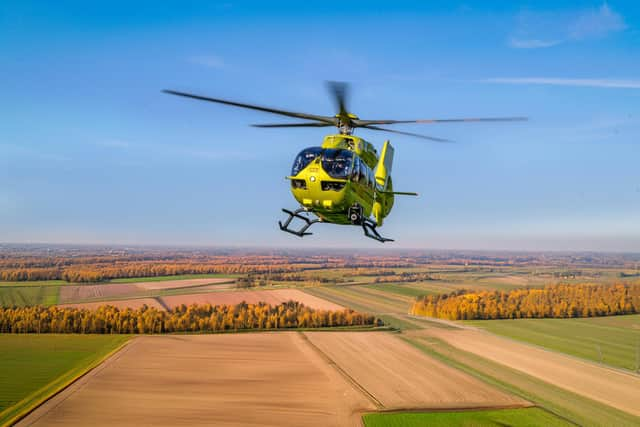
Yorkshire Air Ambulance has come a long way from its humble beginnings in October 2000. What started with just a small crew operating a leased helicopter from a portakabin at Leeds Bradford Airport has grown into a charity that serves nearly five million people, and is able to bring emergency medical care to 90 per cent of Yorkshire in just 20 minutes.
Its fleet of air ambulance helicopters and rapid response vehicles operate from units at The Nostell Priory Estate near Wakefield and RAF Topcliffe near Thirsk, staffed by pilots, consultant doctors and specialist critical care paramedics. The team responds to those in urgent need of emergency care across the region, starting specialised treatment at the scene of an incident, before patients are transported to major trauma centres or hospitals for further medical care.
“Our service is able to provide critical care where a person needs it,” explains CEO Kathryn Marsden. “We bring the hospital to the patient. Our doctors and specially trained paramedics can literally make the difference between life and death and can provide interventions that can improve life following a critical incident. It’s so important we are able to meet as many people that need us across the whole of Yorkshire. We can get to some really hard to reach places and we can provide critical care that can’t be provided on a normal land ambulance.”
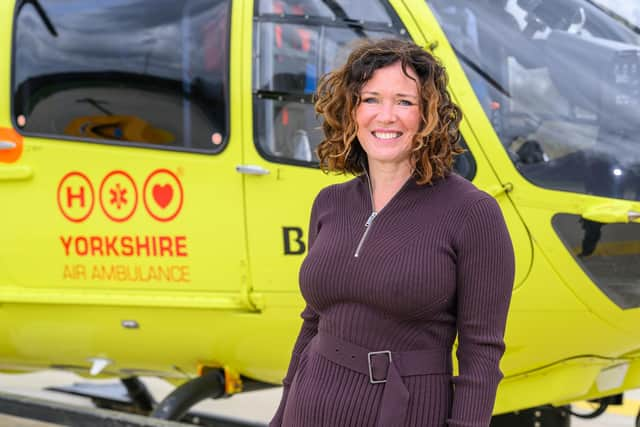

Huddersfield-born Kathryn took over at the helm of the charity in March this year, after 35 years of experience working in social care and health organisations across the UK. Her appointment came just months after YAA celebrated its 25th anniversary and Kathryn is already looking to the next 25.
“It would be nice to be able to think that by 25 years time, we’re able to respond to every single life threatening emergency where our crews could make a difference,” she reflects. “Just now we respond to as many as we can but we certainly can’t respond to all of them...And it would be great to think that one day, if you had a critical incident where the combination of a specialist care paramedic and consultant doctor could potentially save your life or improve your outcome, that we would be able to get to you. That’s my ambition.”
That aim can only be fulfilled with the support of the community. As an independent charity, YAA receives no funding from the government or the NHS, instead relying on the generosity of its supporters to cover costs including running and maintaining the helicopters, medical equipment and consultant care. Supporting the charity’s fundraising income will be a key priority then for Wakefield-based OBE-holder Kathryn as she looks to steer YAA into its next chapter – and one of her first focuses will also be the development of the charity’s new northern airbase at Skipton Bridge, Thirsk, which will likely be operational from autumn.
Public engagement is key to bringing supporters and fundraisers on board. It’s why TV shows such as Yorkshire Air 999, and in the past Helicopter Heroes and Helicopter ER, have been so important for the charity. “Television is a good way of bringing the service to people’s homes,” Kathryn says. “Those people that have come into contact with us and have seen the impact we can have tend to generally be supporters for life, whether as volunteers or supporting our fundraising or being ambassadors, because they’ve seen first hand the difference our crews can make. But thankfully the majority of people haven’t had to experience that…
“There are many many examples of where we’ve been out and either saved a life or increased the likelihood of a good life following a serious incident and I think it’s really important that everybody realises that we’re there if they need us...Television gives people the opportunity to see that, and to see what difference we can make, what impact we can have, in a way that they might not otherwise have known.”
As a senior pilot, and the training captain for YAA, Garry Brasher knows how valuable the service is. When a call comes in, it’s his job to get the aircraft up and running safely and quickly, fly to the incident site and identify a place to land. “I’m a Yorkshire lad and it’s a dream job flying your own ambulance in your own county,” says Garry, who is the charity’s longest serving pilot, having joined 13 years ago after an aviation career in the British Army and with the Specialist Air Services. “You have to pinch yourself thinking do I get paid for this job, whilst helping the people of Yorkshire?”
Many of the charity’s critical care team have also been involved with the YAA for a long period of time. Dr Steve Rowe, for example, is one of the Helicopter Emergency Medical Service (HEMS) consultants and became part of the charity in 2009, after encountering its work whilst volunteering with his local mountain rescue team. He combines his time with the air ambulance with his other NHS duties as a consultant anaesthetist and major trauma doctor at Northern General Hospital in Sheffield.
“YAA is vital for people in this region,” he notes. “Having a state-of-the-art air ambulance with experienced clinicians to be able to deliver care when it’s needed most is really important to everybody…We don’t know who we’re going to on any given day but it’s always a mother, father, relative, or friend of someone that needs help. And it’s only because people continue to donate and support us that we can keep doing what we need to do.”
Twenty-five years may have passed since the charity’s inception but its mission remains as important now as it was on day one – to protect lives from the skies.
- To find out more, visit yorkshireairambulance.org.uk