
'A lasting legacy': Meet the Leeds volunteer who saved a Windrush pioneer’s story forever
For Brent Riley, a simple introduction led to a lasting legacy.
As a volunteer on Leeds Museums and Galleries’ Sporting Heritage Project, he helped research forgotten stories, shape interpretation panels and develop oral history interviews.
But one connection he made ensured that an extraordinary chapter of Leeds’ sporting and social history was preserved - just months before it might have been lost forever.
Through local cricketing networks and colleagues, Brent helped facilitate contact with Alford Gardner, one of the founders of Leeds Caribbean Cricket Club.
The club was formed in 1948 by men who had travelled to Britain on the HMT Empire Windrush, building community and belonging through cricket in post-war Leeds.
Leeds Museums recorded Gardner’s oral history just a few months before his death.
Brent admits he almost did not volunteer at all.
He said: “I said to my wife ‘Oh, it won’t be for me, museums’. It felt a bit out of my comfort zone.”
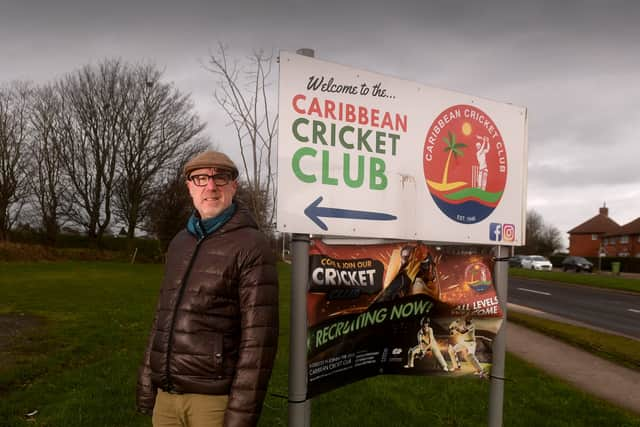

Encouraged by his wife and a former colleague, he decided to give it a try.
He said: “I was a bit apprehensive. But I went because I like sport. I love sport. I love the history of sport.
“And I couldn’t have been more welcomed.”
Brent, who works with socially marginalised people at Gipsil Engage in Leeds, was already used to promoting opportunities and building connections.
When the project began exploring lesser-known sporting stories, beyond the city’s biggest clubs, he remembered hearing Gardner speak at a community event some years earlier.
He said: “It wasn’t about your famous clubs, like Leeds United and things like that. They’ve got all the publicity really. So it wasn’t about that, but about those that are less highlighted and less known about. And that was a really interesting story.”
Through a former colleague whose husband had captained the Caribbean team, Brent began making enquiries.
Conversations led to further introductions, including the club’s chairman, and eventually to Gardner himself.
He said: “It was just through people being helpful and interested. I just asked if they could help out.”
The interview took time to arrange and was postponed more than once when Gardner was unwell. Conscious of his age, Brent understood the urgency.
He said: “You’re conscious when people are in their 90s.
“And then we got that interview, which is lovely. The recording of his voice might be there for 500 years.”
Alongside facilitating the connection, Brent also contributed research and helped shape interview questions for the oral histories.
He said the project broadened his understanding of Leeds’ sporting past, particularly the role of Caribbean cricketers in the city.
He said: “We learned how it helped to integrate within society in very challenging times. I enjoyed getting in touch with Alfred’s family and getting his voice heard.”
For Brent, sport has always been about more than results. A junior cricket and rugby coach himself, he has seen how sport brings young people together.
He said: “Sport can be a power for a lot of good. Sport brings people together. We had kids all together, all growing up together playing together. There was never any racism at all. If you like or dislike somebody, it’s because of their personality.”
The project also prompted personal reflections on his own family history.
Research into workplace rugby league teams reminded him of his father, who played and later coached.
He said: “I once asked him why he coached. He said, ‘Because nobody ever taught me.’ It brought me closer to my dad in a lot of ways.”
For anyone considering volunteering, Brent acknowledges the initial hesitation he felt but encourages others to step forward.
He said: “I just went into it with open eyes. I wasn’t really too sure what to expect.
“There were nice people. There was humour. They were friendly. I learned things. There was no pressure to do anything, but you were thanked if you did. The balance was just right.”
The Sporting Heritage Project ran for almost two-and-a-half years, creating exhibitions, research and a growing archive of oral histories.
Among them is the recorded testimony of a Windrush pioneer.
It is, as Brent puts it, “a lasting legacy”.