
How refugee women are transforming Leeds’ cultural collections - one story at a time
At the University of Leeds campus, a group of women gather around objects that feel unexpectedly familiar.
Patterns pressed into clay echo the architecture of places they once called home, mosques, courtyards, tiled interiors remembered across continents.
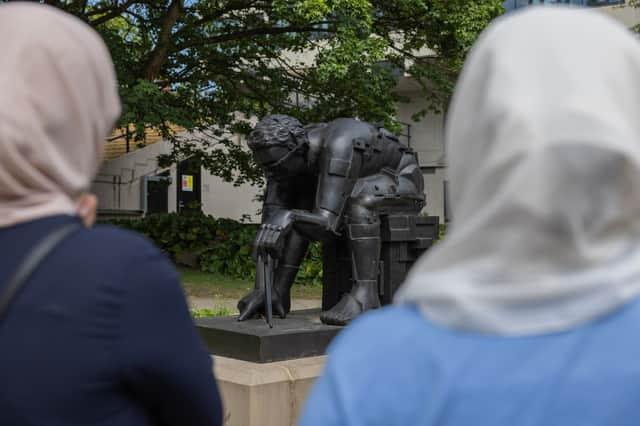

These women have lived experience of migration, and through shared conversation and making, they are adding new stories to the city.
Their work forms the heart of In Touch, with Nature, an exhibition created in collaboration with Leeds Asylum Seekers Support Network.
Rooted in reflection, creativity and connection, the project invites participants to encounter the university’s cultural collections in ways that are personal and open-ended.
The exhibition’s interpretation is shaped by the women’s own words and experiences, forming a new and living strand of Leeds’ heritage.
Guiding the project is Rachel Craddock, Learning Coordinator at Cultural Collections and Galleries, University of Leeds.
Her role is dedicated to engaging refugee and asylum seeker communities across the city.
She said: “That is the sole audience that I’m working with and engaging with.”

Rachel was recruited two years ago as part of the university’s commitment to becoming a University of Sanctuary.
“It was about thinking about how we can open up access to cultural collections and galleries, to our exhibitions, to everything we do, to a wider audience,” she said.
“Obviously we have quite a global community at the university - students and academics - so it was about broadening that out to local communities as well.”
That thinking underpins Welcoming Migrants, the programme Rachel leads, which centres on conversation, creativity and connection.
Drawing on more than 16 years’ experience in community and youth engagement across museums and heritage organisations, she designed the programme to use collections as catalysts rather than conclusions.
Rachel said: “We know that connecting people with objects and artworks is a really good way to start conversations.
“To talk about stories and experiences, and to share and connect with others. Using an object or a theme or an exhibition as a starting point can break down barriers.”
There are wider benefits too.
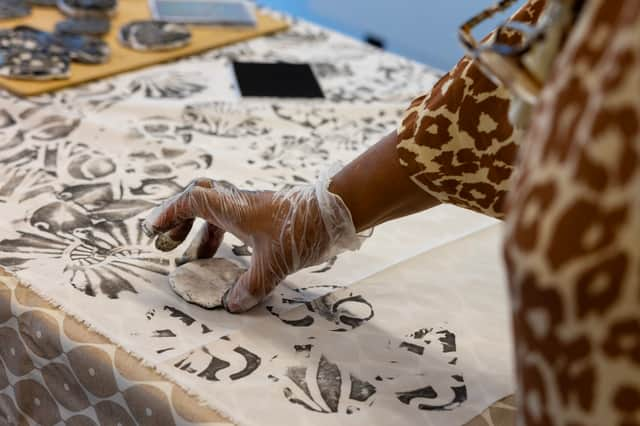
“We also know that making art and connecting with and talking with others can improve people’s wellbeing,” she added.
Just as important is the setting.
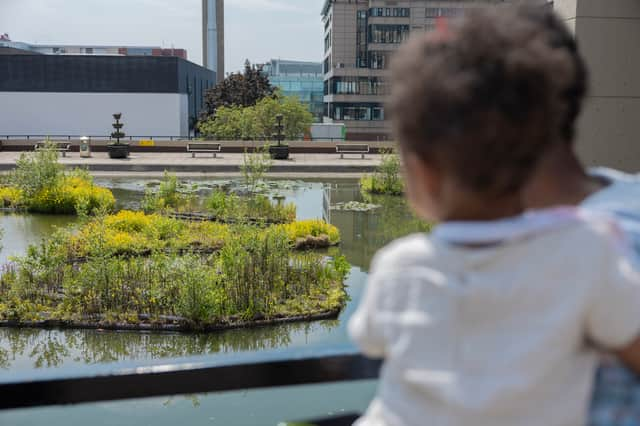
“Campus is a really safe and inspiring place to be. We want people across Leeds to feel a sense of ownership and belonging, that it’s not just a student space, but a safe place for everyone to use, to bring their families and to engage with our activities,” she said.
The In Touch, with Nature exhibition was developed through a long-standing partnership with Leeds Asylum Seekers Support Network (LASSN).
“We’ve been working with LASSN for a few years now, developing a partnership together,” Rachel explained.
“They are specialists in supporting refugee and asylum seeker communities.”
That expertise proved vital.
“They were able to provide us with a member of staff who is an expert with lived experience to support all of the activities,” she said.
“They helped us find participants, support them to take part in a meaningful way, and manage practical things like bus tickets.”
Travel, Rachel noted, can be a major barrier.
She said: “It’s really difficult for people to get around Leeds, particularly people who are refugees and asylum seekers. They don't always have the budget, if they are studying, to get around.
“They helped us get people here in a safe and supported way.”
One of the most powerful elements of the exhibition emerged in the University’s Great Hall, where the women encountered the Burmantofts tiles - decorative ceramics made in Leeds by the Leeds Fireclay Company.
Initially explored as part of a wider investigation into art and nature, the tiles soon took on a deeper resonance.
Rachel said: “Nature is one of those things that we have a human connection to, a human need.
“As humans, we are part of nature.”
From there, the group began looking at artworks that incorporated natural forms.
“The tiles were one of them, so I took the women to have a look, and then we took impressions of them and printed with them,” said Rachel.
What followed surprised even those leading the project.
Rachel said: “What was really interesting was how people started to connect them with their own experience of architecture and design.
“The women started to think about patterns in their own homes, or in mosques and religious places, and architecture from their home countries.”
Those reflections opened up broader conversations about Leeds itself.
“It tells the story of our collections and the architecture in Leeds, which has got a global influence,” she explained.
“You see similarities in different designs that are influenced by Persian or other traditions. People are able to make those connections.”
Central to In Touch, with Nature is the decision to let the women’s voices lead the interpretation.
For Rachel, this was essential.
She said: “It’s super important to show that we value their voices and their lived experience.
“Everyone is an expert. They bring their own lens to an artwork, to an object, to an exhibition.”
She added: “I don’t think it would be authentic if it was me explaining what was happening. A really great way of understanding objects better is by looking from different people’s points of view.”
The project also drew on the university’s wider Cultural Collections, including Artist Books and the sculptural reliefs of Hubert Dalwood.
Rachel said: “We would walk around campus and encounter artworks on the public art trail.
“I’d be looking at what the women responded to, and that would then lead the project further.”
One moment stood out.
“There was one woman who just went crazy for the relief,” Rachel recalled.
“I knew at that point we had to take this on a bit of a journey.”
That curiosity led to hands-on experimentation with clay, pattern and relief, inspired by Dalwood’s process but rooted in the women’s own stories.
For Rachel, this way of working continually reshapes how she understands heritage.
She said: “We are the custodians, we keep hold of these objects and look after them.
“But they’re only activated and alive and relevant if they’re being experienced by people.”
Her hope is that participants carry confidence forward with them.
She said: “I want people to feel comfortable visiting the university, being on campus, and visiting other heritage and arts organisations in Leeds.
“That they feel those places are for them.”
Looking ahead, she hopes to grow the programme and deepen its impact.
She said: “We want to continue capturing and celebrating people’s interpretations and voices, and support refugees and asylum seekers to build skills for future employment or education in Leeds.”
The collections will remain central.
“They’ll always be the starting point. But it’s about our shared history, and our future together in Leeds,” said Rachel.