
Heritage Heroes: Meet the man who can read Middleton Park like a history book
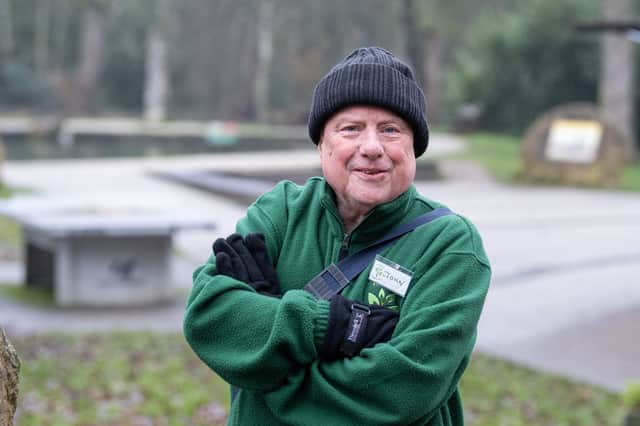
If you walk through Middleton Park with John Newbould, you’re never just walking.
Beneath your feet are centuries of footsteps: miners, manor lords, worshippers, sweethearts and troublemakers, all leaving their marks on the land.

Boundary ditches lie in the undergrowth, coal pits mark the woodland floor, and ponds reflect layers of the park’s past.
As a trustee of the Friends of Middleton Park and one of its most dedicated researchers, John has spent years patiently uncovering these layers, then sharing them, generously, with anyone willing to listen.
John’s journey into Middleton’s past began with a single family, whose story opened up a much wider history.
He said: “My initial interest was in the Brandling family, who were the lords of the Manor of Middleton from the late 1600s until probably about the 1860s. They were based in Newcastle, but they were the lords of the Manor of Middleton through marriage, and it sort of went from there, really.”

As John dug deeper, coal mining quickly emerged as a defining thread, one that would shape both the landscape and the lives of generations.
He said: “They were responsible for the development of coal mining. That’s where my interest came from, and I just followed it up from there.”
That curiosity eventually became a long-term project with the Friends of Middleton Park, resulting in an ever-growing archive of research shared online.
John said: “It’s not a history as such, it’s really more a collection of documents. It starts at the Domesday Book, and at the moment we’re up to about the mid-1800s.”
While his work spans centuries, John is especially drawn to stories that sit just outside the mainstream - moments of tension, belief and everyday drama.
He said: “There was a whole period of history when Ralph Brandling arrived at Middleton and married Anne Lee. They were both Roman Catholics at a time when it wasn’t a good idea to be a Catholic. They allowed Middleton Hall to be used as a chapel for Catholics in the area, which gave Middleton some sense of notoriety.”

Other episodes are far more tragic, and still deeply felt within the community today.
John said: “The Gosforth Pit disaster of 1825 is quite a chilling chapter in Middleton’s history. Last January, the Friends of Middleton Park organised a memorial service in St Mary’s Church to remember the 25 miners who died. There’s a plaque now up in the church that names them.”
When John leads guided walks through the park, he often points out features most visitors would never notice - traces of conflict and boundary lines still etched into the land.
He said: “There was a boundary dispute that stretched over ten years. They went to court, they threatened to kill each other in duels, they kidnapped each other’s servants. When the land was finally settled, they dug a ditch to separate the two parts, and parts of that ditch are still visible, if you know where to look.”
Knowing the stories behind the landscape changes how the park feels, especially in quieter seasons.
John said: “If you’re walking through the woods, particularly late autumn and winter when the undergrowth has gone back, you can actually see the hollows where the former coal pits were. It really does bring it to life.”
Some stories linger in more unsettling ways.
“There was a young sweetheart whose girlfriend drowned in the pond. I think of that every time I walk past it. Not a very nice thought,” he said.
Others surface suddenly, attached to places people pass through every day.
John said: “To walk through the park gates at Belle Isle, William Henry Maud was in a carriage that tipped over and he was killed. There are all sorts of bits and pieces that, as you walk, come back to life in your head.”
For John, local history matters because it connects people - not just to the past, but to each other.
He said: “Up to 1968, Middleton had a long history of coal mining. I suspect there are quite a lot of people who know their grandfathers and great-grandfathers worked down the pits. Some of the things we do bring that to life for them.”
That shared past, he believes, can still help shape a sense of belonging.
John said: “Knowing something about your local history sometimes helps to bring you together as a community. It gives you a shared bond, a common story.”
After more than ten years with the Friends of Middleton Park, and now as a trustee, John hopes visitors leave with more than just facts.
He said: “I’d like people to go away not just thinking about history, but thinking about Friends of Middleton Park, a group of volunteers, unpaid, doing everything they can to promote local interest and involvement.
“I’d like them to think: I enjoyed that walk, I found it really interesting, but above all else, what an amazing organisation they are.”