
Review: Volkswagen Passat
Sleek and lovely, the Volkswagen Passat is the perfect load carrier
It’s hard to believe the Volkswagen Passat has been around for more than 50 years. First launched in 1973, it has evolved through nine generations into the sleek, sophisticated machine you see today.
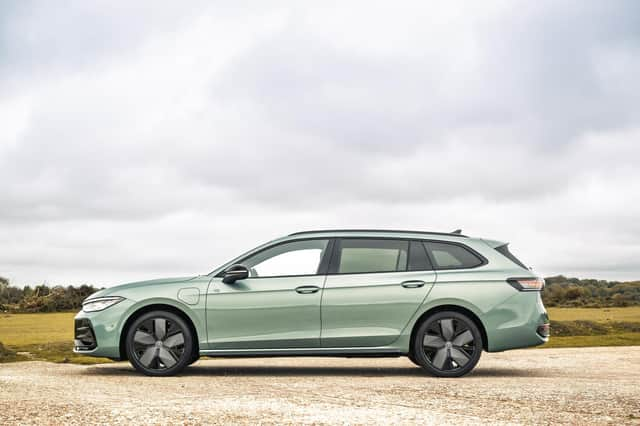

In 2025, 162,087 Volkswagen models were registered in the UK, with 2,823 of those bearing the Passat badge. These days, it’s offered exclusively as an estate — the saloon was quietly dropped in 2023 as demand dwindled — although the “estate” label itself has disappeared, leaving it simply as the Passat.
This latest generation is both handsome and highly practical, making a strong case as one of the best estate cars on the market. Its aerodynamic profile delivers an impressive drag coefficient of just 0.25, improving efficiency while also keeping wind noise to a minimum.
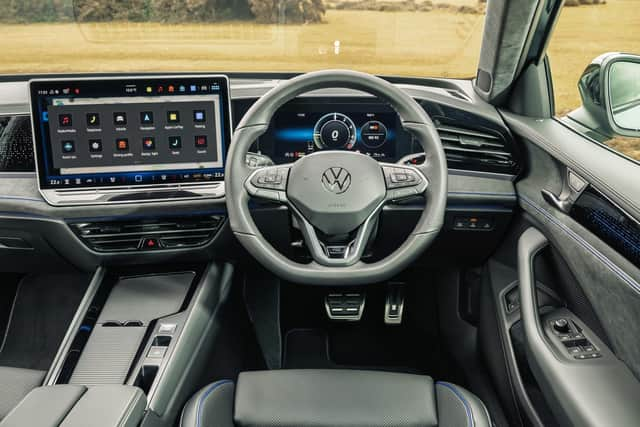
Not everyone wants an SUV as their family car, and for those drivers, the Passat remains a compelling alternative — one that ticks most, if not all, of the right boxes. Built on Volkswagen’s latest platform (shared with the Volkswagen Tiguan), it features a thoroughly modern digital cockpit and a cabin that feels solid, refined and well put together.
We tested the excellent 1.5-litre TSI mild hybrid in top-spec R-Line trim — the range also includes Life and Elegance models. All versions come with a seven-speed DSG automatic gearbox, and while there’s no manual option, the transmission is smooth and responsive enough that you won’t miss it.
On the road, the Passat excels as a long-distance cruiser. Ride comfort is a particular highlight, especially in R-Line form, which features DCC Pro adaptive chassis control. This allows you to tailor the suspension to suit your preferred balance of comfort and control, as well as changing road conditions.
The eTSI mild-hybrid system pairs a 1.5-litre turbocharged petrol engine with a 48V lithium-ion battery and belt-driven starter generator. This setup provides a useful torque boost when pulling away, while also enabling a near-seamless stop-start system. The result is a drivetrain that feels quiet, smooth and eager.
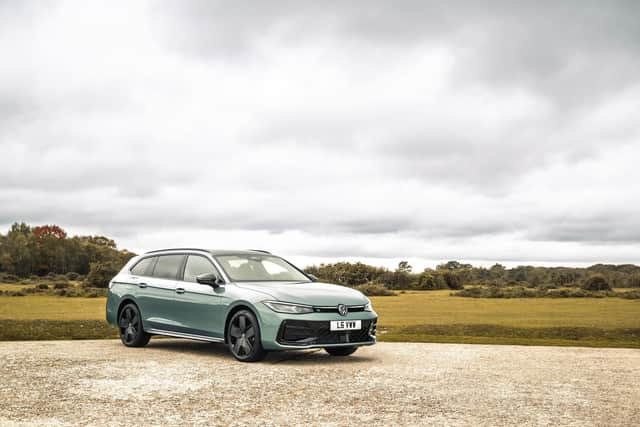
Despite its length, visibility is surprisingly good thanks to large windows, and manoeuvring is made easier with front and rear parking sensors plus a crisp rear-view camera.
Inside, the Passat impresses with high-quality materials and a clean, modern design. Like many contemporary cars, however, most functions are controlled via a central touchscreen. While this keeps the dashboard uncluttered, it does mean taking your eyes off the road for even simple adjustments. Voice control is available, though it can occasionally struggle with stronger regional accents.
Our test car featured several optional extras, including a Driver Assistance Pack (£650) with lane assist and rear door child locks; an Interior Pack (£1,640) adding climate-controlled front seats; and a space-saver spare wheel (£370). Other options included a panoramic sunroof (£1,420), tyre pressure monitoring system (£210) and a folding towbar (£1,125).
Comfort is excellent throughout, with generous rear legroom and supportive, adjustable front seats. As you’d expect from an estate, practicality is a major strength, with 690 litres of boot space expanding to 1,920 litres with the rear seats folded flat.
Volkswagen Passat R-Line
Price: £43,855 (£51,480 as tested)
Engine: 1.5-litre turbo petrol mild hybrid
Power: 148bhp
Torque: 184lb/ft
Transmission: Seven-speed DSG automatic
Top speed: 138mph
0-62mph: 9.3 seconds
Economy: 50.9mpg
CO 2 emissions:126g/km