
'Something has to change': How Leeds restaurants are fighting in the face of spiralling costs

‘We don’t have enough help, and we need it’
Times are hard. It’s impossible not to notice it while scrolling on social media or reading the local or national news.
Costs are skyrocketing while wages struggle to keep up, meaning less money to spend each month. On the other hand, the hospitality business is also facing rising costs – from ingredients and wages to business rates and VAT – often leading to rising prices for customers.

Over the past few months, we’ve shone a light on some of the amazing people who make Leeds the fantastic city it is for food and drink.
And this week, the Leeds Summer Served campaign is focusing on the mounting challenges facing the hospitality sector, how the city’s resilient bar owners, restaurateurs and operators are adapting to survive – and what help the industry is desperately crying out for.
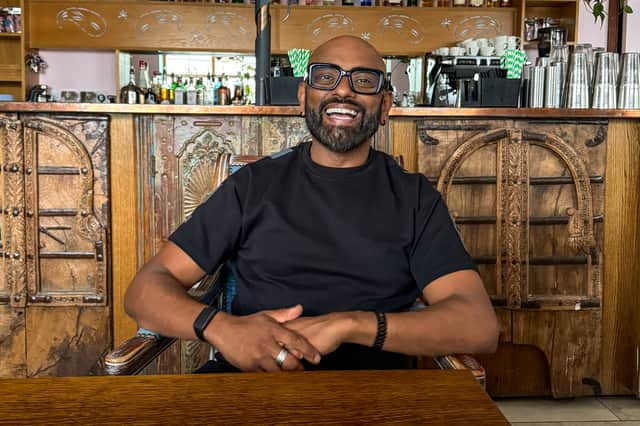
“We don’t have enough help, and we need it”, second-generation restaurateur Bobby Patel told the Yorkshire Evening Post.
“I feel the value of what we offer as an entire industry isn’t necessarily valued by the powers that be. We get strapped in with retail, or we get strapped in under some other pie chart where we’re lost.”
His family restaurant, Prashad, was founded as a deli in 1992 and has become an award-winning establishment synonymous with the city’s hospitality sector. But a dedicated customer base and a name people know is no longer enough to stay in business, Bobby said.
“In the last six months, we’ve had to have some tactical management because it’s tough,” he explained.
“The markets have changed, the external forces have changed, operational costs have changed. But along with that, most businesses just put up the prices. Hospitality can’t do that.”
A stark warning, and Bobby’s feelings are reflected across the industry – and it’s affecting long-running establishments like his own as much as anyone else.
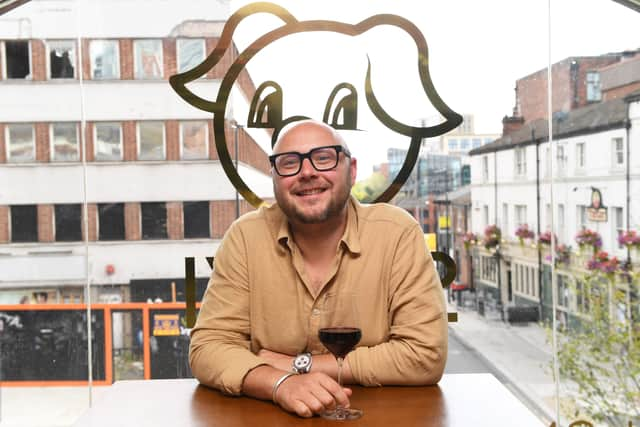
At Italian eatery Stuzzi on Merrion Street, co-owner Jimbob Phillips and his team have also had to adapt to the tougher climate, in some cases sacrificing items in favour of more economically viable options.
He has also noticed a shift in how customers spend, with fewer customers going out to eat - and even regulars eating out less often.
Jimbob said: “We’ve always had quite a good core group of Stuzzi fans and regulars that were going out two to three times a month, that maybe now only go out once a month.
“As the previous years and months have gone by, with all the rises in costs, we have had to put our prices up to help pay for those rises. But I don’t think that then reflects in what our average spend per head has been – I think that’s stayed very much the same.

“People who before might have drunk a certain bottle of wine in a certain price range have started drinking slightly cheaper ones so they can still go out, still have a nice time, but be a little bit more price conscious. If they were having six dishes before, maybe they’re five dishes now.”
Comparing Leeds to its neighbour across the Pennines, Jimbob pointed to Manchester’s thriving hospitality ecosystem, driven by international students, major gigs and two large football clubs.
He added: “Manchester must be having the same struggles – but there seems to be this thriving scene of loads more gigs happening, loads more international students living there.
“The more that little ecosystem and that financial climate gets healthier, the more great things open, so the more people want to visit.
“Leeds feels like it’s playing catch-up. There is development going on, especially in the south of the city, and that hopefully is going to reap benefits in the future – but it just feels like it’s that little bit behind.”
But operators have grit. The hospitality industry has never been a walk in the park, even at the best of economic times, and those working in the sector have learned to stay optimistic - through Covid, the cost of living crisis and whatever may come next.
Prime Minister Andy Burnham last month announced a cut in business rates for bars, pubs and music venues. But there is still more help needed if the city’s brilliant restaurants are to continue to thrive.
Jimbob called for across-the-board VAT of 10%, while Bobby agreed that more direct support and recognition is urgently needed.
He said: “We are the first people who end up giving young people their first job, and we’re struggling too.”
Despite the pressures, he still sees reasons to be hopeful - if the right support and mindsets are in place.
“The exciting part is the innovation and the collaborations,” he said of Leeds’ food scene. “
There are simple sandwich shops just outside the city centre doing phenomenally well, and there’s this appetite to work with someone else – let’s do a Prashad sandwich, let’s do a Mexican takeover.
“When chefs are driven with knowledge and passion, the crossover - where you’re taking elements of the tradition and crossing it over into another cuisine – I think that’s super exciting.”
And for Jimbob, even after what he calls “a barrage of crap” since 2020, hope is what keeps people in the industry going.
“There has to be light at the end of the tunnel,” he said. “There’s always peaks and troughs, and I just think we’re in a massive trough at the minute.
“We’re just at the bottom of the hump at the minute, and hopefully there needs to be a sharp upturn the other way.
“I just live in hope. If you keep doing what you’re doing and doing it well and fighting the good cause and stick by why you did things in the first place and what makes you great, then hopefully you might come out the other side all right. It can’t just keep going on like this.
“There has to be something that changes.”