
'A window into our culture': The restaurants making Leeds a global food destination

‘Our business and our family have always taken pride in being a window into our culture’
Leeds is a city of global flavours. From Gujarati and Keralan food to Japanese, Chinese and Latin American cuisine, restaurants across the city are bringing food and traditions from around the world to West Yorkshire.
Keralan food takes centre stage at eateries like Kerala Canteen and Tharavadu, while Prashad serves up meals from Gujarat. Azotea and Lupe’s Cantina bring Latin America to the city, while FIKA North and BROD give Leeds a taste of Scandinavia.
And you don’t have to look far to find Middle Eastern, southern European, African and North American cuisine, with restaurants and chefs continuing to add to the city’s increasingly diverse food scene.
For week eight of the Yorkshire Evening Post’s Leeds Summer Served campaign, we speak to two restaurant owners who have brought their own take on global food to Leeds - and find out what makes the city such a welcoming place for international flavours.
A family tradition rooted in Gujarati cuisine
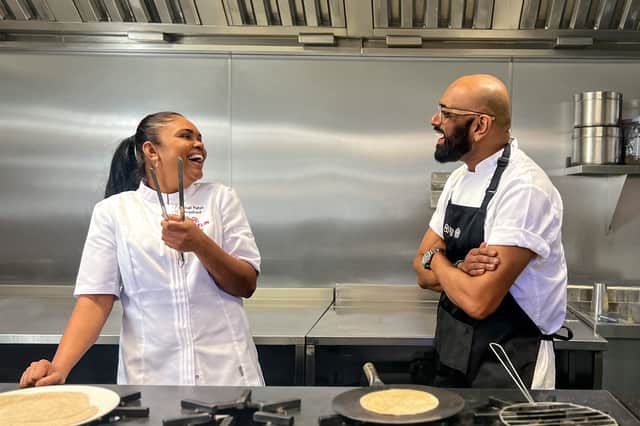

Prashad, in Drighlington between Leeds and Bradford, can be credited with introducing the city to Gujarati cuisine.
Founded by Kaushy and Mohan Patel in 1992 as a small family-run shop and deli on Horton Grange Road in Bradford, the restaurant is today run by their son, Bobby Patel, and his wife, Minal, who heads up the kitchen.
“If you can think back to 1992, when my mum and dad opened Prashad Deli and the board said ‘Prashad 100% vegetarian’. They might as well have put a ‘No entry’ sign on the front door,” Bobby told the YEP.
For Bobby and Minal, Prashad remains rooted in cultural pride and family tradition rather than chasing trends.
”Our business and our family have always taken pride in being a window into our culture,” he said.
“That’s what motivated my mum and dad, and more importantly, that’s absolutely what motivates Minal.
“She was born and grew up in Gujarat and her drive is to showcase her cuisine, to be innovative and to redefine Gujarati cuisine - but it’s always going to be Gujarati cuisine at its heart because that’s what makes her happy.”
That ethos extends to the way they talk about their food. While Prashad began life as a proudly vegetarian deli, Bobby says diners’ attitudes - and the restaurant’s own approach to marketing - have changed dramatically over the past three decades.
“Back then [calling it] ‘Prashad 100% vegetarian’ was probably the worst marketing decision we could have made,” he added.
“Now Prashad doesn’t actually market itself on the fact that it’s vegetarian. Our journey has allowed us to elevate and talk about food as the level, quality, complexity and taste.
“Some customers are still unaware that it’s vegetarian until they walk in - but they stay, because they’re here for good food.”
![“Back then [calling it] ‘Prashad 100% vegetarian’ was probably the worst marketing decision we could have made" - Bobby Patel](https://www.yorkshireeveningpost.co.uk/jpim-static/image/2026/08/13/11/35/Bobby-Patel-Headshot-1.jpeg?trim=1391,0,1107,0&width=640&quality=65)
Bobby credits inquisitive diners and the openness of British culture as a major factor in Prashad’s success.
“All the cultures that have embedded themselves within Leeds and West Yorkshire have become more inquisitive, whereas I would say the core British culture has always been inquisitive,” he said.
“As a culture, we’re always travelling, we’re always experiencing new dishes, and when they come back to our city, we’re the first to go and try it. We love it.”
The city’s organic growth and inclusivity are also among the reasons for its success in attracting independent restaurants and businesses from diverse cultural backgrounds, he added.
“I think it’s because it’s organically grown,” he said. “In the three decades that I remember Leeds, there was a time when Leeds was the poor cousin to Bradford, but it embraced, and it evolved, and it was inclusive.
“The city centre isn’t huge, but it’s got lots of scope, so as it grows it can pull crowds and it can organically grow. With that, you get meaningful businesses - businesses which stand the test of time.”
Tradition meets a modern Leeds
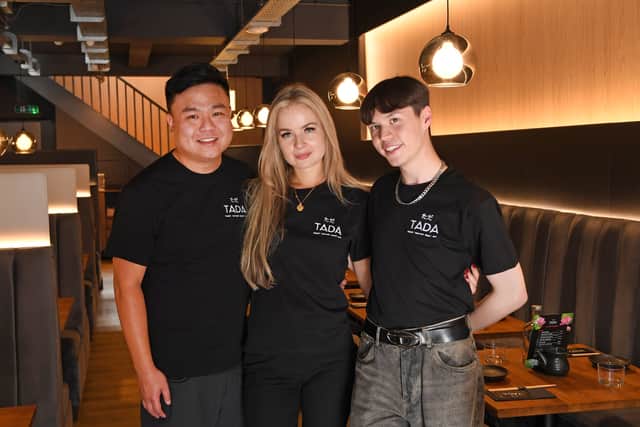
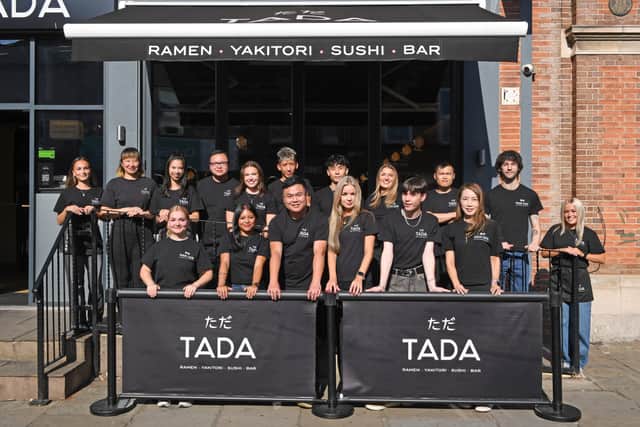
In Headingley, Thomas Chaing and Katlin Akerman’s restaurants TADA and Man Zen offer Leeds a glimpse into Japan’s bento tradition: single-portion meals packed in visually appealing boxed containers.
Launched in 2023, TADA was originally a small venue with limited seating on Otley Road. But when a venue became available just across the road, Thomas saw an opportunity to expand.
The original venue was rebranded as Man Zen, shifting its focus from Japanese to Chinese cuisine, while TADA itself expanded to more than double its original seating capacity.
“We go down the route of a contemporary presentation - still traditional ingredients, but elevated in the wooden bento boxes we use for both restaurants,” Thomas said.
“It’s a new way of delivering what people are familiar with, and our team, our service and the atmosphere are just as important as the food.”
Personal experiences have a direct influence on the menus at both venues, with Thomas and his team drawing inspiration from their travels to Japan and family-owned Chinese restaurants.
“With the Chinese side, it’s more the British Chinese food that we focus on, but elevating it and presenting it in a new style,” Thomas explained. “That’s what we were aiming for.”
The balance between authenticity and catering to local tastes is achieved through trial and error, Thomas and his team explained, with seasonal specials and traditional dishes adapted to the British palate.
“Ultimately, the British Chinese classics are what we focus on, but then we also have seasonal specials that lean into more traditional dishes, tweaked to the British palate,” Thomas said.
“Every quarter we come up with new menus - Christmas, Valentine’s - and create new dishes for the specials.”
“It is a bit of trial and error,” manager Josh added. “There’s a long process behind the scenes, making sure we’re sticking true to authentic ingredients and traditional styles while also shaping it for our guests here.”
That approach has led to some surprise hits.
“There were some items where we thought, ‘Oh my gosh, I don’t think a British person would eat that’ - like a shell-on prawn yakitori,” Josh said. “But that actually turned out to be one of our best dishes over Christmas.”
Like Bobby Patel, the team at TADA agrees that Leeds’ open-mindedness and inclusivity create a perfect space for global food.
“Leeds is becoming a lot more metropolitan, which is a good thing,” Josh said.
“The community here really loves to support local and the small guy, and there’s such an eclectic, diverse food scene that we don’t want to lose that identity - people genuinely want to try new things.”
From Gujarati family recipes to Japanese bento boxes and British Chinese classics, the restaurants shaping Leeds’ food scene may come from different culinary traditions - but they share the same belief that the city is willing to try something new.