
Japanese knotweed: 11 Leeds areas with known infestations revealed - how to stop it from spreading

These are the Leeds areas with Japanese knotweed infestations, according to an interactive heatmap.
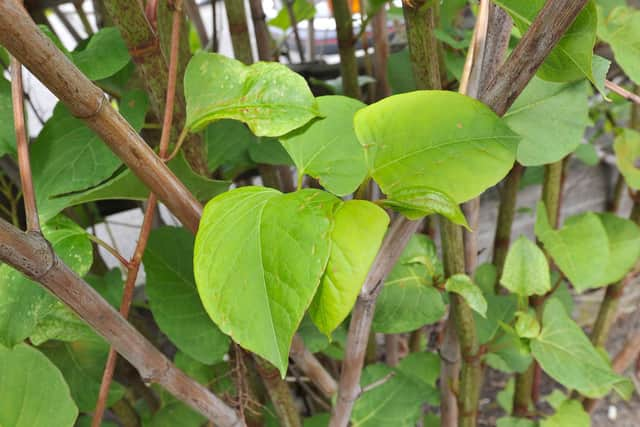
Japanese knotweed, an invasive plant that could destroy your home, has been found in a number of Leeds areas, latest figures have revealed. According to a heatmap provided by invasive plant specialists at Environetuk, over 100 infestations have been found within a number of Leeds postcodes.
Japanese knotweed can grow at a rapid rate of up to 10cm per day, and often causes damage to building structures and substructures. It can also grow up to three metres tall in spring and summer and its roots can reach down to 20 metres underground.
Homeowners must be aware if they have Japanese Knotweed on their land and property as you can be prosecuted if you have let it spread into the wild. In addition to destroying pipes,drains and properties, the plant’s destructiveness could weaken paving or building foundations, resulting in foundational collapse and inadequate flood defences.
Japanese knotweed is cited as a property defect by RICS Homebuyer Reports, which has the potential to lower the value of your house by 5% to 15%, according to surveyor specialists at Stokemont. However, by law if you are selling a property with Japanese Knotweed on the premise you must inform the potential buyer.

11 Leeds areas with Japanese knotweed infestations
According to Environetuk, these are the Leeds areas with the most Japanese knotweed infestations within a 4km radius. You can check if your area is infested with the destructive plant by keying in your postcode.
- City & Hunset - 36 reported occurrences
- Horsforth - 21 reported occurrences
- Calverley and Farsley - 21 reported occurrences
- Morley North - 10 reported occurrences
- Hyde Park and Woodhouse - 49 reported occurrences
- Alwoodley - 35 reported occurrences
- Adel - 29 reported occurrences
- Seacroft - 25 reported occurrences
- Roundhay - 20 reported occurrences
- Crossgates - 17 reported occurrences
- Garforth - 11 reported occurrences
How to stop knotweed spreading
According to the Government website, you should not try to treat knotweed on your own unless you are experienced in this field. Spraying or injecting the stems with chemicals can be an effective treatment to stop knotweeds spreading but only approved herbicides can be used.
Respraying is also needed as it usually takes at least three years to treat Japanese knotweed. However, the government website advises that you get a professional to do this for you.