
Dog owners warned to avoid making this one mistake during spring - which could land you with a hefty fine

Dog owners could face a hefty fine 🐶
- With the warmer weather and longer, lighter nights, many dog owners will walk their dogs in the countryside.
- However, they could face a hefty fine if they make this one mistake.
- Michael Nelson, canine expert at the Kennel Store, outlines the seasonal rule that often catches dog owners out.
Spring is finally on the horizon, with warmer and longer nights, the perfect time to go for a walk with your dog.
However, in the countryside, there are some common restrictions that dog owners need to be aware of, with risks of hefty fines for those who don’t play by the rules. Michael Nelson, canine expert from the Kennel Store, outlines the common seasonal rule that often catches dog owners out.
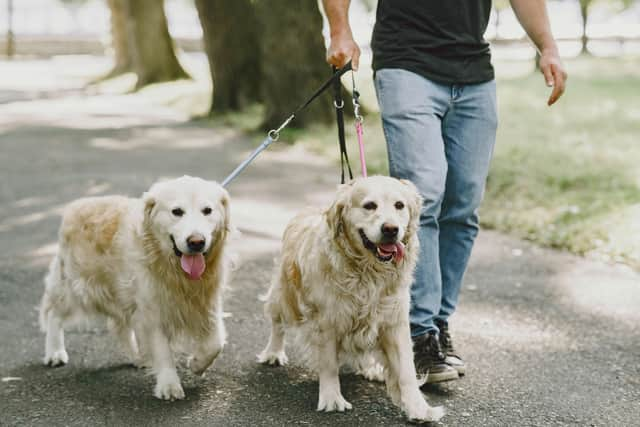

What are the rules for walking your dog this spring?
Dog owners are being reminded that from March 1 through to July 31, dogs should be kept on a lead in many outdoor spaces to protect wildlife during breeding season.
The guidance, set out in the Countryside Code and backed by access law, is designed to protect ground-nesting birds and young animals, which are vulnerable during spring and early summer.
Nesting birds such as lapwings, skylarks and curlews lay their eggs directly on the ground, often in areas that look like empty fields or open countryside. Many young mammals are also hidden in long grass during spring.
To help keep them safe, dogs walking on open access land, such as moorland, heathland and coastal paths, must be kept on a short lead (no more than two metres). Failing to comply with this can lead to hefty fines.
Under countryside access legislation, ignoring seasonal restrictions can result in fines of up to £1,000, while dogs worrying livestock can lead to unlimited fines and, in extreme cases, further legal action. Local councils can additionally issue £100 fixed penalty notices under Public Space Protection Orders in certain areas.
Nelson said: “Most owners are doing exactly what they do all year round, heading out for a walk and letting their dog enjoy a run. The problem is that from March onwards, the countryside is effectively a nursery.
“Dogs don’t need to make contact to cause harm. A dog running through long grass can destroy nests, separate mothers from young, or cause birds to abandon eggs entirely.”
Even dogs with excellent recall instincts can unintentionally cause issues, as no matter how well-trained your dog is, instincts can still kick in. Nelson said: “A sudden movement, a scent, or a bird taking off is all it takes. That’s why the lead rule exists during these months.”
What should dog owners do?
To comply with the legislation, Nelson recommends that dog owners should always keep their dogs on a short lead on open access land and on land near livestock. They should look out for signage indicating any additional restrictions and be aware that even for unintentional breaches, they could face fines of £1,000.
Nelson said: “To us, it looks like an open field. To wildlife, it’s a maternity ward. Once a nest is disturbed, the damage is often irreversible. People are often shocked when they hear the potential fines. But enforcement usually happens after something has already gone wrong, livestock chased, nests destroyed, or a complaint made.
“This isn’t about stopping dogs from enjoying walks. It’s about being mindful for a short part of the year.”
You can find out more about the responsibilities for dog owners who visit the countryside at the Countryside Code.