
How to combine a Kraków city break with an Auschwitz visit


How to plan a meaningful short trip from Leeds, Bradford or Manchester to one of Europe's most historically significant destinations.
Kraków is one of the most accessible and rewarding short-break destinations in Europe. It is well connected from Yorkshire, affordable once you arrive, and deeply interesting across several days. It also sits about 70 kilometres from Auschwitz-Birkenau, the site where the Nazis murdered over 1.1 million people between 1940 and 1945.
Combining a city break with a visit to the Memorial is a logical choice, and many travellers do it. Done well, the trip offers both cultural richness and a serious engagement with history.
Getting to Kraków from Yorkshire
The most convenient departure point from Yorkshire is Leeds Bradford Airport (LBA), which operates direct flights to Kraków John Paul II International Airport (KRK) with Ryanair. Flights take just over two hours. Services also tend to run several times a week.
Manchester Airport (MAN) is the other realistic option, with direct services to Kraków operated by Ryanair and Wizz Air. Journey time from central Leeds or Sheffield to Manchester Airport by train runs around once an hour, which adds time to the travel day but opens up more flight options and potentially better pricing.
Kraków Airport sits about 15 kilometres west of the city. To get there, there is a direct rail link from the airport to Kraków Główny (main station) that takes around 20 minutes and costs roughly 10 PLN. Services run frequently and this is the most efficient option. You can also get the 208 and 902 bus routes that connect the airport to the city centre. They are slower than the train but cheaper and useful if your accommodation is near a stop. If you want to get a taxi, it can cost between 50–80 PLN to get to the centre depending on time of day. Use the official taxi rank or apps such as Bolt or Uber to avoid overcharging.
Exploring Kraków: What to see and in what order
Kraków escaped significant wartime destruction, which means its medieval and Renaissance architecture is largely intact. The city rewards walking and is compact enough to cover its main areas on foot.
The central square is one of the largest medieval market squares in Europe. Allow an hour just to walk it and absorb it. The Cloth Hall (Sukiennice) divides the square and houses craft stalls on the ground floor and a gallery of 19th-century Polish paintings upstairs. St Mary's Basilica stands at the square's corner. The interior is richly decorated and worth seeing, despite the small admission fee. Every hour, a bugler plays a traditional melody from the tower, interrupted mid-phrase, a custom that dates to a medieval warning signal.
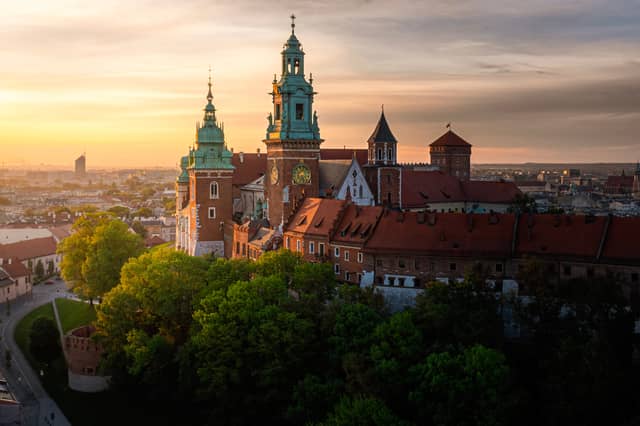
A ten-minute walk south from the square brings you to Wawel, the hilltop complex containing the Royal Castle and Cathedral. This is where Polish kings are buried and where much of Polish national identity is centred. The castle grounds are free to enter but individual exhibitions require tickets. Touring the area can take 2 or 3 hours. The Cathedral alone takes at least an hour if you explore the crypt and chapels.
This is the most important area to visit before Auschwitz-Birkenau, and it merits at least half a day. Kazimierz was Kraków's Jewish quarter for centuries. Before the Second World War, approximately 65,000 Jews lived in Kraków. The Nazis deported and murdered almost all of them. Walking through Kazimierz now — with its synagogues, cemeteries, and cultural memory — provides essential context for the Memorial visit. The Galicia Jewish Museum on Dajwór Street offers a serious photographic exhibition examining Jewish life in southern Poland and the aftermath of the Holocaust.
In the evening, Kazimierz is also Kraków's most atmospheric neighbourhood for food and drink. Szeroka Street and the surrounding lanes have a good range of cafes and restaurants. Restauracja Starka is a reliable choice for traditional Polish food without tourist-trap pricing.
Cross the Vistula from Kazimierz into Podgórze, the district the Nazis forced Kraków's Jewish population into after 1941. Plac Bohaterów Getta (Heroes of the Ghetto Square) now features 70 empty chairs as a memorial to those who were murdered or deported. Schindler's Factory on Lipowa Street houses a permanent museum, 'Kraków Under Nazi Occupation 1939–1945', which is one of the best-produced exhibitions on the occupation period. It requires a pre-booked timed ticket and needs at least 2.5 hours to fully explore. If you visit only one museum in Kraków before Auschwitz, this should be it.
The Auschwitz-Birkenau Memorial and Museum
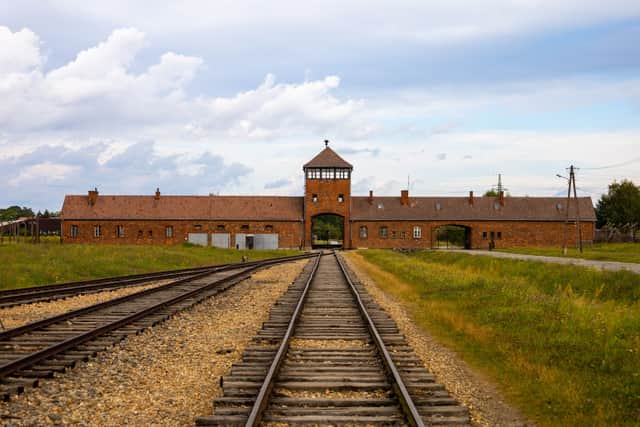
Auschwitz-Birkenau was the largest Nazi concentration and extermination camp complex. The Nazis established it in 1940 near the town of Oświęcim (renamed Auschwitz under German occupation) in occupied Poland. Initially used to imprison Polish political prisoners and Soviet POWs, it became the central site of the industrial mass murder of Jewish people as part of the Nazi's systematic genocide, the Holocaust. Between 1940 and the camp's liberation by Soviet forces in January 1945, the Nazis killed over 1.1 million people here, more than 90% of them Jewish, deported from across occupied Europe. They also murdered tens of thousands of Romani people, Poles, Soviet prisoners of war, and others.
The Memorial consists of two main sites about 3 kilometres apart: Auschwitz I, the original camp, and Auschwitz II-Birkenau, the much larger extermination complex. Both are preserved and open to visitors. The experience of walking through them is unlike visiting any other historical site.
Advance booking is essential. The Memorial receives over two million visitors per year and has strict daily capacity limits. Guided tours must be pre-booked via the official Memorial website at auschwitz.org. Between April and October especially, popular time slots sell out weeks in advance. Do not assume you can turn up and get in, especially during peak season.
English-language guided tours are available and recommended. The guides are trained specifically for this site, and having proper context transforms the visit. Individual visits (without a guide) are permitted only in the morning from 8:00–10:00; after 10:00 a guided tour is required. A full guided visit of both Auschwitz I and Birkenau takes approximately 3.5 hours at the site.
The most convenient options from Kraków are organised tour coaches. You would be collected from central Kraków, with transport and a guide included. KrakowDirect offers structured, English-language day trips from the city, which removes the logistical burden entirely and ensures you have a knowledgeable guide throughout. There is also a public bus that departs from Kraków's main bus station (MDA) with regular services to Oświęcim, taking around an hour and a half and costing 20–25 PLN each way. If driving, it takes just over an hour on the A4 motorway.
Driving — around 70 km, just over an hour via the A4 motorway; parking is available near the Memorial. Good option if you are renting a car.
Factor in total travel time of around 3–4 hours return from central Kraków by public transport, meaning a full visit day requires an early start.
Dress modestly and avoid shorts, sleeveless tops, or anything that would be out of place at a solemn occasion. Photography is permitted in most areas but treat the space with discretion. There are areas, particularly around the ruins of the gas chambers at Birkenau, where photographing for social media purposes feels deeply inappropriate. Use your judgement.
The Memorial is not a tourist attraction in the conventional sense. It is a place of genocide. Eating, drinking, and making noise are not appropriate while moving through the site. There are designated areas outside both entrance buildings where you can take a break.
The visit is heavy. The exhibitions in Auschwitz I include rooms displaying the possessions of victims: suitcases, shoes, hair, prostheses. The scale of Birkenau is difficult to absorb. Many visitors find themselves affected in ways they did not anticipate.
Plan for quiet time afterwards. Do not schedule anything demanding for the evening of your Auschwitz visit. Return to Kraków, eat something simple, and give yourself space to process what you have seen. A walk along the Vistula riverbank or through Planty Park can help. Most visitors find they need more time to decompress than they expected.
Kraków and Auschwitz-Birkenau’s connection
This combination of trip works because Kraków and Auschwitz-Birkenau are genuinely connected — geographically, historically, and in the experience they offer together. The city's Jewish history, its wartime occupation, and the Memorial do not sit awkwardly alongside one another. They make sense in sequence.
The city break is enjoyable in its own right. The Memorial visit is one of the most significant things a person can do in Europe. Give both the time and attention they deserve.