
Why the sandwich remains Britain’s workplace lunch champion

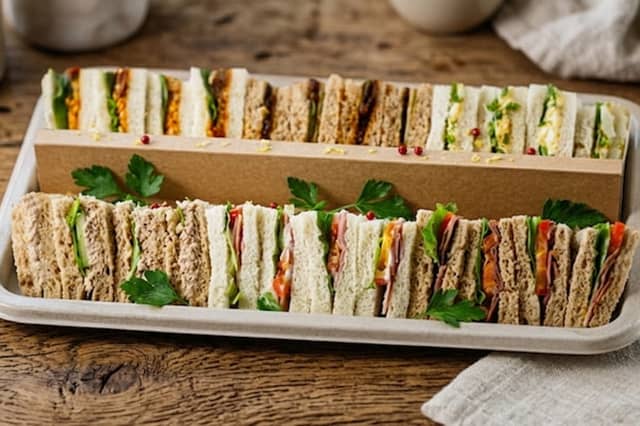

Sandwich platters remain a firm staple in office meetings and family gatherings.
Sushi, poké bowls, burritos, salads and street food have become a staple for Brits, but one old favourite stubbornly refuses to disappear. The sandwich platter is still a fixture of office meetings, family gatherings, training days and events across the country.
Sandwiches require no cutlery, almost everybody can find a filling they like and you can continue talking while eating one.
The food nobody gets particularly confused by
One of the sandwich’s greatest strengths is familiarity. Put a complicated dish in the middle of a meeting table and people immediately start wondering what is in it, how they are supposed to eat it and whether taking the last one will make them look greedy. Sandwiches have relatively few rules. Pick one up. Eat it. Possibly go back for another.
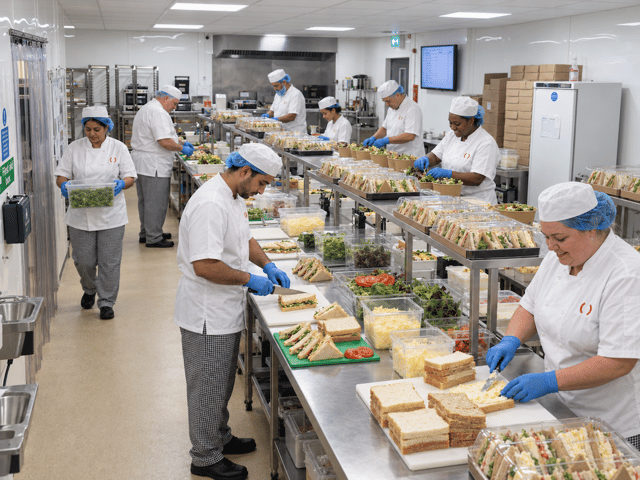
Office catering specialist South Catering is among firms delivering sandwich platters to workplaces, with combinations designed to provide a range of choices rather than requiring everyone to order individually. Its platters are made fresh on the day and include vegetarian choices as standard, with vegan, halal and gluten-free options also available.
“Sandwiches survive because they solve a very practical problem. You can put a platter in the middle of a meeting, people can choose what they want, and nobody has to stop everything for a formal lunch. Simple food done well is often exactly what a workplace needs,” said Colin Bruce, general manager, South Catering.
The British sandwich obsession
Britain’s relationship with the sandwich runs deep. They fill supermarket chillers, appear in children’s lunchboxes and are sold everywhere from motorway service stations to railway platforms. They are eaten at desks, on park benches and on trains.
But the platter occupies a slightly different place in British culture. It normally means something is happening: a meeting, a birthday, a training course, a family gathering or another occasion where several people need feeding at once.
But tastes have changed
The contents, however, are not quite as predictable as they once were. Cheese, ham, tuna and egg remain familiar favourites, but modern caterers need to accommodate a far wider range of diets. Vegetarian choices are expected as standard, vegan options have become commonplace and allergies need to be taken seriously.
For businesses wanting greater choice, South Catering offers different platter ranges and customisation options, including the ability on many selections to adjust the balance of meat and vegetarian food.
“The biggest difference compared with years ago is the amount of choice people expect. The traditional fillings are still hugely popular, but whoever is ordering now needs confidence that vegetarians, vegans and people with other dietary requirements have been considered too,” added Colin Bruce.
The great meeting-food gamble
How much food is enough? Order too little and the final person reaching the buffet is left staring at half a cucumber sandwich and a handful of crumbs. Order too much and perfectly good food ends up being thrown away.
The problem has become even more noticeable in workplaces since the growth of hybrid working. Someone organising a meeting might expect 30 people, only to discover that several are working from home, travelling or have changed their plans. Accurate numbers can make a surprisingly large difference to both the bill and the amount of waste produced.
Why not just order individually?
Food delivery apps have made it possible for almost everyone in a room to choose something different. In theory, that sounds perfect. In practice, 15 individual lunch orders can mean 15 sets of choices, different delivery times and an impressive quantity of packaging. Shared food avoids much of that complication.
Put several platters in the middle of a table and lunch can be dealt with in minutes. There is also something inherently social about sharing food rather than everybody receiving their own labelled bag.
A survivor of changing tastes
None of this means Britain is turning its back on more adventurous lunches. The range of food available to workers today would have been unimaginable a few decades ago. But convenience has a habit of winning.
The sandwich is portable, adaptable, relatively mess-free and can accommodate an enormous variety of fillings. Most importantly, it works just as well for six people as it does for 60.
Despite endless predictions about changing food habits, Britain’s workplace sandwich appears safe for a while yet. It may not be the most glamorous item on the menu. But when somebody announces that lunch has arrived and puts a platter on the table, people still tend to gather around it.