
Driving in snow and ice '“ expert advice on how to cope with a skid
With the UK set to suffer another wintry blast and snow causing disruption on the roads, drivers are being urged to take extra caution.
READ: The most common winter car failures and how to avoid themAs well as the potential for more breakdowns that comes with icy weather, there’s an increased risk of accidents, especially if drivers don’t know what to do if they experience a loss of control.
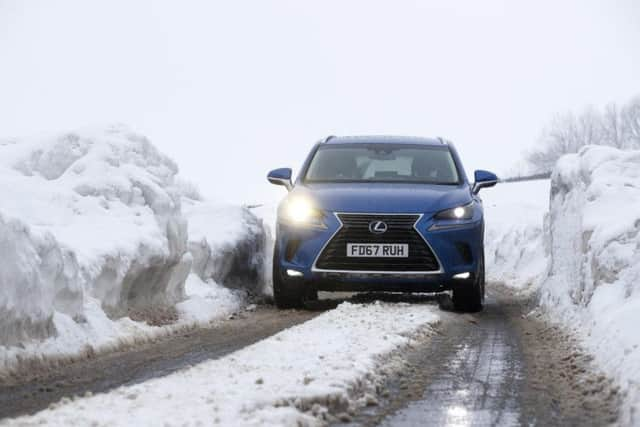

To shed some light on how to handle driving in slippery conditions we spoke to Bill Wardlaw, instructor at Knockhill Racing Circuit’s skid control centre.
Prevention is better than cure

Knowing how to handle a skid is great, avoiding getting into one in the first place is even better.
“The vast majority of skids come down to the driver,” explains Bill. “By properly concentrating drivers can reduce the chance of getting into difficulty in the first place.”
Bill’s mantra is OAP. That’s not driving like your granny but the three pillars of safer driving – observation, anticipation and planning.
“Wheel grip changes every few metres, every corner can be different, especially at this time of year. So it’s important that you’re always alert to the road conditions,” he says.
WARNING: Warnings across Yorkshire as 'mini Beast from the East' is set to make it a white weekendBy looking ahead you can spot potential hazards such as puddles or ice and adjust your driving or take evasive action in plenty of time.
And by keeping your speed down when conditions look dicey you lessen the chances of losing control in the first place and give yourself more time to react.
That advice is echoed by IAM RoadSmart’s head of driving and riding standards, Richard Gladman. He adds: “Even when frost thaws, ice will stay around areas that are often shaded. Consider how you drive through these micro-climates and be prepared to slow down if you need to.”
Throughout my time on the skid pan, Bill’s watch word is smoothness. Sudden braking, accelerating and steering will unsettle the car and make it more vulnerable to bad surfaces. Smooth inputs will help avoid skidding in the first place.
Man v machine
Modern cars are loaded with technology designed to keep you safe. While all the acronyms might look confusing Bill insists it’s worth knowing what systems you car has and what they do.
Check the handbook to see if you’ve got anti-lock braking (ABS), traction control and electronic stability control (ESC). Each manufacturer has their own name and acronym for stability control so find out what yours is called. Knowing what systems are fitted and how they’re represented on the dashboard is important because the presence of stability control changes how you handle a skid.
Trusting the systems is important too. Says Bill: “These sensors are reading and transmitting data hundreds of times a second – far faster than a human can process them.”
To demonstrate the difference stability control makes, Knockhill use a BMW 3 Series with switchable ESC. With this turned off, it’s easy to send the back end spinning. With it activated, it proved virtually impossible. Pinning the accelerator to the floor mid-corner simply resulted in the system cutting the power and braking the inside front wheel.
Don’t panic!
So assuming the worst has happened, you’ve hit a patch of snow or ice and the system hasn’t been able catch car before it starts to slide, what do you do?
Firstly, don’t panic. Staying smooth is as important in a skid as it is to avoiding one. Says Richard Gladman: “All steering and braking inputs must be as gentle as possible in icy conditions.”
That being said, it’s important to react quickly and decisively.
“First thing to do is press the clutch – it cuts the power instantly – and come off the accelerator,” says Bill.
What you mustn’t do is jump on the brake. In a classroom that sounds like a simple theory but out there on the skid pan I still found myself aiming for that middle pedal. Inevitably, I ended up pointing the wrong way. Fine in the safe confines of the skid pan, potentially devastating on the road.
Bill explains: “For some people that’s the hardest thing in the world. You want to be stopping but all you’re doing is sliding more and unbalancing the car.”
The next step depends on both which wheels are skidding and what driver aids the car has.
In a front-wheel skid, where your car’s nose is sliding wide, the advice used to be to steer into the skid. However, with modern ESC systems Bill and the IAM’s Richard both recommend holding your steering position.
Bill explains: “With ESC, if it senses the front wheel skidding it will instantly brake the inside rear tyre, which will pull the nose of the car back round in the right direction. So in a car with ESC keep steering normally.”
In older cars without stability control, Bill recommends a fraction of steering in the opposite direction before returning the steering to the direction you want to be heading. This can potentially help the tyres find some grip.
Richard Gladman’s advice is: “If your car loses grip you should take your foot off the accelerator and point the front wheels in the direction you want them to go.
“Front-wheel-drive vehicles are generally better in icy conditions, but if your car is a rear-wheel-drive always take it extra slow and steady when changing direction.”
A skid where the rear wheels have lost grip is generally harder to put right. Reacting quickly is vital. Dipping the clutch and coming off the throttle are, again, the first steps. Again, if you have ESC keep steering in the direction you want to travel. If, however, your car doesn’t have ESC you need to start steering into the skid, turning your front wheels to counteract the rear’s efforts to swing around.
Get this right and you’ll catch the skid, get it wrong and you’ll end up backwards in, at best a hedge, at worst oncoming traffic.
After demonstrating how tricky it can be to recover such a skid, Bill again emphasises that the best way to handle a skid is to avoid getting into one. Be aware of road conditions and drive accordingly, including reducing your speed if necessary; be smooth, gentle inputs could be the difference between being in control and losing it. And if the worst does happen stay calm, stay smooth and follow the experts’ advice.
And don’t forget to follow our other advice for staying safe on the roads during this cold snap.