
Fast-growing petition protesting proposed Microsoft AI datacentres in Leeds nears 40k signatures
A proposed datacentre is causing rising debate across Leeds
A petition to prevent the construction of multiple datacentres in Leeds is rapidly gaining momentum with over 39,000 signatures.
The petition, created by grassroots campaign group No Leeds Datacentre, protests a proposed Microsoft datacentre campus to be built at Skelton Grange in Stourton.
A trio of three-storey centres are planned for the site and they will be used to provide the physical infrastructure for Microsoft technology, including AI.
Planning permission was initially submitted to Leeds City Council in October 2025 and the project now has conditional planning approval.
However, No Leeds Datacentre argues there was limited public consultation on the proposal and are encouraging residents to have their say.
Lianne Marie Mease, lead representative of the No Leeds Datacentre campaign said: “People deserve to know what is happening so they can object.
“With something on this scale that could impact not just local residents but everyone in Leeds and surrounding areas, we thought it’d be right to bring it to people’s attention and share some information so they can make their own minds up.”
The grassroots group, which was formed in June, is now composed of 168 volunteers who argue that the centre is against the wishes of the Leeds population and poses an environmental risk.
Lianne said: “The people of Leeds don’t want datacentres. They want to see improvements to their quality of life and the cost of living.”
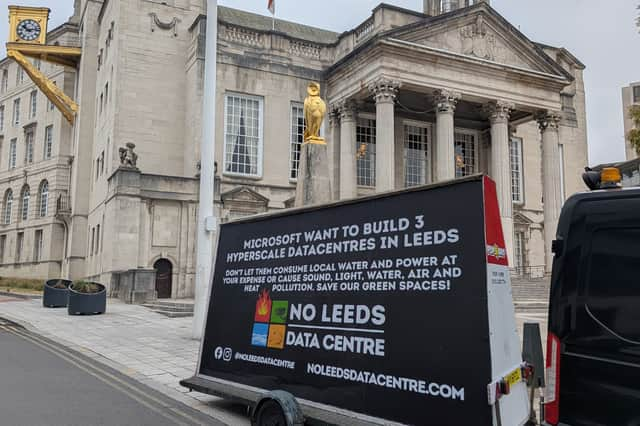

The campaign has received support from environmental organisations such as Friends of the Earth and Greenpeace UK.
The group has published a detailed list of their concerns regarding water usage, biodiversity, air pollution and noise pollution, on their website.
A planning consultation on the proposed datacentres was held by Microsoft on June 11 and 12 2025. However, since the planning application was made in October 2025, there have been 993 objections to the data campus.
Leeds City Council has stated that design, scale, landscape integration, highway safety, sustainability, and amenity impacts, were all given “full and proper consideration during the planning process”.
A spokesperson from Leeds City Council said: “The council’s role as the local planning authority for Leeds is a strictly impartial one, with decisions on planning applications being made in line with national planning legislation and policies. The council is also required to have regard to the Government’s recognition of data centres as critical national infrastructure when considering relevant planning applications.
“A Sustainability Statement submitted in support of the application set out how the scheme would make use of advanced efficiency measures and integration of renewable energy technologies. A substantial proportion of the development’s operational water needs will be met through the use of a rainwater harvesting system, while planning conditions will ensure that waste heat is appropriately managed and, where possible, reused.”
They continued: “As part of its responsibilities as the local planning authority, the council notified people in the area about the planning application via site notices and an advert in the local press.
“Community consultation on the proposed scheme was carried out by the applicant, including a two-day in-person information event held in June last year.”
The construction of the datacentre campus is part of Microsoft’s $30 billion investment to improve and expand UK digital infrastructure.
However, local representatives have expressed concern regarding the scale of this expansion.
Labour MP for Leeds East Richard Burgon called the plans “deeply concerning”.
Microsoft claims that the Skelton Grange project will boost the local economy and create more higher-paid jobs in Leeds.
They have also consulted with public bodies including the Canal & River Trust and the Environment Agency.
Microsoft have confirmed that they are in contact with the No Leeds Datacentre campaign to discuss their concerns however dispute their claims regarding the centre’s energy use, carbon emissions, and water consumption.
A spokesperson from Microsoft said: “The proposed datacentre would be air cooled for more than 95 per cent of the time, we match all our energy use with renewable energy in the UK and Microsoft remains committed to our goals of becoming carbon negative, water positive and zero waste by 2030.”