
Harrogate man Ernesto Rogata praises prostate cancer radiotherapy treatment at St James's Hospital Bexley Wing in Leeds


Ernesto Rogata scans his body every day to check for any changes – it’s long been second nature.
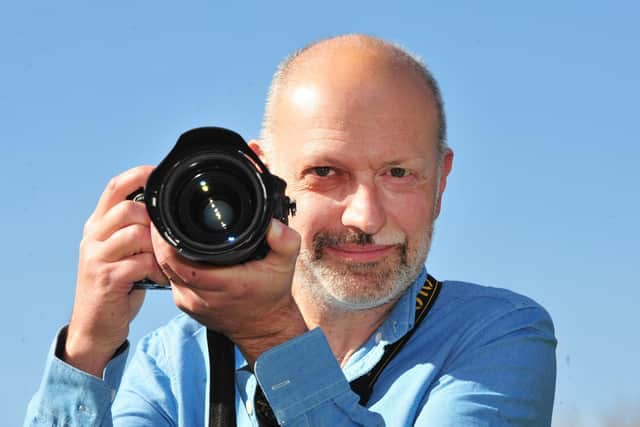
The Harrogate-based Italian photographer, who regularly contributes pictures to The Yorkshire Post – including the one above – learned the hard way.
He had a terrible experience previously when a melanoma on his chest was initially misdiagnosed while Ernesto, now 60, was living in Rome in 1996.
It was only diagnosed as cancer two years later and spread to his lung, bowel and stomach. Despite these difficulties, he survived and was cancer-free by 2005.
But earlier this year, he found that he needed to urinate more often and with greater urgency, but noticed that not much would actually come out.
After contacting his GP online, mentioning his cancer history, Ernesto was very quickly told that the hospital could give him a PSA (Prostate-Specific Antigen) test that day.
“Not even an hour after I had typed that message, my blood had already been taken,” he says. “And a couple of days later, the PSA came back – high, too high, and so further investigation was needed.”
After a follow-up MRI scan and manual examination, Ernesto was offered a biopsy, which he took.
He was at the Great Yorkshire Show in July when, on the Friday, he received a text for an appointment the following Monday morning. He told his wife, Kate, “this means it’s not good news” and indeed he was diagnosed.
Ernesto, who is now in recovery, has found that all areas of cancer care have improved in the years since his previous illness - he is full of praise for the Macmillan Cancer Support nurses - but in particular, he was pleasantly surprised to find out that he could have five radiotherapy sessions instead of the usual 20.
External beam radiotherapy uses high-energy X-ray beams targeted at the prostate from outside the patient’s body, attempting to damage the cancer cells and stop them from growing and spreading.
This particular treatment – called Prostate SABR (Stereotactic Ablative Body Radiotherapy) – uses more precise radiation fields and higher doses during the fewer sessions.
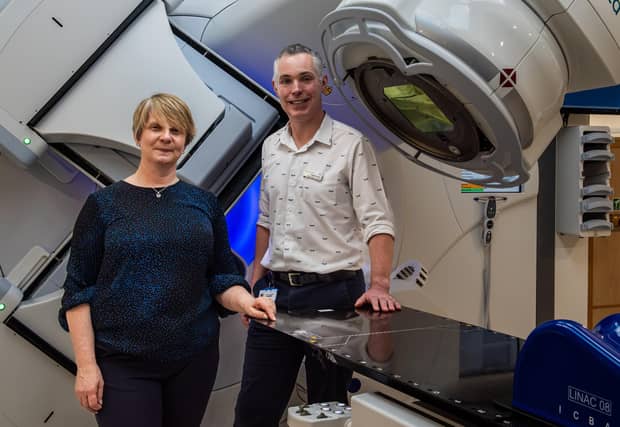
It is not yet available nationwide but was brought to St James’s Hospital in Leeds by Professor Ann Henry, who treats prostate cancer patients on the Bexley Wing, initially as a way to deal with a backlog of patients during the Covid-19 pandemic.
She says: “There have been clinical trials that show that having those five treatments is as effective as having the usual 20 treatments in men who have early prostate cancer. It's not all men with prostate cancer - it is men with early prostate cancer.”
As an early adopter of the treatment, St James’s has been offering it since 2020. An NHS England commissioning process is now under way which might lead to a roll out elsewhere.
Patient feedback on the Bexley Wing has been positive towards the treatment because of its convenience, says Prof Henry, but it also helps people with other illnesses.
“It frees up capacity for our other patients with cancer. We have 12 radiotherapy treatment machines and there's a lot of pressure to treat patients,” she says. “Moving those patients with prostate cancer to five instead of 20 (sessions) then means that there's more capacity for treating other patients with other cancers, like lung cancer, breast cancer, all the other cancers. So it's a benefit for all our patients.”
Patients also benefit from having their treatment planned using the MRI Simulator machine – paid for with £2.4 million raised by Leeds Hospitals Charity – instead of the usual CT scan.
Prof Henry says: “They come every other day over a couple of weeks and it only takes about 10 or 15 minutes to have the treatment. It's very much like having a regular scan. It's not invasive. Nothing touches you, it's not claustrophobic, and you're fine to drive yourself up and away. And people can just really keep on with their usual life.”
That’s why Ernesto preferred it. In fact, he didn’t drive himself away, he took the train and cycled.
“Some of the radiographers were impressed because they say it's a massive hill, as well, when you get to the very end to get up to the Bexley Wing.”
Not that he needs worry about that now – Ernesto spoke with his oncologist on Friday and his cancer is in remission.