
There's a 'serious deficiency in water supplies' after drought in Yorkshire

It may have been raining but there’s a 'serious deficiency in water supplies' after drought in Yorkshire.
Now, the Environment Agency has issued a further 17 drought permits to Yorkshire Water to allow the company to conserve more water in reservoirs to secure public drinking water supplies.
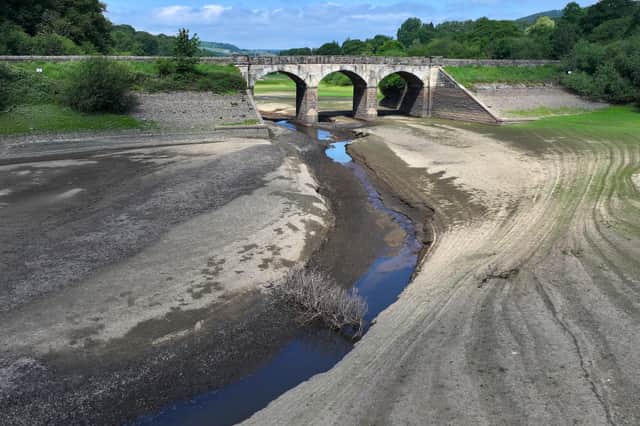

The new permits cover the South West Groups of reservoirs which are on tributaries of the River Calder, River Colne and River Holme and will last for six months. (full list of reservoirs toward end of story).
Yorkshire Water’s current licences require them to release a certain amount of water from the reservoirs to maintain the health of the rivers. With these permits in place, the company can reduce the amount of water released, retaining more water in their reservoirs. The Environment Agency has already granted Yorkshire Water 20 permits for reservoirs in other parts of Yorkshire.
Over the autumn and winter months the weather is usually wetter, however, this is not guaranteed. If there is more rain over the next few months it will help alleviate the impacts of the drought. Nevertheless, having these permits in place will enable Yorkshire Water to use any additional water to support public water supplies.
Although we expect to see more wet weather over the autumn and winter it will take significant rain over several months to refill rivers and reservoirs, without which water supplies will continue to decline. These additional permits will allow Yorkshire Water to retain their reservoir stocks for longer, so protecting that level of public supply. We only issue a permit if we are content that there are clear plans in place to mitigate any impact on the environment, along with strong evidence from Yorkshire Water of their ongoing commitment to reduce leaks and improve water efficiency. Over the autumn and winter, we will continue to work closely with Yorkshire Water as it develops the long-term solutions necessary to protect water resources while drought conditions continue across Yorkshire.
Yorkshire officially moved to drought status on 12 June this year following six months of below average rainfall combined with high temperatures, which affected most of the country.
Reservoir levels across Yorkshire are notably low. The exceptional shortage of rainfall this year, and the possibility of a shortage continuing over the winter, led to Yorkshire Water applying for these permits to help alleviate water supply concerns. To reduce unnecessary use of water and protect customer supplies and the environment, Yorkshire Water’s customers have been subject to a Temporary Use Ban (TUB) since 11 July amid a prolonged spell of warm and dry weather in the UK.
Yorkshire Water will need to inform the Environment Agency in advance of using any of the permits. They will also need to carry out monitoring and mitigation to assess and manage potential environmental impacts.
Reservoir stocks increased to 52.9%, up from 46.2% the previous week. The last time reservoir stocks were over 50% was early July. However, reservoirs remain well below the 70.7% average for this time of year.
Dave Kaye, director of water services at Yorkshire Water, said: “Over the last four weeks, we’ve had some periods of very heavy rainfall and a named storm, and thankfully, these have provided some much-needed relief for our reservoirs, as well as groundwater sources and the region’s rivers. The drought permits we have in place around the region are also keeping more water in the reservoirs and allowing increased abstraction, both of which will help reservoirs stocks to recharge in the coming weeks and months.
“That being said, stocks are still well below where they should be at this time of year, and we’re expecting another period of dry weather over the next week to 10 days. There is still a long way to go in terms of recovering from the driest spring and warmest summer on record. We’re hopeful that the recovery will continue through autumn and winter so that we are in a strong position as we approach spring and summer 2026.
“To allow our reservoirs to recover as much as possible, we’re continuing our efforts to tackle more than 800 leaks per week so that we can keep more water in the network. Once again we’d like to thank customers for their efforts to adhere to the restrictions, and for taking further steps to conserve water resources where they can.”
The hosepipe restrictions remain in place and will be lifted as soon as reservoirs have sufficiently recovered.
The 17 reservoirs:
• Blackmoorfoot Reservoir (Brow Grains Dyke)
• Blackmoorfoot Reservoir (Hoyle House Clough)
• Booth Wood Reservoir
• Ryburn Reservoir
• Withens Clough Reservoir
• Brownhill Reservoir
• Digley Reservoir
• Gorple Lower Reservoir
• Walshaw Dean Lower Reservoir
• Widdop Reservoir
• Warley Moor Reservoir
• Ogden Reservoir
• Butterley Reservoir
• Scammonden Water (Black Brook)
• Scammonden Water (Bradshaw Clough)
• Turvin Clough prescribed flow
• River Colne at Marsden maintained flow